A small office can make even a normally subtle fragrance feel much stronger than expected. When desks sit close together, windows stay shut, and central air keeps circulating the same indoor air, perfume has fewer places to disperse.
That is why how to wear perfume in a small office comes down to controlling how much scent you release and how far it travels. I still want fragrance to feel polished and personal, but I do not want it lingering around a conference table or reaching coworkers several desks away.
For me, the best office fragrance routine is simple: use less, apply strategically, choose moderate-projection scents, and pay attention to the people sharing the space. Those small adjustments make perfume much easier to wear professionally without overwhelming the room.
How Many Sprays of Perfume Should You Wear to the Office?
In a small workplace, I start with one spray.
Two light sprays may work for a very soft fragrance, but I would rather begin conservatively than discover that my perfume fills an entire meeting room. One spray of a powerful fragrance can easily outperform several sprays of a light cologne, so spray count alone never tells the whole story.
Atomizers also vary. Some create a very fine mist, while others release a surprisingly large dose with one press.
I use the arm’s-length rule as my guide. Someone standing near me may notice my fragrance, but a coworker several desks away should not smell it before I approach.
Why Does Perfume Smell Stronger in a Small Office?
Fragrance behaves differently in enclosed spaces because scent molecules cannot disperse as freely as they do outdoors.
A compact US office may have sealed windows and central HVAC that continuously recirculates indoor air. That movement can carry fragrance beyond the desk where it was originally applied.
Small conference rooms make the problem even more obvious. A perfume that feels subtle while commuting can suddenly seem intense when six people spend an hour around one table.
This is why office perfume etiquette should focus on scent radius rather than how strongly you personally notice your perfume.
Which Perfume Scents Work Best in a Small Office?
I usually choose clean, fresh, restrained fragrances when I know I will be sitting close to coworkers.
Are Citrus and Green Fragrances Good for Work?
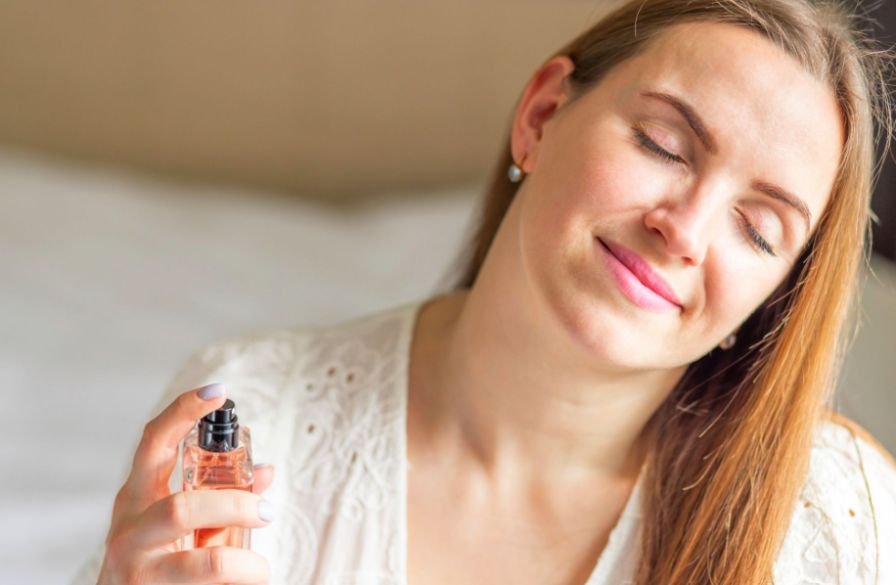
Bergamot, lemon, neroli, vetiver, tea, fresh leaves, and other green notes often feel crisp and professional. They can provide noticeable freshness without the density associated with heavier fragrance styles.
Choosing the right fragrance for a shared workspace starts before you even buy the perfume. If you cannot test a scent in person, learning how to choose perfume without testing in store can help you evaluate its fragrance notes, projection, and longevity before deciding whether it is suitable for the office.
Aquatic, ozonic, and clean-laundry profiles can also work well when they have moderate projection.
Aquatic, ozonic, and clean-laundry profiles can also work well when they have moderate projection. However, warm or humid conditions can affect how a fragrance develops and performs, so these tips for making fragrance last in humid weather can help you adjust your fragrance routine to the environment.
Are Musks, Florals, and Woods Office-Friendly?
Soft musk, iris, light jasmine, cedarwood, and sandalwood can create an understated professional fragrance. I prefer formulas that sit relatively close to the skin instead of leaving a powerful scent trail through hallways and elevators.
Which Perfumes Can Become Too Strong Indoors?
I am more careful with dense oud, heavy spices, tobacco, incense, thick amber, caramel, honey, chocolate, intense vanilla, and highly projecting white florals.
That does not make these notes inappropriate. The issue is how the finished perfume performs. A restrained vanilla may work better in an office than an aggressively projecting citrus fragrance.
Is Eau de Toilette Better Than Eau de Parfum for Work?
Not automatically.
Eau de Toilette and Eau de Cologne are often lighter in concentration, which can make them useful office choices. However, concentration does not guarantee projection.
Some EDTs project strongly, while certain Eau de Parfums and even richer formulas remain close to the skin.
I pay more attention to real-world sillage and projection than the concentration printed on the bottle.
Projection describes how far fragrance radiates from the body. Sillage describes the scented trail it leaves behind as you move. In a small workplace, I want both to stay controlled.
Where Should You Spray Perfume for Minimal Projection?
Application placement can dramatically change how noticeable perfume becomes.
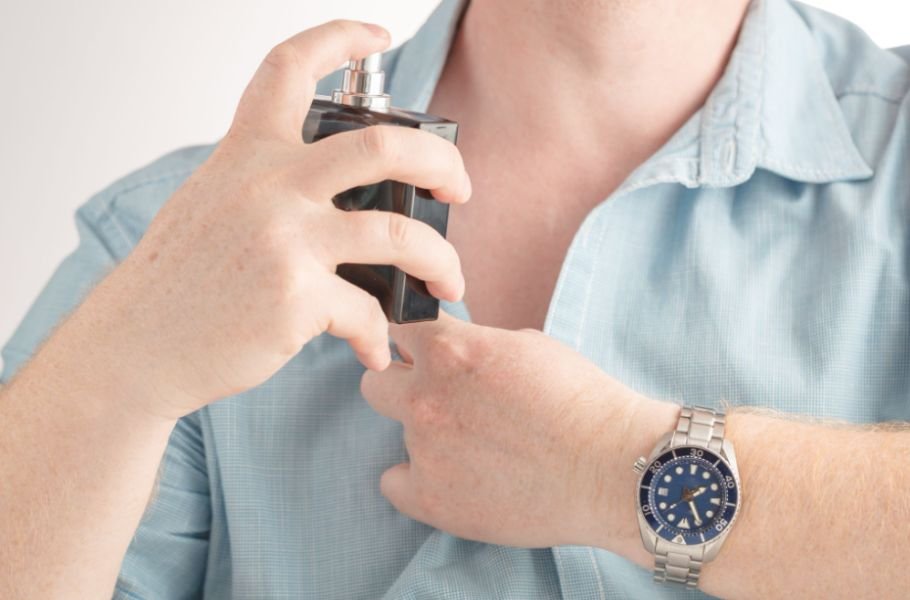
For work, I prefer one light spray on the wrist, lower forearm, or inner elbow. I let the fragrance dry naturally rather than rubbing my wrists together.
Spraying heavily around the neck, shoulders, chest, or hair may send fragrance directly into the surrounding air, especially when those areas remain uncovered.
I am also careful with clothing. Fabric can hold perfume for many hours, and coats, scarves, sweaters, and blazers may continue releasing scent long after it has softened on skin.
When Should You Apply Perfume Before Work?
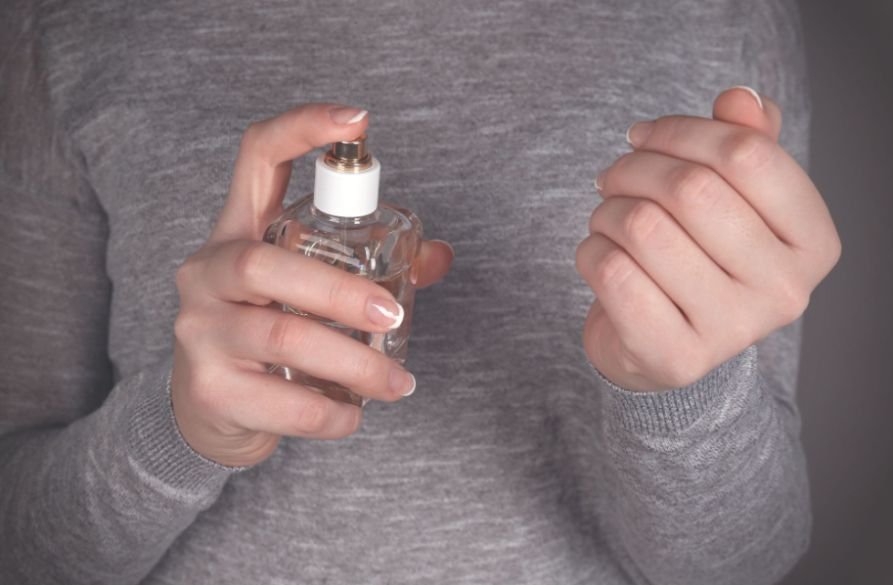
I find it helpful to apply perfume at home roughly 20 to 30 minutes before reaching the office.
That gives the initial alcohol evaporation and brighter opening notes time to settle before I enter an elevator, cubicle area, or meeting room.
Applying after a shower can also help fragrance sit evenly on clean skin.
What I never do is spray perfume after arriving at my desk. Atomized fragrance travels through shared air immediately, which gives coworkers no opportunity to avoid it.
Should You Reapply Perfume During the Workday?
Usually, I do not.
After wearing a perfume for several hours, I may stop noticing it because of olfactory adaptation, often called nose blindness. That does not mean the fragrance disappeared.
After a few hours, I may notice that my perfume seems to have faded, but that does not always mean it has stopped projecting. Understanding why perfume disappears after a few hours can help me distinguish olfactory adaptation from actual fragrance loss and avoid unnecessary reapplication in a shared office.
Coworkers who were not exposed to the scent continuously may still detect it immediately.
If I genuinely need a touch-up, I avoid spraying inside the shared workspace. A tiny amount of solid perfume or fragrance oil applied directly to the wrist can provide better control because these formats generally create less airborne mist.
Even then, moderation matters.
How Can You Tell If Your Office Fragrance Is Too Strong?
Before wearing a new perfume to work, I test it at home.
I apply the amount I plan to wear and wait several hours. Then I ask someone I trust whether they can detect it from several feet away.
Another useful test is leaving a room briefly and returning. If I immediately smell the fragrance lingering in the room rather than only when I approach my skin, I would reduce the application before wearing it to work.
What Should You Do If You Accidentally Overspray?
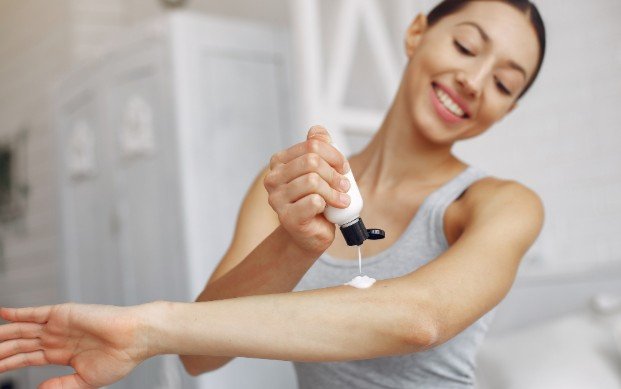
If I overspray before leaving home, I wash the application point gently with soap and water.
If the fragrance landed heavily on a jacket or scarf, removing or changing that item usually helps more than trying to cover the perfume with another scented product.
Adding lotion, deodorant, body spray, or another fragrance can create an even stronger scent cloud.
Should You Stop Wearing Perfume If a Coworker Is Sensitive?
Yes, when the situation requires it.
Some US workplaces have fragrance-free or scent-reduction policies, particularly when employees experience migraines, respiratory problems, asthma, or other sensitivities.
If a coworker tells me my fragrance is causing discomfort, I take that seriously rather than arguing that I only used one spray.
Workplace fragrance etiquette ultimately comes down to sharing indoor air respectfully.
Frequently Asked Questions
1. How do you wear perfume without bothering coworkers?
Use minimal fragrance, choose moderate-projection scents, apply before arriving at work, and keep the scent within roughly arm’s length.
2. Is one spray of perfume enough for the office?
For many fragrances, yes. Strong perfumes may require only one light application, while particularly subtle scents may tolerate two.
3. Where is the best place to spray perfume for work?
The wrist, lower forearm, or inner elbow usually provides better control than spraying heavily around the neck, hair, or clothing.
4. Should I spray perfume at my desk?
No. Spraying directly inside a shared workspace releases fragrance into the surrounding air and can expose coworkers to a much stronger concentration.
5. What is the safest way to learn how to wear perfume in a small office?
Start with one spray, test the fragrance’s projection before work, apply it well before you arrive, avoid frequent reapplication, and adjust immediately if coworkers find it uncomfortable.
Final Thoughts
For me, the secret to how to wear perfume in a small office is remembering that professional fragrance should be discovered, not announced.
I do not need coworkers across the room to know which perfume I am wearing. I want my fragrance to create a subtle personal scent bubble that feels clean, polished, and appropriate when someone comes close.
One thoughtful spray, careful placement, enough settling time, and awareness of fragrance sensitivity can make a dramatic difference. When I treat perfume as part of personal grooming rather than room fragrance, it becomes much easier to enjoy scent at work without overwhelming the people around me.