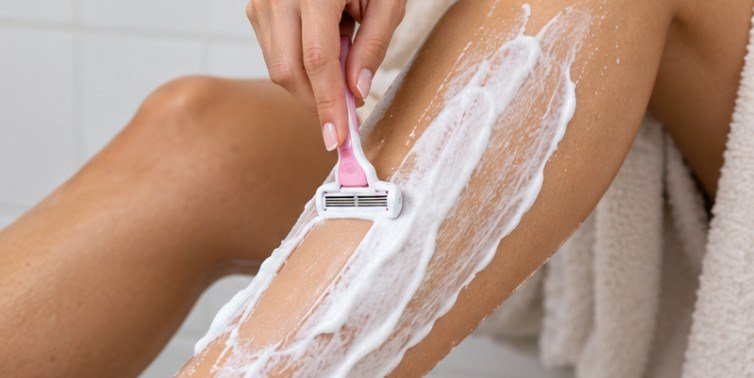
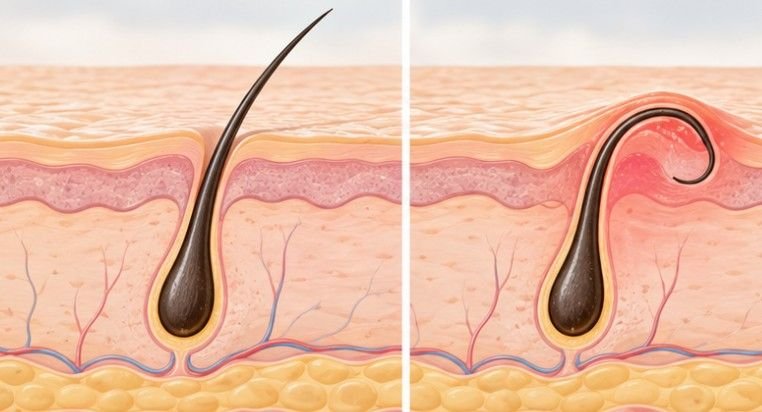
The closest shave is not always the best shave. Cutting leg hair extremely close to the skin can leave a sharp hair tip that grows sideways or curls back into the follicle, triggering the red, itchy bumps many people blame on their razor.
Learning how to shave your legs without razor bumps therefore has less to do with buying an expensive razor and more to do with controlling how closely you cut the hair, how much friction you create, and how you treat your skin afterward. A few small changes can make a surprisingly large difference.
What Actually Causes Razor Bumps on Your Legs?
Razor bumps and razor burn are often treated as the same problem, but they are slightly different.
Razor burn is primarily irritation caused by friction, repeated blade passes, excessive pressure, or shaving without enough lubrication. It may leave the skin red, tender, itchy, or burning shortly after shaving.
Razor bumps usually involve ingrown hairs. According to Cleveland Clinic, an ingrown hair develops when a removed hair grows back into the skin rather than outward. Legs are among the common areas where this occurs.
Hair texture matters too. Curved, coarse, or tightly curled hairs have a greater tendency to re-enter the skin after they are cut.
Research available through the National Library of Medicine describes pseudofolliculitis as an inflammatory response to hairs penetrating surrounding skin. Although it is frequently discussed in relation to facial shaving, the same process can occur on other shaved areas.
The 7-Step Leg Shaving Method That Reduces Bumps
1. Let Warm Water Soften the Hair First
Do not make shaving the first thing you do after stepping into the shower.
Warm water hydrates the hair shaft and softens it, making hair easier to cut with less pulling. The American Academy of Dermatology recommends shaving when hair is soft, such as near the end of a shower.
Give your legs a few minutes under comfortably warm water first.
Avoid extremely hot water, particularly if your skin is already dry or sensitive.
2. Exfoliate, but Do Not Scrub Aggressively
Removing excess dead skin can help keep the opening of the follicle clear, but more exfoliation is not automatically better.
A soft washcloth or gentle body exfoliant can be enough. Some people prone to ingrown hairs also use products containing salicylic, glycolic, or lactic acid between shaving sessions.
Never aggressively scrub existing bumps. Inflamed follicles are already irritated, and repeated friction can make redness worse.
If you use an exfoliating acid, introduce it gradually rather than combining several strong products at once.
3. Never Shave Dry Legs
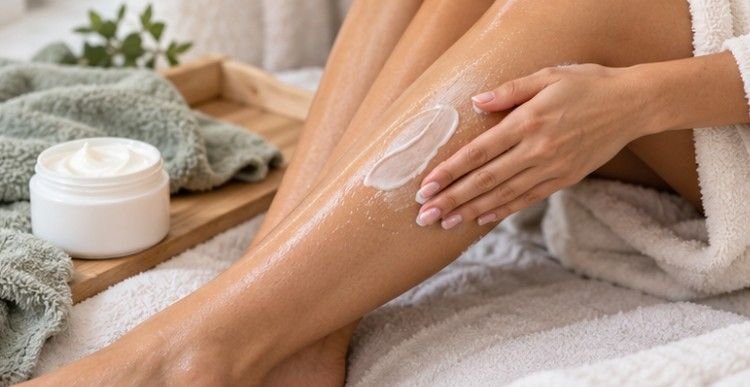
A lubricating layer reduces direct blade-to-skin friction. Apply a generous shaving cream or gel and allow it to sit briefly before starting. Mayo Clinic specifically recommends lubricating shaving cream or gel to soften hair before shaving.
Ordinary bar soap can work in an emergency, but it may not provide the same lasting slip as a shaving product designed to stay between the blade and your skin. If the cream disappears halfway through shaving, reapply it.
4. Use a Sharp Blade and Keep It Clean
A dull razor tends to catch and pull instead of producing a clean cut. That often encourages people to press harder or repeatedly shave the same spot. Neither habit is good for sensitive skin.
The American Academy of Dermatology advises replacing disposable razors after about five to seven shaves and storing them somewhere dry rather than leaving them permanently wet in the shower.
Rinse the blade frequently while shaving so hair, skin cells, and product do not clog the cutting surface.
5. Follow Your Hair Growth, Not Your Instinct
Many people automatically shave upward from ankle to knee because it produces an extremely smooth result.
Unfortunately, shaving against hair growth can also increase irritation and the risk of ingrown hairs.
Instead, examine a small section of your leg before shaving. Hair does not necessarily grow in exactly the same direction everywhere.
Use short, light strokes in the direction the hair naturally grows.
The University of Iowa Health Care advises shaving with hair growth, using gentle strokes and avoiding pulling or stretching the skin.
A Quick Razor-Bump Risk Check
| Shaving habit | Lower-risk approach | Higher-risk approach |
| Skin preparation | Warm water first | Dry shaving |
| Lubrication | Shaving cream or gel | Little or no lubricant |
| Blade | Sharp and clean | Dull or clogged |
| Direction | With hair growth | Against the grain |
| Pressure | Light | Heavy |
| Passes | One careful pass | Repeated passes |
| Aftercare | Gentle moisturizer | Fragrance-heavy products immediately |
No single technique guarantees perfectly clear skin, but reducing several risk factors at once gives your follicles a better chance to recover normally.
6. Stop Trying to Achieve a Zero-Stubble Finish
One of the most useful changes for people with recurrent razor bumps is accepting a shave that feels smooth rather than impossibly close.
Do not press the razor into your skin, repeatedly shave the same centimeter, or stretch the skin tightly while passing the blade over it.
Mayo Clinic notes that pulling skin during shaving can allow freshly cut hair to retract, increasing the likelihood that it grows into the skin.
If a particular razor consistently leaves you covered in bumps, consider an electric razor or trimmer that leaves the hair slightly above skin level.
7. Calm Your Skin Immediately After Shaving

Rinse away remaining shaving product and gently pat your legs dry rather than rubbing them with a towel.
A cool, damp cloth can calm recently shaved skin. Follow with a fragrance-free moisturizer to support the skin barrier.
Avoid applying heavily fragranced body sprays, strong exfoliating acids, or irritating products immediately after shaving if your skin reacts easily.
Loose clothing can also help. MedlinePlus notes that friction from clothing can damage hair follicles and contribute to folliculitis.
That makes tight leggings immediately after shaving a poor choice for someone already prone to irritated follicles.
What If You Already Have Razor Bumps?
First, give the affected skin a break.
Repeatedly shaving over inflamed bumps can reopen irritated follicles and prolong the problem. Avoid picking, squeezing, or digging out hairs with your fingernails.
Occasional ingrown hairs often resolve as the hair grows. Persistent bumps deserve more attention.
The Mayo Clinic warns that unresolved ingrown hairs can contribute to infection, post-inflammatory dark marks, and scarring.
Seek medical advice if bumps are painful, repeatedly return, spread, produce significant pus, or leave scars and dark patches. What looks like ordinary razor bumps can sometimes be folliculitis or another skin condition requiring treatment.
What About Single-Blade Razors?
Single blades are frequently recommended because they may avoid cutting hairs unnecessarily close. However, blade count is not the entire story.
A review indexed by PubMed noted that evidence comparing single- and multiblade shaving strategies for pseudofolliculitis remains limited. Technique, hydration, skin preparation, shaving frequency, and aftercare also matter.
Instead of assuming one razor design works for everyone, pay attention to how your own legs respond.
FAQs
1. Should I shave my legs up or down to prevent razor bumps?
Shaving in the direction your hair grows usually reduces irritation and ingrown-hair risk. Hair direction varies across the legs, so examine each area rather than assuming every hair grows downward.
2. How often should I exfoliate my legs if I shave?
Start gently once or twice weekly rather than exfoliating aggressively every day. Reduce frequency if you experience stinging, persistent redness, peeling, or increased sensitivity.
3. Can moisturizer prevent razor bumps?
Moisturizer cannot guarantee prevention, but keeping skin hydrated may reduce dryness and irritation. Choose a simple, fragrance-free formula, particularly immediately after shaving.
4. Why do I still get bumps with a new razor?
A sharp razor cannot compensate for dry shaving, excessive pressure, shaving against hair growth, repeated passes, or tightly curled hair that naturally tends to grow inward.
Smoother Legs Start With a Less Aggressive Shave
Once I stopped thinking of shaving as a contest to remove every trace of stubble, the advice behind how to shave your legs without razor bumps became much more logical. The goal is to cut hair cleanly without unnecessarily traumatizing the follicle.
Warm the skin, add plenty of lubrication, use a clean sharp blade, follow hair growth, minimize repeat passes, and moisturize afterward. If bumps keep returning despite those changes, do not simply shave harder or exfoliate more aggressively. Give your skin time to recover and consider a dermatologist’s advice. The smoothest-looking legs often come from the gentlest shave, not the closest one.