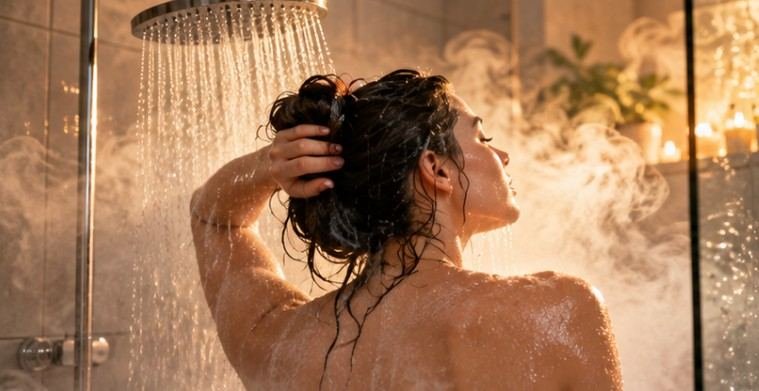
A steaming shower can feel restorative, but your skin may experience it very differently. Research measuring the skin before and after water exposure found that hot water can sharply increase transepidermal water loss—the movement of water from inside the skin into the surrounding air. That helps explain how hot showers affect your skin barrier: excessive heat, especially when combined with long shower times and strong cleansers, can leave the outer skin less effective at holding moisture.
The first clues are often surprisingly ordinary. Your legs feel tight after drying off. Your arms become itchy later. Previously comfortable products suddenly sting. Understanding why this happens makes it much easier to change your shower routine without giving up showers you actually enjoy.
What Your Skin Barrier Is Actually Protecting
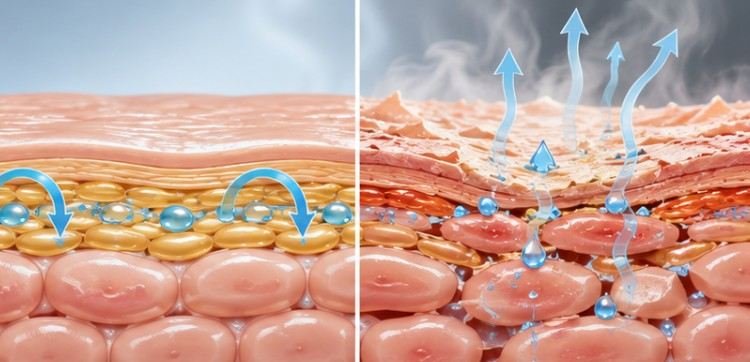
Your outermost skin layer, the stratum corneum, is sometimes compared with a brick wall. The “bricks” are flattened skin cells called corneocytes, while lipids—including ceramides, cholesterol and fatty acids—help fill the spaces between them. Those lipids matter because the barrier has two jobs happening simultaneously: keeping useful water inside while making it harder for irritants, allergens and microorganisms to enter.
Harvard Health notes that the stratum corneum contains both cells and lipids that contribute to moisture retention. When that protective arrangement becomes disrupted, water escapes more easily. Dermatologists call this transepidermal water loss, or TEWL. Higher TEWL doesn’t automatically mean you have a skin disease. It does, however, indicate that your barrier is allowing more water to escape.
What Hot Water Does That Lukewarm Water Doesn’t
Heat doesn’t literally wash your entire skin barrier away during one shower. The problem is cumulative disruption. Hot water can remove some of the oils and lipids that help the skin remain flexible and retain moisture. Longer exposure compounds the problem because the skin spends more time immersed in water while cleansing agents remove additional surface oils.
A study involving 50 healthy volunteers provides useful real-world evidence. After hot-water exposure, average TEWL increased from 25.75 to 58.58 g/h/m². Researchers also measured increased redness and a rise in skin-surface pH. They concluded that prolonged water exposure impaired barrier function and that hot water produced greater effects than colder water.
That doesn’t mean every shower produces the same change. Temperature, duration, cleansing habits and your underlying skin condition all matter.
The Heat-Duration-Cleanser Effect
Think about shower-related dryness as three variables rather than blaming temperature alone.
| Shower habit | Likely barrier impact | Better choice |
| Very hot water | Greater moisture loss and dryness | Comfortable lukewarm water |
| 15–20 minute shower | Prolonged water and cleanser exposure | About 5–10 minutes |
| Strong fragranced soap everywhere | Removes more surface oils and may irritate | Gentle cleanser where needed |
| Vigorous towel rubbing | Adds friction to vulnerable skin | Pat dry gently |
| Waiting until skin is fully dry to moisturize | Misses an easy hydration opportunity | Moisturize while slightly damp |
The American Academy of Dermatology recommends limiting showers or baths to roughly five to 10 minutes, using warm rather than hot water and applying moisturizer while skin remains damp
Signs Your Shower Routine May Be Damaging Your Barrier
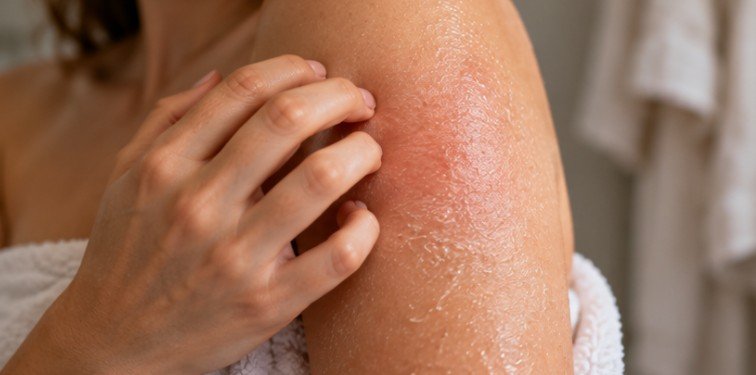
You don’t need laboratory equipment to notice an unhappy skin barrier. Pay attention to how your skin behaves during the hour after showering. Tightness is one of the clearest warning signs, especially when accompanied by itching, roughness, flaking or redness.
MedlinePlus lists scaling, peeling, roughness, tightness after bathing, itching and cracking among common signs of dry skin. It also identifies frequent long, hot showers as a contributor.
A simple test is useful: shower as usual and apply nothing for five minutes. If your skin rapidly feels uncomfortable, tight or itchy, your routine may be stripping more moisture than your skin can readily replace.
Don’t deliberately repeat this test if you have eczema, severely cracked skin or another active inflammatory condition.
Why Eczema-Prone and Winter-Dry Skin Need Extra Care
Not everyone has the same margin for error. People with eczema already have difficulty maintaining an effective barrier, making heat, fragrance, aggressive scrubbing and extended bathing particularly troublesome.
The National Eczema Association recommends lukewarm rather than hot water, gentle fragrance- and dye-free cleansers, no scrubbing and moisturizer applied shortly after bathing while the skin is still moist.
If you’re prone to eczema, it is also worth reviewing ingredients to avoid in body wash for eczema because water temperature is only one part of the equation.
Winter creates another problem. Heated indoor air commonly contains less moisture, while cold outdoor conditions can increase dryness. Combining that environment with a long steaming shower can make post-shower tightness much more noticeable.
A dedicated body care routine for dry skin in winter can compensate for those seasonal pressures.
A Better Shower Routine for Protecting Your Barrier
You don’t need cold showers. Comfortable lukewarm water is a more realistic target.
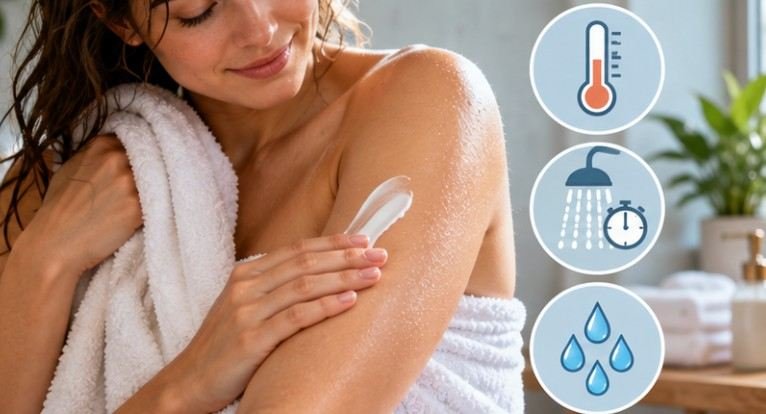
1. Turn Down the Temperature
Choose water that feels pleasantly warm rather than producing steam or leaving your skin noticeably red.
There isn’t one perfect temperature for every person, so comfort and your skin’s response matter more than obsessing over a thermometer.
2. Keep the Shower Short
Aim for roughly five to 10 minutes when dryness is an issue. Both the AAD and Mayo Clinic recommend short showers and warm rather than hot water for people dealing with dry skin.
3. Clean Strategically
You generally don’t need aggressive cleanser over every inch of your body every time you shower. Concentrate cleansing where sweat, oil and odor accumulate. If your skin is sensitive, choose a mild, fragrance-free formula and avoid turning your shower into a scrubbing session.
The same restraint applies to exfoliation. If heat has already left your skin irritated, postpone acids, body scrubs and rough exfoliating tools until it feels normal again. This guide to exfoliating sensitive body skin safely explains how to reduce unnecessary irritation.
4. Pat, Don’t Scrub, With Your Towel
Mechanical friction is easy to overlook. Gently pat away excess water and leave the skin slightly damp rather than aggressively rubbing until completely dry.
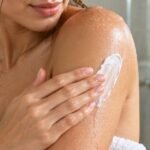
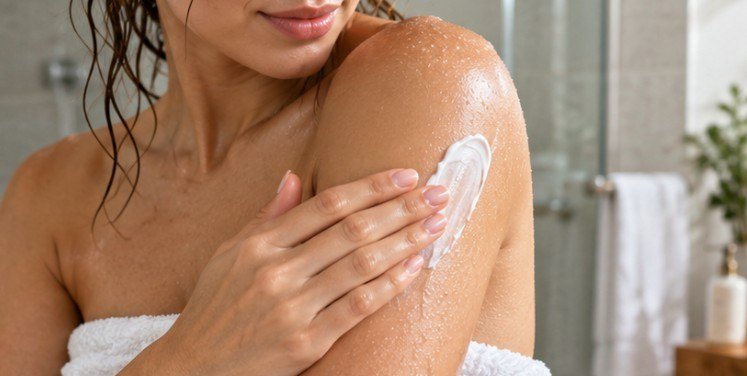
5. Moisturize Immediately
Apply moisturizer within a few minutes. Humectants such as glycerin attract water, while emollients soften rough areas and occlusive ingredients reduce water evaporation. Ceramide-containing formulas can also support the lipid-rich structure of the outer barrier. For very dry areas, creams and ointments usually offer more occlusion than lightweight lotions.
Can You Ever Take a Hot Shower?
Yes. Barrier-friendly skin care doesn’t require treating one hot shower as a dermatological disaster. Occasional heat is different from taking long, very hot showers every morning and night.
If your skin remains comfortable, hydrated and free of persistent irritation, small variations probably aren’t meaningful. The people who benefit most from stricter temperature control are those already experiencing dryness, eczema, itching, cracking or weather-related irritation.
The better question isn’t “Are hot showers forbidden?” It is “What does my skin repeatedly do after them?”
Frequently Asked Questions
1. How hot showers affect your skin barrier over time?
Repeated hot-water exposure can increase moisture loss and remove protective surface oils, contributing to dryness, tightness, itching and irritation—especially when showers are long.
2. Can the skin barrier repair itself after hot showers?
Usually, mild disruption can improve when you reduce irritating habits and moisturize consistently. Persistent cracking, inflammation, pain or severe itching should be evaluated by a dermatologist.
3. Are cold showers better for your skin?
Not necessarily. You don’t need cold water to protect your barrier. Lukewarm water offers a practical balance between effective cleansing, comfort and reducing unnecessary dryness.
4. Should I moisturize immediately after showering?
Yes. Applying a fragrance-free cream or ointment while skin is still slightly damp helps trap water and reduce post-shower moisture loss.
The Takeaway
The temperature dial in your shower looks insignificant, yet it can change what happens to your skin for hours afterward. Research shows that hot-water exposure can increase measurable water loss, while dermatology organizations consistently recommend shorter showers, gentler cleansing and immediate moisturizing.
That doesn’t mean giving up an occasional relaxing shower. It means noticing the combination that causes trouble: very hot water, long exposure, harsh cleanser, scrubbing and no moisturizer afterward.
If your skin regularly feels tight the moment you step out of the bathroom, consider that sensation useful feedback. Turn the temperature down, shorten the shower and moisturize while your skin is still damp. Your barrier may not need a complicated routine—just fewer obstacles to doing its job.