

A flight costing $600 might require 60,000 reward points through one booking option but only 30,000 miles through another. The destination, airline, and seat could be identical. The difference is knowing where and how to redeem.
Learning how to use travel reward points effectively can turn ordinary credit card spending into discounted airfare, hotel stays, and travel upgrades. However, accumulating points is only half the equation. Their actual value depends on redemption rates, availability, fees, and booking decisions.
The smartest travelers don’t automatically choose the redemption promising the biggest discount. They calculate what their points are worth and compare every realistic alternative before booking.
Why Travel Reward Points Have Different Values
Travel points aren’t a universal currency. Their purchasing power changes depending on the loyalty program and how they’re redeemed.
For example, 50,000 points might provide $500 toward airfare through one credit card program but cover a hotel reservation worth substantially more through a transfer partner.
A useful starting benchmark is one cent per point. At that rate, 10,000 points equal $100 in travel value.
However, one cent isn’t a guaranteed minimum. Some redemption options deliver less, while valuable airline and hotel bookings can provide two cents per point or more.
The Consumer Financial Protection Bureau examined several hundred consumer complaints and identified recurring problems involving reward devaluation, unexpected conditions, redemption difficulties, and canceled benefits. This makes understanding program rules just as important as earning additional miles.
Choose the Redemption Method That Actually Saves Money
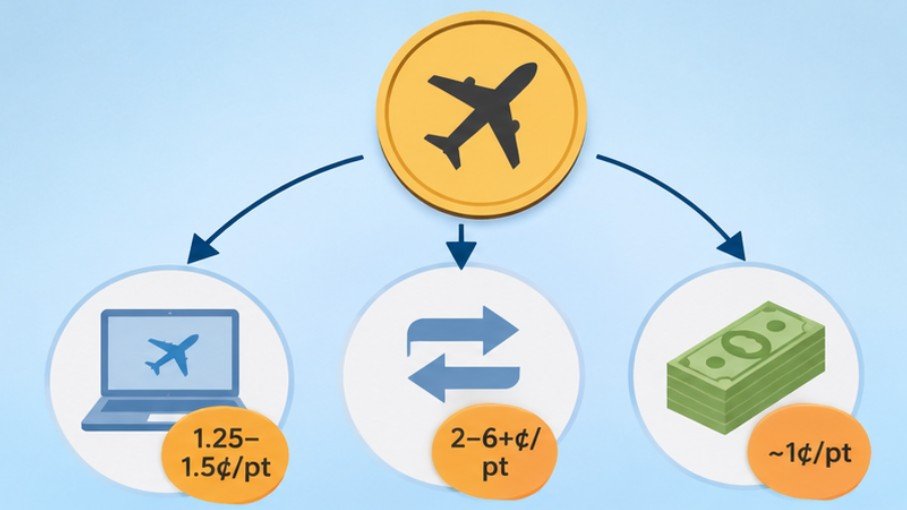
Not every redemption option delivers comparable value. Before exchanging points, consider three common approaches.
Credit Card Travel Portals
Programs such as Chase Ultimate Rewards and Capital One Miles allow eligible cardholders to book travel through dedicated platforms.
Some cards offer fixed redemption values, while others provide variable rates or enhanced offers for selected bookings. Depending on the product and booking, values can reach 1.25 or 1.5 cents per point, although those rates are not universal.
Portals offer convenience because travelers can compare flights and hotels without transferring points.
However, compare the portal’s final price against booking directly. A higher booking price can eliminate the advantage of an attractive redemption rate.
Airline and Hotel Transfer Partners
Transferable credit card currencies offer another opportunity.
Programs associated with American Express Membership Rewards, Chase Ultimate Rewards, Citi ThankYou, and Capital One may allow transfers to participating airline and hotel loyalty programs.
Potential partners include World of Hyatt, Air France-KLM Flying Blue, and Virgin Atlantic Flying Club, depending on the credit card issuer.
Strategic transfers can sometimes produce two to six cents per point or more, particularly for expensive international premium-cabin tickets.
However, those exceptional values aren’t guaranteed, and inflated cash prices can make a redemption appear better than it really is.
Cash Back, Gift Cards, and Merchandise
Cash redemptions frequently offer approximately one cent per point, although values vary by program.
Merchandise and gift cards can deliver even less.
Still, cash back isn’t automatically a poor choice. If travel awards offer limited availability, expensive fees, or inconvenient schedules, receiving predictable cash value may be more useful.
The objective is getting meaningful savings, not winning an imaginary points competition.
Calculate Your Points’ Real Value Before Booking
The most practical way to evaluate travel rewards is calculating cents per point, commonly called CPP.
Cents per point formula
Cashprice-AwardfeesPointsrequired100
Example: A $600 flight requires 30,000 miles plus $5.60 in taxes.
600-5.6030,000100=1.98
1.98 cents per point
This hypothetical redemption exceeds the one-cent benchmark.
For a fair comparison, use the price of the ticket or room you would realistically purchase, including comparable baggage, cancellation terms, and amenities.
Subtract award-related cash charges and consider any rewards you would have earned by paying cash.
An extravagant first-class ticket isn’t necessarily an excellent redemption if you’d never consider buying that ticket at its advertised cash price.
Follow a Smarter Five-Step Award Booking Process
Knowing how to use travel reward points effectively becomes easier when you follow a repeatable booking routine.
1. Compare Cash Prices Before Searching for Awards
Check prices directly with airlines and hotels, alongside credit card travel portals.
Record the complete cost, including taxes and essential extras.
This establishes a realistic baseline and prevents points from distracting you from an affordable cash deal.
2. Search Multiple Award Programs
Explore participating loyalty programs before committing your points.
An airline partnership may provide access to flights operated by another carrier, sometimes at a different mileage price.
Search nearby departure airports and alternative dates to identify additional options.
3. Verify Availability Before Transferring

Always confirm that the required award seat or hotel room is available for your actual travel dates.
Bank-to-loyalty-program transfers are generally irreversible. Transfers may also take time, during which availability can change.
Never transfer a substantial balance simply because a redemption looks attractive.
4. Examine Taxes, Surcharges, and Restrictions
Award tickets aren’t necessarily free. The U.S. Department of Transportation explains that mileage-award advertisements must appropriately disclose applicable taxes and mandatory carrier-imposed fees.
International premium-cabin redemptions can sometimes carry hundreds of dollars in additional charges.
Also examine refund policies, change restrictions, baggage allowances, and whether reservations qualify for loyalty benefits.
5. Transfer, Book, and Confirm
Once availability and total costs are acceptable, transfer only the points needed. Complete the reservation and verify that the airline or hotel has issued a valid confirmation. Save booking details, cancellation conditions, and transaction records.
Make Flexibility Your Biggest Travel Advantage
Award availability often improves when travelers aren’t locked into a single departure date.
Searching two or three days around your preferred itinerary can reveal substantially different mileage requirements.
Major airports such as Chicago O’Hare, Dallas-Fort Worth, and Los Angeles may offer additional routing opportunities. However, include transportation costs before choosing a distant departure airport.
Booking months ahead can help secure limited award inventory. Alternatively, some airlines release additional seats close to departure.
Neither strategy guarantees availability, especially during holidays or school vacation periods.
The Department of Transportation’s frequent-flyer guidance also encourages travelers to investigate award restrictions, cancellations, and mileage reinstatement policies before committing.
Look Beyond Flights for Hidden Hotel Savings

Hotel rewards deserve equal attention, particularly for longer vacations.
Marriott Bonvoy offers a Stay for 5, Pay for 4 benefit on eligible award stays. Hilton Honors provides a fifth-night-free benefit for eligible members with Silver status or higher on qualifying standard-room awards.
Certain IHG credit cardholders can also receive a fourth-night reward benefit.
These advantages can make longer reservations more economical, but eligibility and restrictions matter.
Compare the entire booking against cash prices, accounting for resort fees, parking, and breakfast.
For a family vacation, a conveniently located hotel with useful amenities may deliver greater practical value than a luxurious property requiring expensive daily transportation.
Protect Your Points From Expiration and Unnecessary Costs
Travel rewards are assets with limitations, not savings accounts.
The Federal Deposit Insurance Corporation warns that rewards may expire or become forfeited under program conditions. It also emphasizes that credit card interest and fees can outweigh rewards earned.
Paying credit card statements in full is therefore more important than chasing bonus points. Avoid unnecessary purchases merely to earn a promotional reward.
Security matters, too. The Federal Trade Commission warned in April 2026 about fraudulent messages claiming reward points are about to expire. Check balances through official websites or apps rather than unfamiliar text-message links.
Before traveling, review your points expiration dates, card benefits, and upcoming annual fees, while also preparing your luggage carefully with practical tips on how to pack fragrance without leaking in luggage to protect your personal belongings.
Then handle smaller preparations, including packing essentials and choosing a travel-friendly fragrance routine. Simple details such as making layered fragrance last longer can help make long travel days more comfortable.
Frequently Asked Questions
1. How many travel reward points are needed for a free flight?
Requirements depend on the airline, route, travel dates, and fare class. Some domestic awards require relatively few miles, while international premium-cabin tickets may demand substantially more.
2. Is it better to redeem points or pay cash?
Compare the redemption’s cents-per-point value against your points’ realistic alternatives. Paying cash can make more sense when fares are inexpensive or award fees are excessive.
3. Can travel reward points expire?
Yes. Expiration policies vary by issuer and loyalty program. Some points remain active while accounts are open and in good standing, while others require qualifying activity.
4. What is the biggest mistake when using travel points?
Transferring points without verifying award availability is particularly costly because most transfers cannot be reversed. Always check inventory, taxes, fees, and booking conditions first.
Make Every Point Work Toward a Better Journey
The best travel redemption isn’t necessarily the one involving the most luxurious hotel or the most expensive airline ticket. It’s the booking that delivers genuine value while fitting your budget, schedule, and preferences.
Understanding how to use travel reward points effectively means treating every redemption as a financial decision rather than an exciting discount.
Start by checking your current rewards balances, identifying a realistic destination, and comparing cash prices with available award options. Calculate the value, examine restrictions, and redeem only when the numbers make sense.
Points become powerful when they help you travel more comfortably or affordably—not simply when you accumulate thousands of them.