

A prescription that is perfectly legal in the United States could cause serious problems at an international airport. Some countries restrict everyday medications, including certain ADHD treatments, sleeping pills, and pain relievers. Even a doctor’s prescription may not guarantee permission to bring them across the border.
Understanding how to travel with medication international flight requirements can prevent confiscated prescriptions, customs delays, and interrupted treatment. The safest approach involves checking destination laws, preparing medical documents, and packing medications where they remain accessible throughout your journey.
Why International Medication Rules Deserve Attention
International travel introduces two separate challenges: airport security screening and foreign customs regulations. Passing through a Transportation Security Administration (TSA) checkpoint does not automatically mean your medication is legal at your destination.
According to the Centers for Disease Control and Prevention (CDC), medications commonly prescribed in America may be restricted or prohibited overseas. Violations can result in confiscation, fines, or imprisonment.
Travelers should therefore investigate regulations before departure rather than assuming their prescriptions will be accepted everywhere.
Check Medication Laws Before Booking Your Flight
Research Restrictions in Every Country
Medication regulations vary significantly between countries. Some governments limit the quantity of prescription drugs visitors may bring, while others require advance authorization.
Pay particular attention to medications containing:
- Amphetamine-based ingredients used in ADHD treatment
- Opioids and other prescription pain medications
- Certain anti-anxiety medications and sleeping pills
- Products containing codeine or pseudoephedrine
- Medical cannabis and cannabis-derived products
The U.S. Department of State advises travelers to verify prescription requirements with the embassies of countries they plan to visit or pass through.
Don’t Ignore Connecting Airports
A connecting flight can complicate medication compliance, particularly when travelers must clear immigration, collect luggage, or enter another country’s customs territory.
Check transit rules for every stop, even when you do not intend to leave the airport.
For controlled substances, the International Narcotics Control Board (INCB) provides country-submitted information about restrictions and documentation. However, the information may be incomplete or outdated, making direct embassy confirmation essential.
Prepare a Medical Documentation Folder
Airport officers may request evidence that prescription medications belong to you and are intended for personal treatment.
Keep Prescriptions in Original Packaging
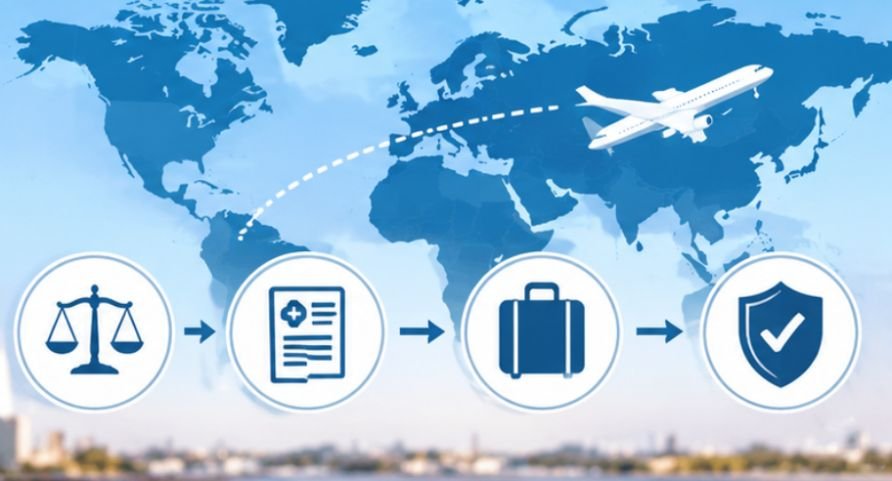
Original pharmacy containers make identification easier and help establish that medications were legally obtained.
Whenever possible, labels should display:
- Your full name matching your travel documents
- Medication name, including its generic name
- Prescribed strength and dosage instructions
- Prescribing healthcare professional’s information
- Pharmacy details
Although TSA does not universally require prescription bottles, foreign customs authorities may impose stricter documentation rules.
Avoid transferring your entire supply into unlabeled organizers before traveling.
Request a Doctor’s Letter
A signed medical letter offers additional support when carrying prescription drugs, injectable medications, or medical devices.
Ideally, it should identify your condition, prescribed treatments, dosages, and the medical necessity of each medication.
Bring printed prescriptions and digital backups. For countries requiring translated or officially certified documents, arrange those before departure.
Pack Medication Where You Can Reach It
Essential medications belong in your carry-on bag rather than checked luggage.
Checked baggage can be delayed, misplaced, or exposed to unfavorable temperatures.
Checked baggage can be delayed, misplaced, or exposed to unfavorable temperatures, and knowing what to do if your flight is canceled at the last minute can also help you prepare for unexpected travel disruptions that affect access to essential medication.
Keeping medications nearby also prevents problems when unexpected flight delays interrupt your usual schedule.
Understand TSA Liquid Medication Rules
Standard carry-on liquids generally must fit within containers holding no more than 3.4 ounces (100 milliliters).
However, medically necessary liquids, gels, and aerosols are permitted in larger reasonable quantities at TSA checkpoints.
Under TSA’s medical screening procedures, travelers should inform security officers about medically necessary liquids before screening begins.
These products do not need to fit inside the standard quart-sized toiletries bag, although additional inspection may be necessary.
Foreign airport security authorities may apply different screening procedures.
Protect Temperature-Sensitive Prescriptions
Some medications, including certain insulin formulations and biological treatments, require controlled storage temperatures.
Use an insulated medical travel case with appropriate cooling accessories.
TSA permits medically necessary cooling packs in reasonable quantities, including when partially melted, subject to screening.
Ask your pharmacist about the medication’s exact temperature range and safe storage duration. Do not assume airline staff can refrigerate medications during the flight.
Calculate How Much Medication to Bring

Packing only the exact number of doses needed creates unnecessary risks if your return flight is delayed.
For example, a traveler taking two tablets daily during a 14-day vacation needs:
14 days × 2 tablets = 28 tablets.
Adding five days of emergency coverage increases the total to 38 tablets.
This calculation provides a useful planning estimate, but additional quantities must remain within destination-country limits.
Some countries permit only a limited personal supply of certain medicines, sometimes 30 days or less.
Contact your pharmacy or insurance provider early if you need a vacation refill. Insurance plans may impose limits on how soon prescriptions can be renewed.
Manage Prescriptions Across Time Zones
Long-distance international flights can disrupt established medication routines.
The important consideration is often the interval between doses rather than the destination’s local clock.
For example, medication prescribed every 12 hours may require a different adjustment strategy from a medicine taken once daily with breakfast.
Consult your healthcare provider before changing the timing of insulin, seizure medications, anticoagulants, or other time-sensitive treatments.
Set phone reminders using a schedule approved by your healthcare professional rather than independently skipping or doubling doses.
Special Precautions for Injectable Medication and Medical Devices
Travelers carrying insulin pens, epinephrine auto-injectors, syringes, or medical pumps should organize their supplies separately for inspection.
Keep necessary needles alongside their associated medication and carry relevant documentation.
Inform security personnel about medical devices before screening, particularly if your equipment has manufacturer-specific restrictions.
Also check airline policies concerning batteries, medical cooling devices, and equipment requiring power during the flight.
For travelers with multiple medications, a dedicated medical pouch can simplify screening and reduce the chance of losing essential supplies.
What Happens If Medication Is Lost Abroad?
Losing prescription medication overseas can become a medical emergency, especially when replacement drugs are unavailable.
Start by contacting your prescribing clinician and travel insurer. A local physician may need to evaluate you before issuing a replacement prescription.
Avoid buying medication from unverified vendors. Counterfeit drugs can contain incorrect ingredients, dangerous substances, or ineffective doses.
The CDC warns that counterfeit medicines may closely resemble genuine pharmaceutical products.
Travelers should also understand that mailing replacement prescriptions internationally can trigger additional customs restrictions.
A Practical Medication Checklist Before Departure
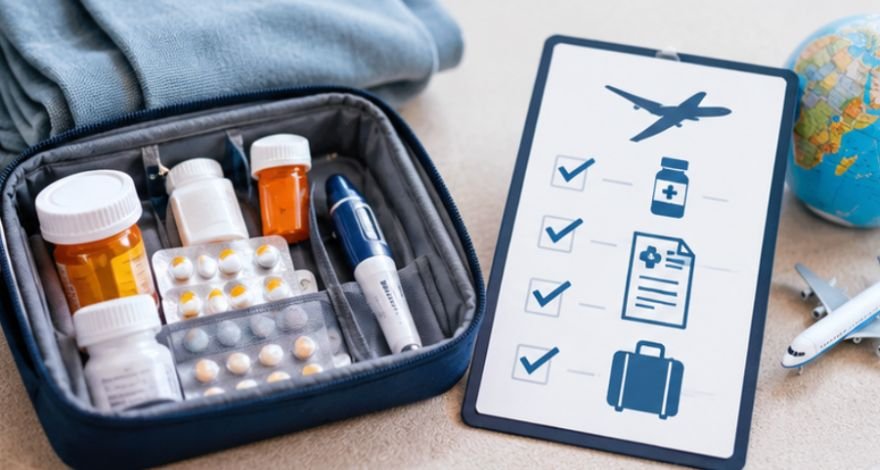
Use this preparation schedule to reduce last-minute problems, and consider how to use travel reward points effectively to make your overall international travel expenses more manageable.
Four to Six Weeks Before Travel
- Review every prescription and over-the-counter product you intend to carry.
- Verify medication restrictions for destinations and transit countries.
- Arrange necessary permits, doctor appointments, and prescription refills.
- Discuss alternatives if a particular medication is prohibited.
One Week Before Travel
- Prepare original medication containers and supporting documents.
- Confirm permitted quantities and calculate an appropriate emergency supply.
- Test insulated storage equipment if refrigeration is necessary.
- Save digital prescription copies somewhere accessible offline.
On Departure Day
- Place essential medications in your personal carry-on.
- Keep medical liquids accessible for separate security screening.
- Pack documents alongside prescriptions.
- Confirm that medication alarms reflect your approved dosing schedule.
Personal care products should remain separate from medical supplies. For everyday beauty essentials, these fragrance habits that improve scent longevity can help maintain a simple travel routine without unnecessarily overpacking toiletries.
Returning to the United States With Medication
Medication requirements do not end when your vacation finishes. U.S. Customs and Border Protection (CBP) requires travelers to comply with FDA rules when bringing medications into the country.
According to CBP’s medication guidance, travelers should carry appropriate prescriptions, retain original packaging, and declare medications as required.
A 90-day supply is sometimes referenced as a general personal-use guideline, not an automatic allowance for every drug or traveler.
Controlled substances and medications purchased overseas may face additional restrictions.
Frequently Asked Questions
1. Can I take prescription medication on an international flight?
Yes, generally. Keep medication in your carry-on, retain original packaging, and verify destination restrictions. Some prescriptions require advance permits or supporting medical documentation.
2. Do I need a doctor’s letter for international travel?
Not universally. However, certain countries require medical certificates, particularly for controlled substances. A doctor’s letter is also useful when traveling with injectable medications.
3. Can I bring liquid medication over 100 mL?
Yes. TSA allows medically necessary liquids above 100 mL in reasonable quantities, subject to security screening. Check foreign airport requirements separately.
4. How early should I prepare my medications?
Begin four to six weeks before departure. This provides time to confirm foreign regulations, obtain medical certificates, arrange refills, and resolve potential restrictions.
Make Medication Planning Part of Your Itinerary
Knowing how to travel with medication international flight rules can make the difference between a smooth arrival and an unexpected customs problem.
The most important preparation happens before reaching the airport. Confirm medication legality, secure supporting documents, pack essential treatments in your carry-on, and prepare for possible travel delays.
Remember that airport security approval and foreign customs permission are separate matters. Neither replaces the other.
A few careful preparations can protect your health, preserve your treatment schedule, and let you focus on the experience ahead rather than worrying about whether your medication will make it through the journey.