
That sharp “pool smell” many swimmers associate with chlorine is not simply a sign that the water contains plenty of disinfectant. The CDC explains that chlorine can react with sweat, dirt, urine, skin cells, and other substances introduced by swimmers to form chloramines—irritants that can affect the eyes, respiratory system, and skin.
That is why a body care routine after swimming in a pool should start before the chlorine residue has had time to dry on your skin. The goal is not aggressive “detoxing.” It is much simpler: rinse promptly, cleanse gently, limit additional irritation, and restore moisture while the skin is still damp. Here is how to do it properly.
Why Pool Water Can Leave Skin Dry, Tight, and Itchy
Chlorine plays an essential public-health role. It helps control microorganisms that could otherwise make swimming pools unsafe. The problem is that repeated exposure to treated water, combined with long periods spent wet, can be irritating for some skin types.
The outermost layer of skin—the stratum corneum—helps slow water loss while keeping environmental irritants out. Frequent swimming followed by hot showers, harsh soap, towel scrubbing, and skipped moisturizer can leave this protective layer feeling increasingly dry.
Research indexed by the National Library of Medicine has found that residual chlorine in water can reduce the water-holding capacity of the stratum corneum in people with atopic skin.
This does not mean everyone should avoid chlorinated pools. It means swimmers who regularly experience tightness, itching, scaling, or eczema flares need a better recovery routine.
The 15-Minute Post-Pool Reset
You do not need seven products after every swim. A good routine can be reduced to four actions.
| After swimming | What to do | What to avoid |
| Immediately | Rinse with fresh water | Sitting in a wet swimsuit |
| In the shower | Use lukewarm water and mild cleanser | Very hot water |
| While drying | Pat rather than rub | Rough towels and scrubbing |
| Within minutes | Apply moisturizer to damp skin | Waiting until skin feels tight |

1. Rinse Before Pool Water Dries
Head to the shower shortly after leaving the pool.
A fresh-water rinse removes residual pool water, sweat, sunscreen, and other material sitting on your skin. Pay particular attention to folds, underarms, the swimsuit line, neck, and areas where water may remain trapped.
Keep the water lukewarm rather than steaming hot.
The American Academy of Dermatology recommends warm rather than hot water for dry skin because long, hot showers can worsen moisture loss.
Changing out of your damp swimsuit also matters. Remaining in wet, tight fabric creates friction and prolonged moisture exposure, particularly around the groin, chest, waistband, and thighs.
2. Clean Your Skin Without Trying to “Scrub Off” Chlorine
One of the easiest mistakes after swimming is overcleansing.
A harsh soap, exfoliating glove, body scrub, and long shower may make skin feel extremely clean, but that aggressive combination can remove additional surface lipids when the skin already feels stressed.
Choose a mild, fragrance-free cleanser and use your hands rather than an abrasive loofah. Clean the areas that need it instead of repeatedly lathering the entire body.
People with reactive or eczema-prone skin should be particularly selective. Knowing which ingredients to avoid in body wash for eczema can make post-swim cleansing considerably more comfortable.
The distinction between “fragrance-free” and “unscented” also matters. The American Academy of Dermatology notes that unscented products may still contain chemicals used to disguise odors, while fragrance-free formulas are generally the better choice for sensitive dry skin.
Skip the Exfoliation Session
Flaking after swimming can create the temptation to immediately reach for glycolic acid, salicylic acid, exfoliating mitts, or body scrubs. Usually, that is the wrong moment.
Visible flakes may indicate dryness rather than excess dead skin that needs to be polished away. Aggressive exfoliation immediately after chlorine exposure can increase stinging and irritation.
Give irritated skin time to recover. If exfoliation is already part of your routine, move it to a non-swimming day and adjust the frequency according to how your skin responds.
Moisturizer Is the Step That Makes the Biggest Difference
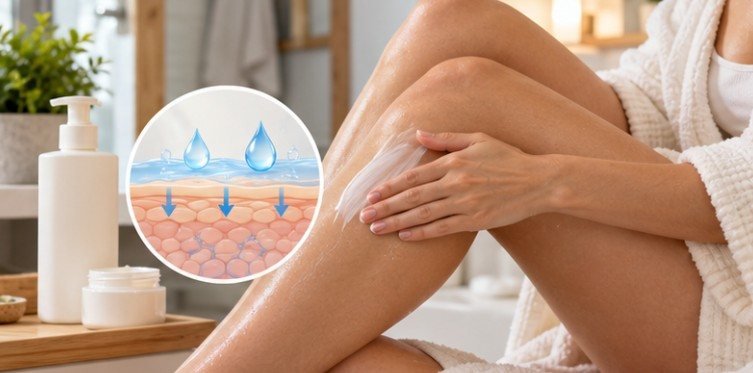
After showering, use a soft towel to gently pat yourself dry. Do not try to remove every trace of water. Then apply moisturizer while your skin remains slightly damp.
MedlinePlus recommends moisturizing damp skin after bathing because moisturizers help trap water in the skin. It also advises using gentle cleansers and avoiding excessive scrubbing for people dealing with dryness.
What Ingredients Should Swimmers Look For?
A useful post-swim moisturizer usually combines ingredients performing different jobs. Humectants such as glycerin and hyaluronic acid attract and hold water within the upper layers of the skin. You can read more about hyaluronic acid body lotion benefits for dry skin if persistent post-pool tightness is your main concern.
Ceramides help support the lipid structure of the skin barrier. Niacinamide can also be useful in barrier-supporting formulas, while petrolatum, dimethicone, and similar occlusive ingredients reduce water evaporation.
A lightweight lotion may be perfectly adequate for someone swimming occasionally in humid weather. Frequent swimmers, people living in dry climates, and those whose skin becomes visibly flaky may prefer a richer cream or ointment.
Preservatives should not automatically be treated as undesirable, either. Water-based lotions require systems that help prevent microbial contamination. Understanding the purpose of preservatives in body care products is more useful than choosing products simply because their labels promise to be “chemical-free.”
Adjust the Routine If You Have Eczema
Chlorinated water affects people differently. Some people with eczema tolerate swimming well, while others experience considerable dryness or irritant dermatitis. The National Eczema Society advises showering soon after swimming and reapplying an emollient. It also notes that people who consistently react to one swimming pool may tolerate another facility with a different water-treatment setup.
Avoid swimming during a severe or infected eczema flare unless your clinician advises otherwise. If your skin burns badly whenever you swim, changing moisturizer may not solve the underlying issue. Pool chemistry, exposure time, an existing dermatitis condition, or another irritant may be contributing.
Do You Need a Special Chlorine-Removing Body Wash?

For most recreational swimmers, probably not. Fresh water, a gentle cleanser, and prompt moisturizing are usually the priorities. Specialized swimmer cleansers may help people who dislike lingering pool odor or swim frequently, but stronger cleansing does not automatically mean healthier skin.
Products marketed with vitamin C, charcoal, or “chlorine neutralizing” claims should still be judged by the complete formula and how your skin responds. Your skin should feel comfortable after washing—not squeaky, stretched, or itchy.
A Better Routine Starts Before You Get in the Water
Post-swim care works better when you reduce irritation beforehand. The CDC recommends showering before entering a pool because rinsing removes much of the dirt and material on the body that can react with chlorine and contribute to chloramine formation.
Outdoor swimmers should also remember sun protection. Use broad-spectrum, water-resistant SPF 30 or higher and reapply according to label directions after swimming and toweling off.
For regular swimmers, keep a simple locker-room kit containing a gentle cleanser, fragrance-free moisturizer, clean towel, dry clothing, and sunscreen if you will be outdoors afterward. Consistency matters far more than owning a complicated collection of products.
When Pool Irritation Deserves Medical Attention
Occasional dryness after swimming is common. Persistent inflammation is different. Consider seeing a dermatologist if you repeatedly develop painful cracks, bleeding, significant swelling, intense itching, worsening eczema, widespread rash, or irritation that continues despite changing your routine.
Redness, warmth, drainage, open sores, or other signs of infection also deserve medical attention. Do not assume every rash following a swim is a “chlorine allergy.” Contact dermatitis, eczema, fungal infections, friction, swimsuit materials, sunscreens, and other exposures can produce similar symptoms.
Frequently Asked Questions
1. Should I shower immediately after swimming in a chlorinated pool?
Yes. Rinsing promptly with fresh, lukewarm water helps remove pool-water residue before it dries on your skin. Follow with gentle cleansing when needed and moisturizer.
2. Should I moisturize before or after swimming?
Moisturizing after swimming is particularly important. People with very dry or eczema-prone skin may also benefit from an appropriate emollient before swimming if their dermatologist recommends it.
3. Is body oil enough after swimming?
Body oil can reduce water loss but may not provide enough hydration alone. Applying a cream or lotion to damp skin first is often more effective for noticeably dry skin.
4. Why does my skin itch hours after swimming?
Dryness, chloramine irritation, eczema, friction, or sensitivity to pool chemicals may contribute. Persistent or severe itching should be evaluated rather than repeatedly treated with stronger cleansers.
The Takeaway
The best body care routine after swimming in a pool is surprisingly uneventful. Your skin does not need to be aggressively scrubbed, exfoliated, or “detoxed” after every swim. It needs the irritants removed without stripping away more of its protective oils.
Rinse promptly, use lukewarm water, cleanse gently, pat rather than rub, and moisturize while your skin is still slightly damp. For frequent swimmers, those few minutes after leaving the water can determine whether swimming remains an enjoyable form of exercise or becomes an endless cycle of tightness, itching, and irritation. Treat recovery as part of the swim itself.