

A road trip can look surprisingly affordable until you add up hotel taxes, restaurant stops, parking fees, and the extra gas needed for scenic detours. The difference between a $700 getaway and a $1,200 adventure often comes down to expenses travelers overlook before leaving home.
Learning how to plan a road trip budget means estimating more than fuel and accommodations. A realistic spending plan accounts for your vehicle, travel style, daily expenses, and unexpected situations. With a few calculations and smart choices, you can explore more destinations without worrying about money halfway through your journey.
Start With Your Total Road Trip Spending Limit
Before choosing hotels or mapping attractions, decide how much you can comfortably spend.
Your budget should reflect available savings rather than the maximum amount your credit card allows. Consider upcoming bills, existing financial commitments, and the money you want available after returning home.
Divide your estimated expenses into six categories:
- Transportation, including gasoline and vehicle-related costs
- Overnight accommodations
- Meals, drinks, and snacks
- Attractions and recreational activities
- Tolls, parking, and miscellaneous purchases
- Emergency funds for unexpected expenses
The Consumer Financial Protection Bureau recommends evaluating actual spending patterns and including irregular expenses in financial plans. This approach is especially useful for travel, where small purchases can accumulate quickly.
Once you establish your maximum spending limit, work backward to determine which destinations and travel dates fit your finances.
Calculate Fuel Expenses Before Choosing Your Route
Gasoline is one of the easiest road trip expenses to estimate, provided you know your vehicle’s fuel efficiency.
Use a Simple Gas Budget Formula
Calculate estimated fuel spending using this equation:
Fuel cost = (Total driving miles ÷ Vehicle MPG) × Gas price per gallon
Consider a 1,200-mile journey in a vehicle averaging 28 miles per gallon, with gasoline estimated at $3.60 per gallon.
The calculation becomes:
1,200 ÷ 28 × $3.60 = approximately $154.
Adding a 10% mileage cushion brings the estimated fuel budget to roughly $170.
For greater accuracy, use the government’s Fuel Economy Trip Calculator, which allows travelers to enter destinations, vehicle specifications, and fuel prices.
Remember to include local driving, sightseeing detours, and the return journey.
Reduce Fuel Consumption Without Sacrificing Comfort
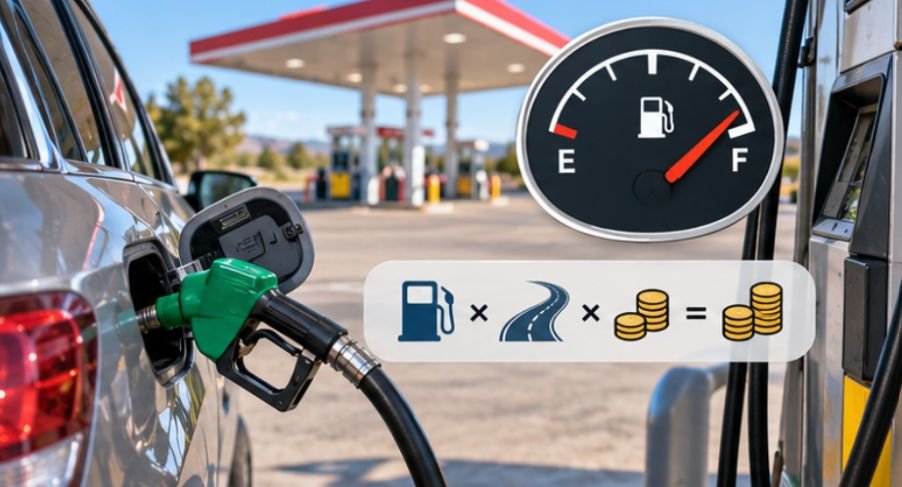
Driving habits can significantly affect gasoline expenses.
According to the U.S. Department of Energy, aggressive acceleration, speeding, and braking can reduce fuel economy by approximately 15%–30% at highway speeds.
Driving More Efficiently
Maintain recommended tire pressure, remove unnecessary cargo, and avoid carrying bulky rooftop storage when possible.
GasBuddy can help compare fuel prices, although the cheapest station may not justify a lengthy detour.
Choose Accommodations Based on Total Value
Hotel expenses can become the largest part of a multiday road trip, particularly around major tourist destinations.
Budget motels might cost 60–100 or more per night in some locations, while popular coastal destinations and national park gateway towns can cost considerably more.
Compare the final booking price rather than the advertised nightly rate, and consider how to use travel reward points effectively to reduce accommodation expenses and get more value from eligible hotel bookings.
Taxes, parking charges, pet fees, and resort fees can change which accommodation offers better value.
Consider Alternatives to Traditional Hotels
Camping, cabins, vacation rentals, and accommodations with shared kitchens may reduce overall spending.
Campgrounds can sometimes cost less than hotels, although rates vary considerably. Free dispersed camping may be permitted on certain public lands, subject to local rules and restrictions.
Review Recreation.gov reservation policies before booking federal recreation facilities. Some reservations involve additional service fees and cancellation restrictions.
Recreation.gov
Midweek stays can also be cheaper in certain markets. However, business-oriented hotels sometimes charge less on weekends, so compare several dates.
Build a Daily Food Budget That Matches Your Habits
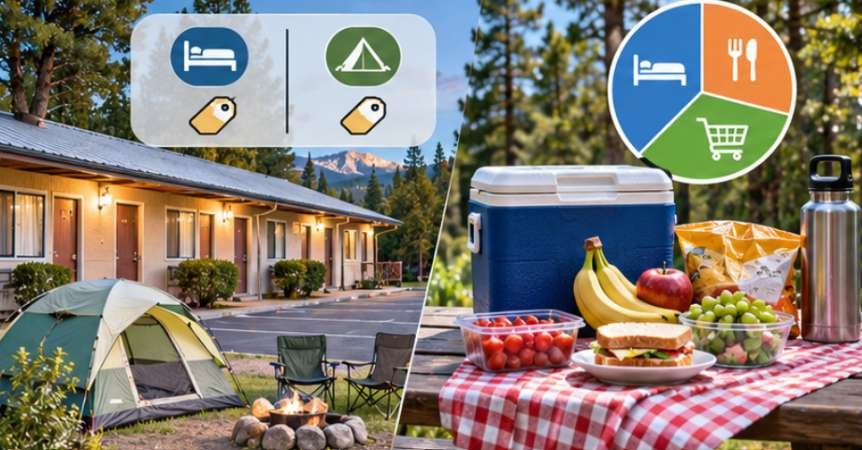
Restaurant spending often increases because travelers purchase meals whenever hunger strikes rather than following a plan.
For a basic starting estimate, allow 15–25 per person daily for primarily grocery-based meals, or 30–50 or more when combining inexpensive restaurants with packed food.
These are planning allowances, not guaranteed prices. Actual costs depend on location, dietary needs, and restaurant choices.
Use a Flexible Meal Strategy
Pack a cooler with sandwiches, fruit, yogurt, and drinks. Purchase groceries at supermarkets instead of relying exclusively on highway convenience stores.
Choose lodging with complimentary breakfast when the total room price makes sense.
For a five-day trip, reducing food spending by $15 per person daily saves $75 per traveler.
Rather than eliminating restaurant visits, reserve money for memorable local dining experiences and simplify routine meals.
Account for Attractions, Parking, and Toll Roads
A carefully calculated travel budget can still fail when admission tickets, toll roads, and parking are ignored.
Research activity prices before departure. Museums, amusement parks, guided excursions, and national park visits can affect daily spending considerably.
For travelers visiting several federal recreation sites, consider the America the Beautiful Pass.
In 2026, the annual pass costs $80 for eligible U.S. citizens and residents, while the nonresident annual pass costs $250. Passes cover qualifying entrance and standard day-use fees but generally do not cover camping or special activities.
National Park Service
Compare individual entrance charges before purchasing a pass.
Also check toll roads and urban parking costs. An inexpensive hotel outside a major city may become less economical after accounting for daily transportation and parking.
See What a Realistic Five-Day Road Trip Costs
Consider two people taking a five-day, four-night road trip covering approximately 1,200 miles.
The following example uses hypothetical prices rather than national averages.
| Expense category | Estimated cost |
| Fuel, including mileage cushion | $170 |
| Lodging: 4 nights at $110 | $440 |
| Food: $35 per person daily | $350 |
| Attractions and activities | $100 |
| Tolls and parking | $60 |
| Subtotal | $1,120 |
| Emergency buffer: 15% | $168 |
| Total budget | $1,288 |
The estimated cost is $644 per person.
This example assumes travelers use their own vehicle and does not include major repairs, vehicle rental, or pre-trip maintenance.
It illustrates why estimating each expense individually produces a more useful budget than simply choosing an arbitrary daily spending limit.
Prepare for Costs That Do Not Appear on Your Itinerary
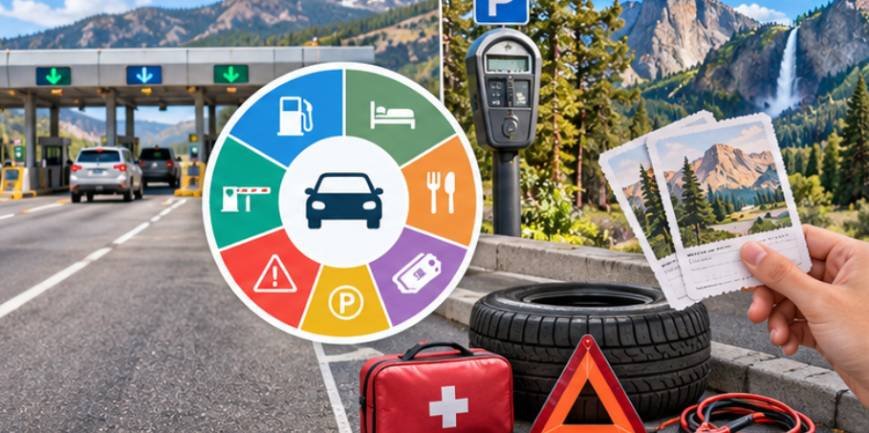
Unexpected expenses are a normal possibility during long-distance travel, so preparing your travel essentials in advance, including learning how to pack fragrance without leaking in luggage, can help prevent avoidable messes and damage to your belongings.
Set aside approximately 10%–15% of your planned spending for minor disruptions, additional accommodation, and changes in fuel prices.
Travelers with older vehicles, remote destinations, or limited roadside assistance may need a larger reserve.
Before departure, inspect your tires, brakes, fluids, lights, and battery.
The U.S. Department of Transportation advises checking tire pressure and scheduling preventive maintenance when vehicle service history is uncertain.
US Department of Transportation
Keep emergency savings separate from money intended for sightseeing or shopping. Otherwise, a spontaneous purchase can consume funds needed for a genuine problem.
Track Spending and Adjust During Your Journey
Understanding how to plan a road trip budget also means knowing when your original estimates need adjustment.
Use a spreadsheet, budgeting application, or phone notes to record purchases by category.
At the end of each day, compare actual expenses with your available balance.
If you exceed your restaurant allowance, consider reducing discretionary shopping or choosing free activities the following day.
Avoid treating every budget category as equally flexible. Accommodations and fuel may be unavoidable, while souvenir purchases and optional attractions are easier to reduce.
For longer journeys, divide your remaining money by the number of travel days left. This gives you a practical daily spending target without requiring complicated calculations.
Frequently Asked Questions
1. How much money should I budget for a road trip?
It depends on your mileage, travel duration, accommodation preferences, and group size. Estimate transportation, lodging, food, and activities separately, then add an emergency reserve.
2. What is the cheapest way to travel by car?
Share transportation and lodging costs, prepare meals, choose affordable accommodations, and avoid unnecessary detours. Regular vehicle maintenance can also help prevent costly disruptions.
3. How can I estimate road trip costs accurately?
Calculate fuel using expected mileage and MPG. Add actual accommodation quotes, daily meal allowances, admission fees, parking, tolls, and emergency savings.
4. Is driving always cheaper than flying?
No. Longer journeys can involve significant fuel, lodging, parking, and vehicle expenses. Compare total door-to-door costs, particularly when traveling alone.
Make Your Road Trip Memorable, Not Financially Stressful
The most enjoyable road trips are not necessarily the most expensive. They are the ones where travelers can explore freely without constantly worrying about what everything costs.
Once you understand how to plan a road trip budget, the decisions become easier. You can identify where spending adds value, recognize unnecessary expenses, and leave room for unexpected discoveries.
Start by calculating fuel costs, comparing realistic accommodation prices, and setting daily spending limits. Then protect your plans with a separate emergency reserve.
A thoughtful budget does not restrict the adventure. It gives you the confidence to enjoy every mile.