
A cooler packed with ice can still leave your lunch unsafe to eat if temperatures rise during a long drive. The problem isn’t always melted ice. It’s how quickly bacteria can multiply when perishable food gets too warm.
Learning how to keep food fresh on long road trips means understanding temperature control, smart packing, and choosing foods that can survive hours between stops. Whether you’re driving through Arizona’s summer heat or exploring the Pacific Northwest, a few practical habits can protect your meals, reduce food waste, and save money.
Why Food Spoils Faster During Road Trips
Unlike a home refrigerator, your car experiences constant temperature changes. Direct sunlight, frequent stops, and opening the cooler repeatedly can make keeping food cold difficult.
According to the USDA Food Safety and Inspection Service, bacteria can multiply rapidly between 40°F and 140°F, commonly called the temperature danger zone.
Perishable foods should remain at 40°F or below. If they stay above that temperature for more than two hours, they generally need to be discarded. When temperatures exceed 90°F, that limit drops to one hour.
This matters particularly for sandwiches containing meat, dairy products, cooked meals, and refrigerated produce.
Prepare Your Cooler Before Leaving Home
Start With a Cold Cooler, Not Just Cold Food
One of the most overlooked road-trip preparations is cooling the cooler itself.
An insulated container stored in a hot garage can absorb heat before your journey even begins. Adding chilled groceries forces your ice packs to cool both the food and the container.
Bring your cooler into an air-conditioned room the day before departure. For better results, place temporary ice packs inside several hours before loading it.
Remove the temporary ice, dry excess moisture, and transfer refrigerated food directly into the cooler immediately before departure.
Choose Ice That Lasts Longer
Large frozen blocks generally melt more slowly than small ice cubes because they expose less surface area relative to their volume.
Freeze water in sturdy, freezer-safe containers, leaving room for expansion. Frozen water bottles are another practical option because they provide drinking water after thawing.
Combine large frozen blocks with smaller gel packs to fill gaps around food containers.
However, ice quantity alone doesn’t guarantee safety. A cooler thermometer remains essential for confirming the temperature.
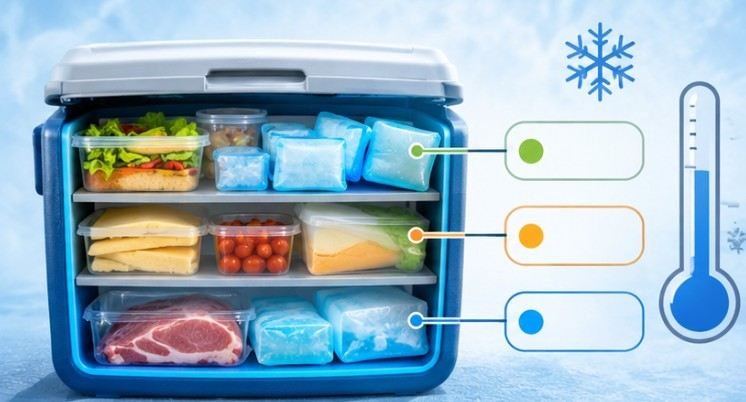
Pack Your Cooler in a Way That Protects Every Meal
The arrangement of food inside your cooler influences both convenience and temperature stability. A useful approach is organizing meals according to when you’ll need them.
Bottom: Frozen Foods and Long-Term Storage
Place large ice blocks and securely packaged frozen meals at the bottom. If you’re bringing raw meat for camping, use a separate cooler whenever possible. Otherwise, seal it inside leakproof containers positioned where juices cannot reach ready-to-eat food.
Middle: Foods That Need Consistent Refrigeration
Store yogurt, cheese, cooked chicken, eggs, and prepared salads in watertight containers surrounded by cold packs. Avoid placing delicate produce directly against extremely cold surfaces, which can damage its texture.
Top: Your Next Meal
Keep frequently needed sandwiches and snacks accessible near the top. Add frozen gel packs above these containers to maintain cooling throughout the load.
The University of Minnesota Extension recommends filling coolers with cold food and sufficient ice while minimizing unnecessary opening.
For longer journeys, a separate beverage cooler is especially useful. Passengers can retrieve drinks without repeatedly exposing the main food supply to warmer air.
Where You Store the Cooler Inside Your Car Matters
A cooler’s insulation slows heat transfer, but it cannot prevent warming indefinitely.
The trunk may become considerably warmer than the air-conditioned passenger compartment, especially during summer travel.
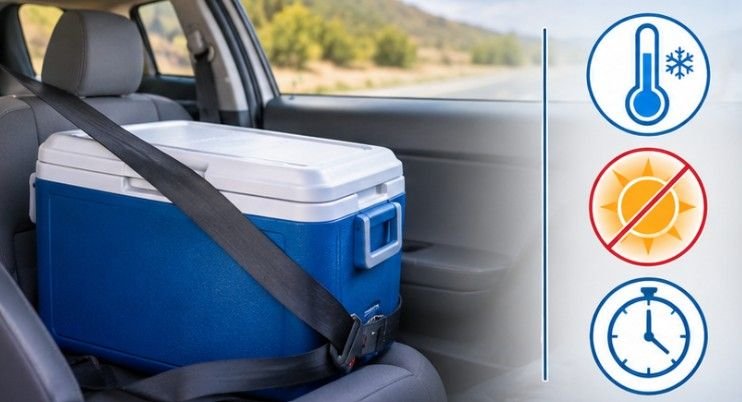
Keep your cooler in a shaded, accessible area inside the vehicle when possible. Secure it so it cannot slide during sudden braking.
Avoid leaving it beside windows exposed to direct sunlight.
During sightseeing stops, move the cooler into a shaded area if practical. Never assume a parked vehicle will remain cool simply because its air conditioner was running earlier.
For overnight travel, transfer refrigerated items into a functioning refrigerator whenever possible.
Choose Foods That Stay Fresh Longer
The easiest way to avoid spoiled food is to reduce the number of highly perishable items you’re transporting.
Fresh Foods for the Beginning of Your Journey
Refrigerated wraps, yogurt, hard-boiled eggs, hummus, and cut vegetables make convenient travel meals when properly chilled.
Eat delicate foods earlier if refrigeration conditions are uncertain, but don’t treat the first 24–48 hours as a guaranteed safe window.
Their safety depends on continuous temperature control.
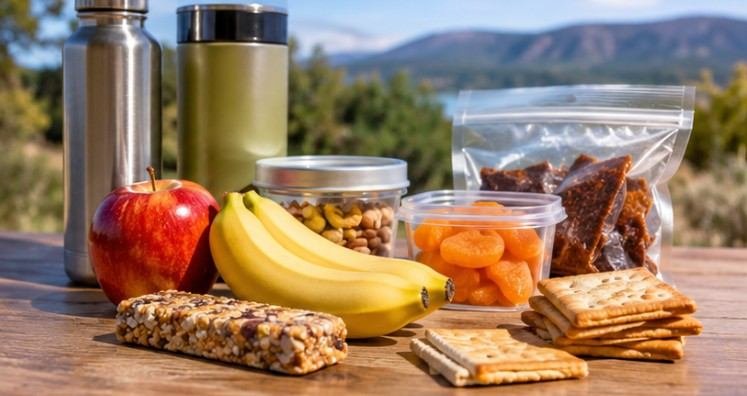
Whole apples, oranges, and bananas are generally easier to transport than sliced fruit.
According to the FDA’s produce safety guidance, pre-cut produce needs refrigeration, while fresh produce should be protected from contamination.
Shelf-Stable Foods for Later Stops
For the second or third travel day, consider unopened peanut butter, nuts, seeds, dried fruit, whole-grain crackers, commercially packaged shelf-stable jerky, and individual oatmeal packets.
These foods reduce your dependence on refrigeration.
Remember that shelf-stable packaging only applies before opening when the label specifies refrigeration afterward.
Consider an Electric Cooler for Multi-Day Adventures
An ordinary insulated cooler works well when ice is replenished regularly.
However, a compressor-powered portable refrigerator may be more convenient for extended camping trips or cross-country drives.
Unlike many thermoelectric coolers, compressor refrigerators can maintain selected temperatures under a wider range of conditions.
Before purchasing, check its temperature range, electrical consumption, interior capacity, and compatibility with your vehicle’s power supply.
A thermoelectric cooler may only cool a certain number of degrees below ambient temperature, making it less reliable during extreme heat.
Use a thermometer to confirm actual food temperatures regardless of the equipment.
For hot meals, an insulated container or electric food warmer must maintain food at 140°F or above. Keeping food merely lukewarm isn’t sufficient.
A Simple Food Safety Routine for Every Rest Stop
One of the most practical ways to master how to keep food fresh on long road trips is to establish a routine instead of guessing whether everything remains safe.
Before departure, check that your cooler reads 40°F or lower.
At meal stops, remove only the food needed immediately and close the lid promptly.
Inspect containers for leaks and replace ice when necessary.
Wash or sanitize hands before eating, particularly after pumping gas or using public facilities.
The FoodSafety.gov road-trip guidance recommends keeping raw meat separate from ready-to-eat foods and using different coolers for immediate meals and later supplies.
For longer journeys, schedule a grocery-store stop to replenish perishables instead of relying on one cooler load throughout the trip.
What to Do When Your Cooler Gets Too Warm
Suppose you’re driving through Nevada and discover that your cooler thermometer reads 48°F.
Don’t assume the food is safe because some ice remains.
Determine how long the temperature has exceeded 40°F. If refrigerated perishables have been above that threshold for more than two hours, discard them. Use the one-hour limit when temperatures are above 90°F.
If you cannot establish how long sensitive foods were improperly chilled, the safest choice is to throw them away.
Food that smells normal can still contain harmful bacteria.
The Utah State University Extension emphasizes using frozen cold sources, limiting cooler openings, and separating raw foods from ready-to-eat meals.
Frequently Asked Questions
1. How long can food stay fresh in a cooler during a road trip?
Perishable food can remain safe while the cooler consistently maintains 40°F or below. Ice longevity varies with insulation, outside temperature, packing methods, and how frequently the cooler opens.
2. Can I keep sandwiches fresh overnight in a car?
Yes, if they’re continuously refrigerated at 40°F or below. Sandwiches containing meat, eggs, cheese, or other perishable fillings shouldn’t remain overnight in an uncooled vehicle.
3. What is the best way to keep food cold without electricity?
Use a well-insulated cooler packed with pre-chilled food, large ice blocks, and frozen gel packs. Monitor the temperature and replenish ice before it becomes insufficient.
4. Are frozen water bottles better than regular ice?
Frozen bottles reduce melted-water mess and provide drinking water. Loose ice can surround irregularly shaped containers more effectively. Using both often offers a practical balance.
Final Thoughts
Successful road-trip meal planning isn’t about buying the most expensive cooler or packing enough ice to fill your trunk.
It’s about controlling temperature, choosing practical foods, and knowing when to replenish supplies.
Before your next adventure, test your cooler at home, freeze your cold packs, and organize meals according to when you’ll eat them. Keep a thermometer nearby and make quick temperature checks part of your travel routine.
Once you understand how to keep food fresh on long road trips, food preparation becomes less stressful. You’ll spend less time worrying about spoiled groceries and more time enjoying the journey.