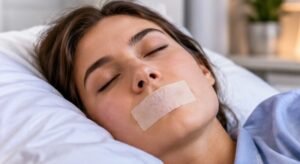
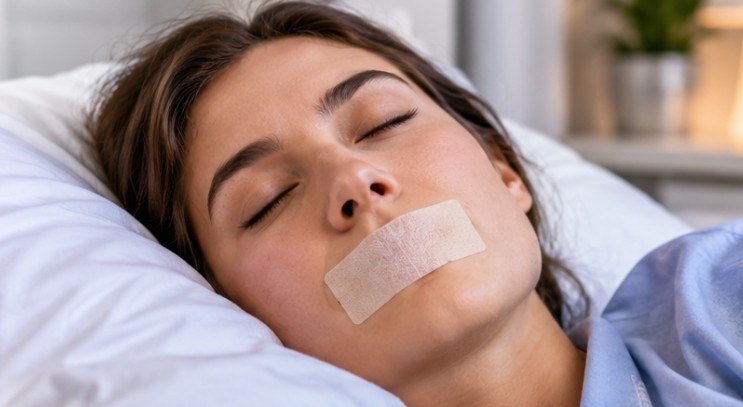
A small strip of tape across your lips might seem like an unusual sleep aid, but it has become a popular wellness trend among people hoping to stop snoring, prevent dry mouth, and wake up feeling refreshed.
However, the science tells a more complicated story.
Understanding mouth taping for sleep benefits and risks is essential before experimenting with something that changes how you breathe overnight. While preliminary studies suggest improvements in certain sleep-related symptoms, researchers have also identified potentially serious safety concerns.
The most important question isn’t whether mouth taping encourages nasal breathing. It’s whether restricting mouth breathing is necessary, effective, or safe for your particular situation.
What Does Research Actually Say About Mouth Taping?
Scientific interest in mouth taping has increased, but the available evidence remains limited. A 2025 systematic review published in PLOS ONE examined 10 studies involving mouth taping or other methods of restricting oral airflow.
Researchers found insufficient evidence to support routine mouth taping for sleep-disordered breathing. Although certain patients with mild obstructive sleep apnea experienced improvements, the studies generally had methodological weaknesses.
A separate 2026 systematic review and meta-analysis examined nasal obstruction and sleep apnea indicators.
Its mouth-taping analysis included only two small studies involving 50 participants with mild sleep apnea. Both reported fewer breathing interruptions, but the researchers emphasized that larger, higher-quality investigations are necessary.
These findings suggest a possible benefit for carefully selected individuals, not proof that mouth taping is a universally effective sleep treatment.
Potential Benefits That Have Some Scientific Basis
Less Snoring in Certain Individuals
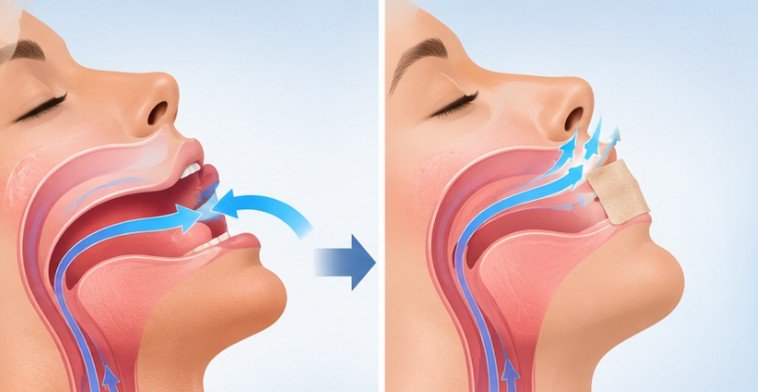
Snoring occurs when airflow causes tissues in the upper airway to vibrate.
For some people who breathe through their mouths despite having clear nasal passages, encouraging nasal breathing might reduce nighttime noise.
One preliminary study involving 20 adults with mild obstructive sleep apnea reported approximately a 47% reduction in its measured snoring index.
However, this improvement cannot be assumed for people with severe snoring, significant nasal obstruction, or more advanced sleep apnea.
Reduced Morning Dry Mouth
Sleeping with an open mouth can increase moisture evaporation, leaving your tongue, gums, and throat feeling uncomfortable.
Saliva plays an important protective role by washing away food particles and helping neutralize acids.
According to the American Dental Association, persistent dry mouth can increase the risk of cavities, oral infections, and other dental complications.
Keeping the lips closed might reduce evaporation in certain circumstances, but direct evidence that mouth taping prevents dental disease is lacking.
Possible Improvements in Mild Sleep Apnea
Researchers sometimes measure sleep apnea using the apnea-hypopnea index (AHI), which counts breathing interruptions per hour of sleep.
In one small study, participants’ median AHI declined from 8.3 to 4.7 after mouth taping.
That result is encouraging, but it does not establish mouth taping as an alternative to prescribed sleep apnea treatment.
Fewer CPAP Mouth Leaks
People using nasal continuous positive airway pressure (CPAP) therapy sometimes experience air escaping through their mouths.
Reducing mouth leaks may improve comfort in selected patients. Nevertheless, taping should never be added to CPAP treatment without consulting the prescribing sleep specialist.
Mask adjustments, humidification, and alternative mask designs are generally more appropriate starting points.
The Risks That Deserve More Attention
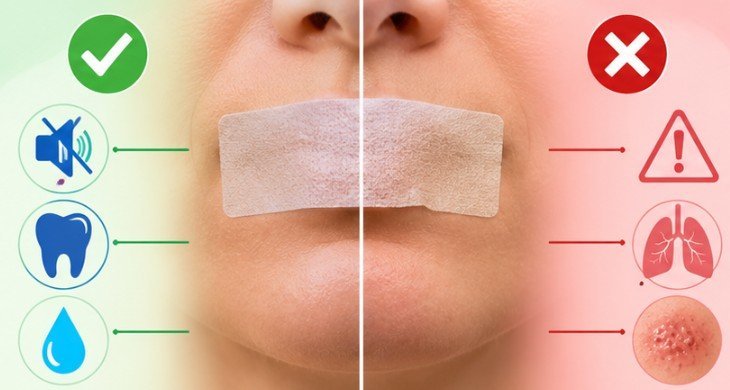
Breathing Difficulties During Nasal Congestion
The biggest concern is restricting an alternative breathing route when nasal airflow becomes inadequate.
Seasonal allergies, sinus infections, nasal polyps, and a deviated septum can interfere with breathing through the nose.
If congestion worsens overnight, taping the lips may increase breathing difficulty. The possibility of reduced airflow is particularly concerning for people with existing respiratory conditions.
Undiagnosed or Worsening Sleep Apnea
Obstructive sleep apnea causes repeated narrowing or closure of the upper airway during sleep.
The National Heart, Lung, and Blood Institute identifies loud snoring, nighttime gasping, breathing pauses, and excessive daytime sleepiness as important warning signs.
Mouth taping does not correct the underlying throat obstruction and could complicate breathing in some patients.
Skin Damage, Anxiety, and Choking Concerns
Adhesives can irritate sensitive skin, trigger contact allergies, or cause discomfort when removed.
Some individuals experience panic or claustrophobia when their lips are restricted.
People prone to nighttime vomiting, nausea, or significant reflux also face additional concerns because obstructing mouth opening may interfere with clearing vomit or other fluids.
Although severe complications have not been reliably quantified, the lack of safety data is itself a reason for caution.
Who Should Avoid Mouth Taping Completely?
Mouth taping is particularly inappropriate for people with untreated or suspected sleep apnea, persistent nasal blockage, or difficulty breathing comfortably through the nose.
People with asthma, COPD, significant heart or respiratory conditions, nighttime vomiting risks, or anxiety related to restricted breathing should avoid experimenting without medical guidance.
Children should not undergo unsupervised mouth taping. Pediatric snoring or mouth breathing deserves professional assessment.
Anyone using CPAP should seek individualized advice before adding adhesive products.
A Practical Way to Evaluate Your Nighttime Breathing
Rather than immediately purchasing mouth tape, investigate why you breathe through your mouth.
First, notice whether you can breathe comfortably through both nostrils while awake. Persistent difficulty suggests a reason to investigate nasal obstruction, not a reason to tape your lips.
Next, monitor symptoms for several mornings. Record dry mouth, headaches, tiredness, congestion, and reports of loud snoring or gasping.
Then consider whether medications, allergies, bedroom air quality, or sleep position might contribute.
Finally, arrange a medical evaluation if symptoms persist. A sleep study may be appropriate when obstructive sleep apnea is suspected.
This simple assessment helps distinguish manageable discomfort from potentially serious breathing disorders.
Safer Ways to Improve Breathing and Sleep Quality
Treating the underlying cause is more useful than forcing the mouth to remain closed.
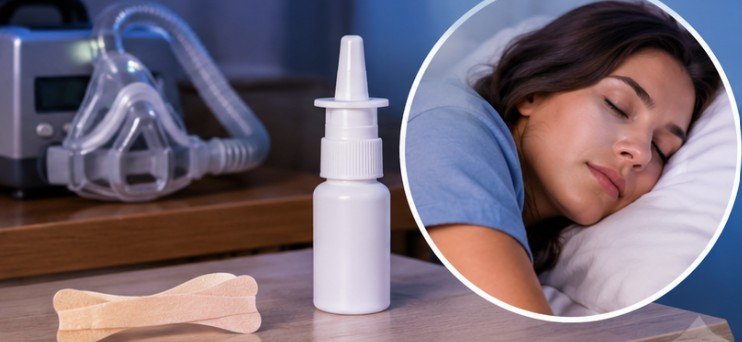
Saline nasal sprays, appropriate allergy treatment, and carefully selected nasal dilators may improve comfort when congestion is present.
Side sleeping can reduce positional snoring for some individuals, while a clean bedroom humidifier may ease dryness in suitable environments.
For persistent oral dryness, review medications with a healthcare professional and ask your dentist about saliva substitutes.
People diagnosed with sleep apnea should follow evidence-based treatment plans. The NIH’s sleep apnea treatment guidance describes positive airway pressure therapy, oral appliances, lifestyle changes, and other appropriate options.
Unlike mouth taping, these approaches can be selected according to the underlying medical diagnosis.
Frequently Asked Questions
1. Is mouth taping safe every night?
Not necessarily. Long-term safety has not been established, and regular use may be risky for people with nasal congestion, breathing disorders, or undiagnosed sleep apnea.
2. Can mouth taping improve oxygen levels?
There is insufficient evidence that mouth taping consistently improves blood oxygen levels in healthy sleepers. Results from small studies cannot establish benefits for the general population.
3. Does mouth taping stop snoring permanently?
No. Some individuals experience reduced snoring, but mouth taping does not eliminate anatomical obstructions or permanently treat conditions responsible for sleep-related breathing problems.
4. Is mouth taping better than nasal strips?
Nasal strips may improve airflow through the nostrils without sealing the mouth. Neither option reliably treats obstructive sleep apnea, and effectiveness depends on the cause of breathing difficulty.
The Healthier Path to Better Sleep
The growing interest in mouth taping for sleep benefits and risks highlights an important truth: people want simple solutions to persistent sleep problems. Yet convenience should never outweigh breathing safety.
Although preliminary research suggests potential benefits for certain individuals, the evidence remains too limited to recommend routine mouth taping. Improving nasal airflow, addressing allergies, maintaining oral health, and investigating persistent snoring offer more sensible starting points.
Before trying another viral nighttime remedy, consider what your symptoms might be telling you. Better sleep begins with understanding why breathing becomes difficult, not simply preventing your mouth from opening.