

Your body starts preparing for sleep long before your head touches the pillow. Bright lights, late dinners, and unpredictable bedtimes can interfere with that preparation, leaving you exhausted at night but strangely alert when you should be sleeping.
The best evening routine for circadian rhythm reset isn’t about forcing yourself to sleep earlier. It’s about creating consistent signals that tell your brain when nighttime begins.
A predictable wind-down schedule, controlled lighting, and a few carefully timed habits can help restore a healthier sleep-wake cycle. The key is understanding which changes actually influence your internal clock.
Why Your Circadian Rhythm Gets Out of Sync
Your circadian rhythm is an internal timing system that regulates sleep, alertness, body temperature, and hormone release throughout approximately 24 hours.
Light is one of its strongest environmental signals. Morning brightness encourages wakefulness, while evening darkness supports melatonin production, the hormone that helps prepare your body for sleep.
According to the National Heart, Lung, and Blood Institute, appropriately timed light exposure, consistent routines, and sometimes medically supervised treatments can help realign disrupted sleep-wake cycles.
Common reasons your biological clock becomes misaligned include:
- Staying awake under bright artificial lighting.
- Changing sleep schedules between weekdays and weekends.
- Working rotating or overnight shifts.
- Traveling across multiple time zones.
- Eating heavy meals close to bedtime.
- Spending late evenings on stimulating activities.
These habits don’t necessarily cause a clinical circadian rhythm disorder. However, they can make it harder to maintain consistent sleep timing.
Build a Better Evening With the 3-2-1 Sleep Routine
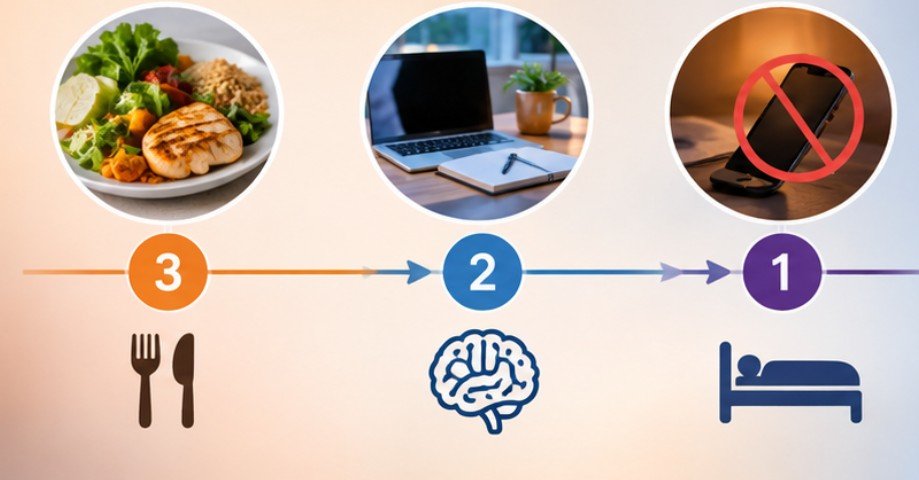
A practical starting point is the 3-2-1 method. It organizes the final three hours before bed into manageable stages rather than expecting an immediate transition from activity to sleep.
The timing is flexible, not a scientifically established treatment protocol.
Three Hours Before Bed: Finish Heavy Meals
Large meals shortly before bedtime can contribute to discomfort, indigestion, and nighttime awakenings.
Try finishing dinner approximately three hours before your intended bedtime. Choose balanced portions containing protein, vegetables, and fiber-rich carbohydrates.
You don’t need to avoid food entirely afterward. A light snack is reasonable if you’re hungry.
Reduce excessive fluid intake later in the evening if frequent bathroom visits interrupt your sleep. However, maintain adequate hydration, particularly during hot weather or after physical activity.
Two Hours Before Bed: Reduce Mental Stimulation
Your brain needs time to transition away from demanding activities. Close work applications, postpone unnecessary stressful conversations, and avoid beginning projects that require intense concentration.
Instead, spend ten minutes writing tomorrow’s priorities. This simple habit creates a stopping point for unfinished responsibilities without requiring you to solve every problem before bedtime.
Gentle movement can also help. Choose comfortable stretching or relaxed walking rather than a strenuous workout if late exercise makes you feel energized.
One Hour Before Bed: Create a Low-Light Environment
Lighting deserves special attention because it directly influences circadian timing.
Research summarized by the CDC’s National Institute for Occupational Safety and Health indicates that reducing bright light during the two hours before bedtime can make falling asleep easier.
Turn off unnecessary overhead lights and use dim lamps instead. Ideally, stop using phones and laptops during your final hour. If screens are unavoidable, reduce brightness and avoid emotionally stimulating content.
Warm-colored lighting can be comfortable, but brightness and timing matter more than simply changing the color of a bulb.
Add Relaxation Rituals That Support Natural Sleep
The best evening routine for circadian rhythm reset combines consistent timing with activities that lower mental and physical arousal.
Try a Warm Shower Before Bed
A warm shower may improve sleep for reasons that seem counterintuitive. Warm water increases skin blood flow, helping the body release heat afterward. This cooling process can support the natural temperature decline associated with sleep onset.
A 2019 systematic review and meta-analysis involving researchers from the University of Texas at Austin examined 17 studies. It found that warm bathing or showering approximately one to two hours before bedtime was associated with improved sleep outcomes.
A shower lasting around ten minutes may be sufficient, although individual responses vary.
Practice Quiet Activities Instead of Forcing Sleep

Reading, meditation, gentle stretching, and slow breathing can reduce bedtime stimulation.
Experiment with five minutes of relaxed breathing, allowing your exhalation to become slightly longer than your inhalation without straining.
Relaxation techniques such as controlled breathing may also be relevant when exploring ways to support vagus nerve function at home, although persistent symptoms should be discussed with a healthcare professional.
A physical book is another useful alternative to scrolling. The American Heart Association also recommends journaling, preparing for the following day, and creating a predictable bedtime ritual.
Personal care can fit naturally into this routine. Applying moisturizer or following a simple skincare ritual may provide a comfortable transition into bedtime. For additional skincare guidance, explore what niacinamide does for body skin.
These activities support relaxation, although they do not independently reset your biological clock.
Make Your Bedroom Work With Your Body Clock
Your bedroom environment can either reinforce your evening routine or undermine it. Focus on three conditions: darkness, temperature, and noise.
Keep the room comfortably cool. Around 65–68°F is a reasonable starting point for many adults, but there is no universally ideal temperature.
Consider blackout curtains if outdoor lighting enters your bedroom. A sleep mask may also help. Reduce disruptive noise with earplugs or consistent background sound when necessary.
Most importantly, reserve your bed primarily for sleep and intimacy rather than working, watching television, or scrolling.
If you’re exploring techniques intended to support nighttime breathing, read about the potential mouth taping for sleep benefits and risks and understand the safety concerns before considering this practice.
The CDC’s sleep recommendations also emphasize regular sleep schedules, comfortable bedrooms, and avoiding electronic devices shortly before bed.
A Realistic Evening Schedule You Can Follow Tonight
Suppose your target bedtime is 10:30 p.m. and you want to wake around 6:30 a.m.
Your evening could look like this:
- 7:30 p.m. — Finish dinner
Avoid another large meal and begin winding down physically. - 8:30 p.m. — Close work
Write a short to-do list and put away demanding tasks. - 9:00 p.m. — Lower the lights
Reduce screen brightness and switch to quieter activities. - 9:15 p.m. — Take a warm shower
Follow with comfortable clothing and simple personal care. - 9:45 p.m. — Relax without screens
Read, stretch gently, or practice relaxed breathing. - 10:30 p.m. — Bedtime target
Go to bed when sleepy and maintain a consistent morning wake-up time.
This example provides eight hours between bedtime and waking, though actual sleep time may be shorter.
Your schedule should accommodate your individual sleep needs rather than prioritize an arbitrary early bedtime.
How to Tell Whether Your Circadian Rhythm Is Improving

Give your routine a consistent trial and track patterns rather than judging progress from a single night.
For seven to fourteen days, record your bedtime, estimated time to fall asleep, wake-up time, and morning alertness.
Look for gradual improvements, including:
- Feeling sleepy closer to your intended bedtime.
- Falling asleep with less difficulty.
- Waking at more predictable times.
- Experiencing better alertness during the day.
Morning light is particularly important. Aim to get outdoor daylight soon after waking, and maintain regular wake-up times, including weekends.
For most adults, adequate sleep means at least seven hours nightly. Consistency shouldn’t come at the expense of sufficient rest.
When an Evening Routine May Not Be Enough
Sleep hygiene cannot correct every sleep disorder.
Persistent insomnia, loud snoring with breathing interruptions, or severe daytime sleepiness may require medical evaluation.
People with delayed sleep-wake phase disorder may need carefully timed light therapy or melatonin under professional guidance.
Shift workers also require individualized strategies because conventional nighttime routines may conflict with their work schedules.
Avoid treating melatonin supplements as an automatic solution. Their effectiveness depends partly on timing, and supplements can have side effects or interact with medications.
Frequently Asked Questions
1. How long does a circadian rhythm reset take?
Improvement may begin within several days, but meaningful changes can take weeks. The timeline depends on your current schedule, light exposure, consistency, and whether an underlying sleep disorder exists.
2. What is the best evening routine for circadian rhythm reset?
Finish heavy meals early, reduce demanding activities, dim lights before bedtime, practice relaxation, and maintain consistent sleep and wake times. Morning daylight reinforces the routine.
3. Can I reset my circadian rhythm without melatonin supplements?
Yes. Consistent wake times, appropriately timed daylight, reduced evening brightness, and regular daily routines can improve circadian alignment without supplements.
4. Should I go to bed earlier even if I’m not sleepy?
Not necessarily. Forcing an early bedtime can increase frustration. Maintain a consistent wake-up time, manage light exposure, and gradually adjust your schedule.
The Small Changes That Make Sleep More Predictable
A healthier sleep schedule rarely begins with one dramatic lifestyle change. It develops through repeated signals that help your body distinguish active daytime hours from restorative nighttime hours.
I would start with two manageable commitments: reduce evening brightness and wake at approximately the same time every morning. Once those habits feel natural, introduce earlier dinners, calming activities, and a comfortable bedroom environment.
Remember that the goal isn’t to create a perfect bedtime ritual. It’s to make healthy sleep easier to repeat.
Your biological clock responds to patterns, not promises. Give it consistent signals, and better sleep becomes a more realistic expectation.