

Just a few minutes outdoors after waking could make a meaningful difference to when you feel sleepy at night. The secret isn’t necessarily getting more sunlight throughout the day. It’s getting light at the right time.
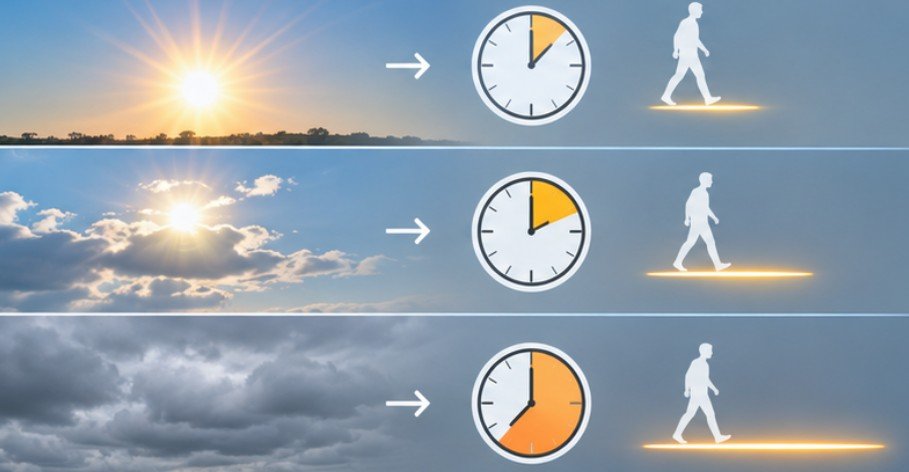
The ideal morning sunlight duration for circadian rhythm regulation is approximately 5–10 minutes on clear days and 15–30 minutes when skies are cloudy. These are practical starting points, not scientifically established minimum doses.
Morning daylight helps synchronize your internal biological clock, supports daytime alertness, and encourages a more predictable sleep schedule. However, the timing, brightness, and consistency of exposure matter as much as the number of minutes spent outside.
Why Morning Sunlight Matters for Your Body Clock
Your circadian rhythm is an internal timing system that coordinates sleep, wakefulness, body temperature, hormone release, and other daily functions.
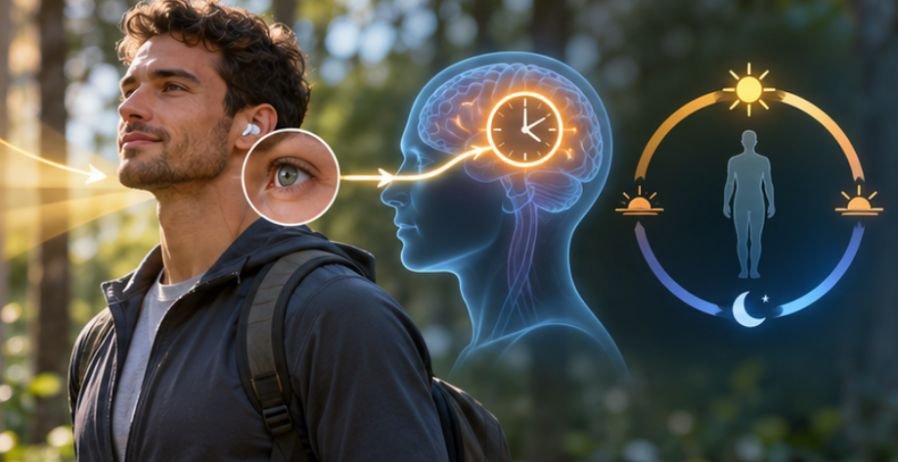
A small region of the brain called the suprachiasmatic nucleus acts as the body’s central clock. Specialized cells in your eyes detect environmental light and send signals that help synchronize this clock with the 24-hour day.
According to the National Institutes of Health, light and darkness influence melatonin and cortisol, two hormones involved in sleep and wakefulness.
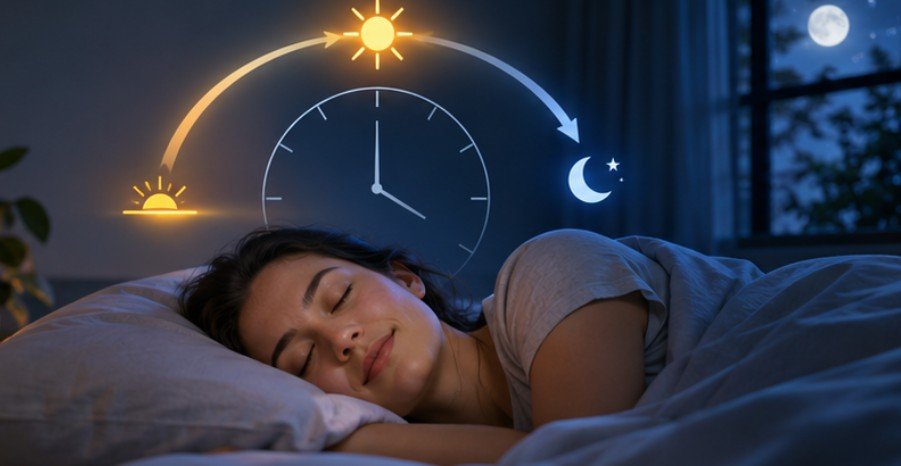
Melatonin generally rises during the evening, preparing your body for sleep. Morning light helps suppress melatonin and supports the normal transition toward wakefulness.
Cortisol also naturally increases around waking, helping prepare the body for daily activity. Morning light reinforces these biological signals rather than simply functioning as a natural energy boost.
How Morning Light Changes Sleep Timing
Scientists describe the effect of properly timed morning light as a circadian phase advance. Essentially, exposure to bright light shortly after waking can encourage your biological clock to shift earlier. Over time, this may help you become sleepy earlier and wake more comfortably.
Evening light can produce the opposite effect, delaying your internal clock and making earlier bedtimes more difficult.
How Many Minutes of Morning Sunlight Are Enough?
The appropriate exposure depends on sunlight intensity, weather, season, and individual sensitivity.
For most adults following a conventional daytime schedule, these ranges provide reasonable starting targets.
| Morning conditions | Suggested outdoor duration |
| Clear, sunny morning | 5–10 minutes |
| Partly cloudy morning | 10–20 minutes |
| Overcast or heavily cloudy | 15–30 minutes |
| Dark winter mornings | Seek daylight when available; duration varies |
These ranges are practical estimates rather than universal clinical prescriptions. Outdoor brightness can vary substantially even under similar weather conditions. Your evening habits also influence sleep timing, so learning how to reduce screen time before bed can complement a consistent morning daylight routine.
These ranges are practical estimates rather than universal clinical prescriptions. Outdoor brightness can vary substantially even under similar weather conditions.
The most effective routine is one you can repeat consistently without exposing yourself to unnecessary ultraviolet radiation.
When Should You Go Outside?
Aim to get outdoor daylight within approximately 30–60 minutes after waking, particularly if you’re trying to establish an earlier sleep schedule.
The CDC’s guidance on circadian rhythms explains that morning light generally advances biological timing, while evening light tends to delay it.
For someone waking at 7 a.m., an outdoor walk between 7:15 and 7:45 a.m. could be a convenient starting point.
The commonly recommended 9–10 a.m. cutoff isn’t a strict biological deadline. Your usual wake time and internal circadian phase are more meaningful than a universal clock hour.
What Research Actually Says About Sunlight and Sleep
Evidence suggests morning daylight is associated with improved sleep timing, although researchers are still determining optimal exposure durations.
A 2025 observational study involving 1,762 Brazilian adults examined sunlight exposure and sleep characteristics.
Published in BMC Public Health and available through PubMed Central, the study found that each additional 30 minutes of reported sunlight exposure before 10 a.m. was associated with a sleep midpoint approximately 23 minutes earlier.
Researchers also identified an association between morning sunlight and better reported sleep quality.
However, the study did not establish that adding 30 minutes of sunlight directly causes a 23-minute shift. Participants reported their own exposure, and the research could not eliminate every potential confounding factor.
Importantly, the researchers found no significant association with total sleep duration, sleep latency, or sleep efficiency.
This distinction matters: sunlight may help regulate when you sleep without necessarily increasing how long you sleep.
What Stanford Researchers Recommend
Stanford Lifestyle Medicine emphasizes the importance of regular daylight exposure for healthier sleep patterns.
Stanford sleep researcher Jamie Zeitzer explains that morning sunlight helps communicate time-of-day information to the biological clock, while additional daytime light can strengthen circadian regulation.
The practical implication is encouraging: morning light doesn’t have to be your only outdoor exposure. A lunchtime walk may provide additional benefits.
How to Build a Morning Sunlight Routine That Works
You don’t need specialized equipment, expensive light devices, or a complicated wellness schedule.
A simple routine can make morning daylight exposure an automatic part of your day.
Step 1: Establish a Consistent Wake-Up Time
Begin by choosing a realistic daily wake-up time.
Maintaining approximately the same schedule throughout the week gives your biological clock more predictable signals.
If you usually wake at 7 a.m. on weekdays, sleeping until 11 a.m. every weekend may make maintaining consistent sleep timing more difficult.
Step 2: Move Outdoors Soon After Waking
Step onto your porch, walk around your neighborhood, or enjoy breakfast outside.
Outdoor light is generally much brighter than ordinary indoor lighting. Windows reduce incoming light intensity, making outdoor exposure a more reliable choice.
You don’t need direct sunlight on your face or skin. Simply being outdoors in daylight can provide the light signal your circadian system needs.
Never look directly at the sun.
Step 3: Adjust Your Exposure to the Weather
Use a shorter outdoor session when daylight is bright and extend it when conditions are dimmer.
Someone living in sunny Arizona may find a brief morning walk convenient, while a resident of Seattle might choose a longer outdoor activity during cloudy winter weather.
Avoid treating these durations as rigid requirements. Consistency and suitable light exposure are more important than achieving an exact number.
Step 4: Monitor Your Sleep for Two Weeks
Record your wake-up time, approximate outdoor exposure, evening sleepiness, and bedtime for 14 days.
Look for gradual changes in how easily you wake and whether sleepiness arrives at a more predictable hour.
A sleep diary can identify useful patterns, although it cannot prove that sunlight alone caused the changes.
Common Mistakes That Reduce the Benefits
One frequent mistake is assuming sunlight through a bedroom window provides the same exposure as spending time outdoors.
Although window light can contribute to daytime brightness, its intensity depends on glazing, orientation, weather, and distance from the window.
Another misconception is that sunglasses must always be removed. Bright outdoor light may still be beneficial while wearing sunglasses, and eye protection should take priority when necessary. Morning light also doesn’t require unprotected skin exposure.
The American Academy of Dermatology recommends broad-spectrum SPF 30 or higher, protective clothing, and appropriate shade to reduce ultraviolet damage.
Finally, morning sunlight cannot compensate for consistently insufficient sleep. Adults still need adequate sleep opportunities and sensible evening habits. If you regularly wake up feeling unrefreshed despite getting enough rest, understanding why you might feel tired after 8 hours of sleep can help you identify other factors affecting your sleep quality.
What If Your Schedule Doesn’t Match Sunrise?
Morning daylight recommendations are primarily designed for people who sleep at night and remain awake during the day.
Night-shift workers may require different light timing because exposure after work could interfere with their intended daytime sleep.
People experiencing jet lag, delayed sleep-wake phase disorder, bipolar disorder, or certain eye conditions should seek individualized guidance before using intensive light-based interventions.
For those waking before sunrise, indoor lighting can support morning visibility and alertness. Outdoor daylight can be added once available.
Remember that morning light works best alongside reduced evening brightness, consistent sleep schedules, and a comfortable sleeping environment.
Along with consistent morning daylight exposure, establishing healthy nighttime habits can help reinforce your sleep-wake cycle. Explore the best evening routine for circadian rhythm reset for practical ways to manage evening light, reduce stimulation, and prepare your body for sleep.
Frequently Asked Questions
1. Is 10 Minutes of Morning Sunlight Enough?
Ten minutes may be a useful starting point on bright mornings. However, individual needs vary with light intensity, season, and sleep timing.
2. Does Morning Sunlight Work on Cloudy Days?
Yes. Outdoor daylight remains available through cloud cover, although brightness decreases. Spending approximately 15–30 minutes outside may be a practical option.
3. Can Morning Sunlight Help Fix a Late Sleep Schedule?
Properly timed morning light can help shift circadian timing earlier. Results depend on consistency, evening light exposure, and individual sleep patterns.
4. Can I Get Circadian Benefits While Wearing Sunscreen?
Yes. Circadian regulation depends primarily on light reaching your eyes, not ultraviolet radiation reaching your skin. Appropriate sun protection remains important.
Let Morning Light Set the Pace
Understanding morning sunlight duration for circadian rhythm health doesn’t require turning your mornings into another demanding routine.
Start by stepping outdoors shortly after waking and spending a few comfortable minutes in natural daylight. Adjust the duration to the weather, protect your skin and eyes, and maintain consistent sleep hours.
Pay attention to changes in evening sleepiness and morning alertness rather than expecting immediate results.
Morning light is not a cure for every sleep problem, but it offers a simple way to support your body’s natural timing system. Sometimes, a healthier night begins with what you do immediately after waking.