

Sensitive skin taught me that exfoliation should never feel like a battle. Rough loofahs, gritty scrubs, and repeated acid treatments may create temporary smoothness, but they can also trigger redness, burning, dryness, and inflammation. Learning how to exfoliate sensitive body skin safely means removing excess dead cells without compromising the moisture barrier underneath.
The best approach usually involves a mild chemical exfoliant, limited frequency, minimal friction, and immediate moisturization. Although gentle exfoliation may improve flaky skin, clogged pores, body acne, and rough texture, sensitive skin needs a slower and more deliberate routine.
Should You Exfoliate Sensitive Body Skin?
Sensitive skin can benefit from exfoliation, but it may not need treatment every week. Skin naturally sheds dead cells, and some people can maintain a comfortable texture with gentle cleansing and consistent moisturizing alone.
Exfoliation may help when dead cells create visible flakes, dullness, clogged pores, or rough areas on the arms and legs. However, it should not be used on open cuts, sunburn, peeling skin, active infections, or an eczema flare. Anyone with rosacea, psoriasis, chronic eczema, or an unexplained rash should consult a board-certified dermatologist before trying an exfoliating product.
Which Exfoliants Are Best for Sensitive Body Skin?
Chemical exfoliants loosen the bonds between dead surface cells without requiring aggressive rubbing. This often makes them more suitable for reactive skin than coarse physical scrubs. Concentration, pH, contact time, and the complete formula still influence how gentle a product will feel.
Is Lactic Acid Gentle Enough for Sensitive Skin?
Lactic acid is an alpha hydroxy acid that exfoliates the skin’s surface. Its molecular size is larger than glycolic acid, so it generally penetrates more slowly. Lactic acid also has humectant properties that can help attract moisture, making it a useful ingredient for dry, rough, or sensitive body skin.
A low-strength lotion or rinse-off wash is usually a more cautious starting point than a high-concentration peel. The label instructions matter more than the assumption that every lactic acid product is automatically gentle.
Is Mandelic Acid Better for Reactive Skin?
Mandelic acid has a larger molecular structure than lactic and glycolic acids. Its slower penetration may make it easier for some sensitive skin types to tolerate. It can provide mild surface exfoliation while helping improve uneven texture and dullness.
However, no acid is irritation-proof. Patch testing and gradual introduction remain necessary, even when a product is marketed for sensitive skin.
Are PHAs Good for Highly Sensitive Skin?
Polyhydroxy acids such as gluconolactone work mainly on the skin’s surface. Their larger molecular size can provide mild exfoliation with less penetration than many traditional AHAs. PHAs may suit highly reactive skin, especially when the formula also contains ceramides, glycerin, or other barrier-supporting ingredients.
Understanding what ceramides do for dry skin explains why they are valuable after gentle exfoliation, helping reinforce the moisture barrier and reduce dryness or sensitivity.
Can Sensitive Skin Use Salicylic Acid Body Wash?
Salicylic acid is a beta hydroxy acid that enters oily pores and helps clear dead cells. It can be useful for body acne, clogged pores, ingrown hairs, and keratosis pilaris.
A rinse-off salicylic acid body wash may be easier to tolerate than a leave-on product because it stays on the skin briefly. However, people with very dry or reactive skin should start cautiously and stop if tightness, itching, or persistent stinging develops.
Why Should You Avoid Harsh Physical Scrubs?

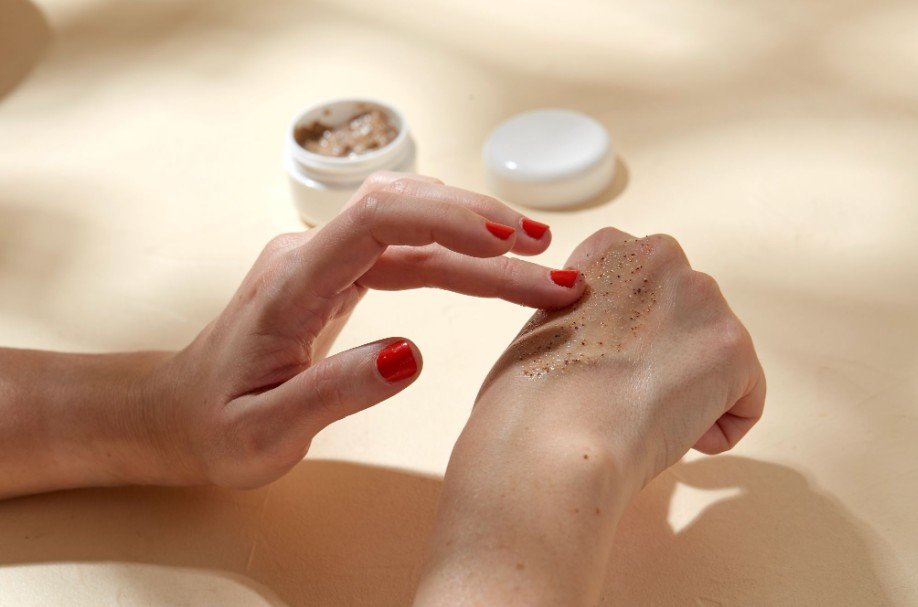
Sugar, salt, crushed shells, walnut particles, stiff brushes, and rough loofahs can create excessive friction. Scrubbing harder does not make exfoliation more effective. Instead, it may disrupt the protective barrier and increase inflammation or post-inflammatory discoloration.
I prefer using clean hands to apply a chemical body wash or lotion. A very soft washcloth may work for some people, but it should move across damp skin with almost no pressure. Do not combine a scrub, exfoliating glove, and acid cleanser during the same shower.
How Do You Patch-Test a Body Exfoliant?
Apply a small amount to a discreet area, such as the inner arm or thigh, according to the product directions. Wait at least 24 hours and watch for redness, itching, swelling, or burning. Because delayed reactions can occur, observing the area for several days offers additional reassurance before treating a large section of skin.
Do not patch-test on broken, freshly shaved, or inflamed skin. Remember that a successful test reduces uncertainty but does not guarantee that repeated full-body use will never cause irritation.
What Is the Safest Step-by-Step Exfoliation Routine?
Step 1: Start With Calm Skin
Schedule exfoliation on a day when the skin has not been shaved, waxed, sunburned, or exposed to another intensive treatment. Delay the routine if the skin already feels sore, itchy, or unusually dry.
Step 2: Shower With Lukewarm Water
Take a short shower using lukewarm rather than hot water. Hot showers can remove protective surface oils and make sensitive skin feel tighter. Use a mild, fragrance-free cleanser before applying the exfoliant.
Step 3: Apply the Product With Clean Hands
Spread the exfoliating body wash gently over the intended area. Avoid vigorous rubbing. If the directions allow brief massaging, keep the contact light and limit it to approximately 30 seconds before rinsing thoroughly. For a leave-on lotion, apply a thin, even layer according to its label.
Step 4: Pat the Skin Dry
Use a clean, soft towel and pat rather than rub. Leave the skin slightly damp so the next moisturizing step can help retain water.
Step 5: Moisturize Immediately
Apply a fragrance-free cream containing ingredients such as ceramides, glycerin, hyaluronic acid, colloidal oatmeal, squalane, or petrolatum. A consistent body care routine for dry skin in winter can further protect sensitive skin by restoring moisture immediately after exfoliation and reducing seasonal dryness.
A widely available ceramide cream, such as CeraVe Moisturizing Cream, is one option, but any well-tolerated barrier-supporting formula can work.
Step 6: Protect Exposed Skin
Apply broad-spectrum SPF 30 or higher to exposed arms, legs, shoulders, and chest. Some chemical exfoliants increase sun sensitivity, making daily UV protection especially important.
How Often Should Sensitive Skin Be Exfoliated?

Once a week is a sensible maximum for a beginner with sensitive skin. Very reactive or dry skin may need seven to ten days between treatments. If the skin becomes red, tight, flaky, shiny, or painful, stop exfoliating and allow the barrier to recover.
Never use an exfoliating body wash and a chemical body lotion on the same night when starting a routine. Avoid combining exfoliating acids with retinoids, benzoyl peroxide, or other potentially irritating actives on the same area unless a dermatologist recommends the combination.
What Are the Signs of Over-Exfoliation?
Persistent burning, redness, itching, peeling, tenderness, increased dryness, and sensitivity to ordinary moisturizer can indicate over-exfoliation or irritant contact dermatitis. New bumps and worsening discoloration may also appear.
Pause all exfoliants and return to a basic fragrance-free cleanser, moisturizer, and sunscreen. Seek medical care if the reaction involves swelling, blistering, severe pain, spreading inflammation, or symptoms that do not improve.
Frequently Asked Questions
1. How can I learn how to exfoliate sensitive body skin safely at home?
Begin with one mild chemical exfoliant, patch-test it, use it no more than once weekly, avoid other actives that night, and moisturize immediately afterward.
2. Can I exfoliate before or after shaving?
Avoid exfoliating immediately before or after shaving because both processes can increase sensitivity. Separate them by at least a day, or longer if your skin remains irritated.
3. Is a body scrub safe for eczema-prone skin?
Do not scrub skin during an active eczema flare. Ask a dermatologist before introducing either physical or chemical exfoliation to eczema-prone areas.
4. Should a chemical exfoliant sting?
A brief, mild sensation can occur with some acids, but persistent stinging, burning, redness, or pain is a signal to rinse the product off and discontinue use.
A Safer Route to Smooth Skin
I believe successful exfoliation should leave the skin comfortable, not raw. Starting with a gentle acid, limiting the routine to once a week, applying products with clean hands, and restoring moisture afterward creates a safer path to smoother body skin. When irritation appears, stopping early is more valuable than forcing the skin to “adjust.”