
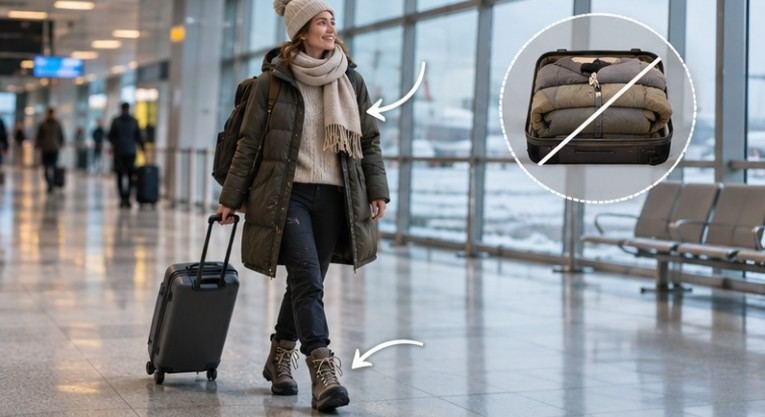
A winter jacket can occupy nearly half a carry-on suitcase, yet you might only wear it during a few hours of your trip. The secret to packing lighter isn’t sacrificing warmth. It’s choosing clothing that works together instead of bringing several bulky outfits.
Learning how to travel light with winter clothes can make airport transfers easier, reduce baggage fees, and leave room for essentials. Whether you’re exploring snowy Colorado, visiting New York in December, or spending a week in Chicago, a carefully planned winter wardrobe can fit into one carry-on without leaving you unprepared for freezing temperatures.
Build Your Winter Wardrobe Around Three Essential Layers
The most effective way to reduce luggage weight is to choose garments that perform specific functions.
Start With Moisture-Wicking Base Layers
Thermal clothing sits directly against your skin and helps prevent perspiration from making you cold.
Merino wool and synthetic materials such as polyester are useful options. Merino wool generally resists odor well, while synthetic thermals often dry faster and cost less.
Pack two or three thermal tops and one or two pairs of thermal leggings. Choose lightweight designs that fit comfortably beneath everyday clothing.
Avoid relying on cotton thermals for demanding outdoor activities because cotton retains moisture and can leave you feeling cold.
Choose One Versatile Insulating Layer
Your middle layer should retain body heat without occupying unnecessary luggage space. A lightweight fleece, fine-knit merino sweater, or compact insulated vest works well for most winter city trips.
The Mountaineers’ layering guidance explains that an effective clothing system balances insulation, moisture management, and weather protection.
For example, one neutral-colored fleece can work beneath a winter jacket outdoors and serve as a comfortable standalone layer inside heated buildings.
Finish With Weather-Appropriate Outerwear
A compressible down jacket provides excellent warmth relative to its weight in dry conditions. Synthetic insulation can be more forgiving in damp weather, although performance varies by construction.
If your destination experiences rain, sleet, or wet snow, consider a waterproof, windproof shell.
For extreme cold, a sufficiently insulated parka may be essential. Packability should never take priority over adequate protection.
Create a Winter Capsule Wardrobe for Seven Days
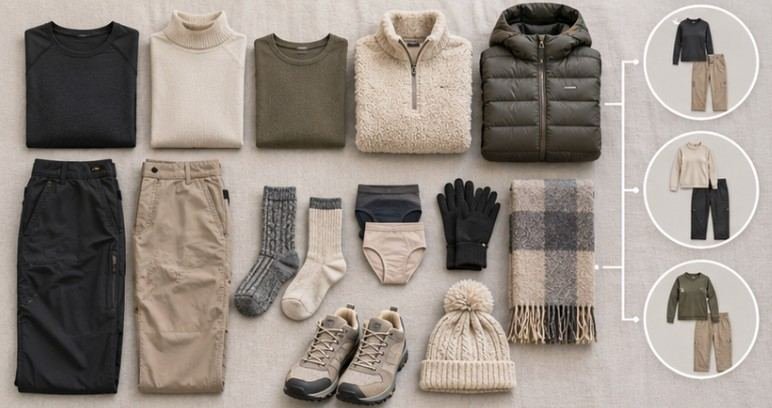
A capsule wardrobe reduces unnecessary duplication while making outfit planning easier.
For a typical weeklong winter city vacation, consider this packing checklist:
| Clothing | Suggested quantity |
| Thermal tops | 2–3 |
| Thermal leggings | 1–2 |
| Everyday tops | 3–4 |
| Lightweight sweater or fleece | 1–2 |
| Pants | 2 |
| Insulated winter jacket | 1 |
| Waterproof outer shell | 1 if needed |
| Underwear | 6 |
| Warm socks | 4–5 pairs |
| Winter boots | 1 pair |
| Additional lightweight shoes | 1 optional pair |
| Hat, gloves, neckwear | 1 set |
These quantities include clothing worn during transit and assume occasional laundry.
Choose coordinating colors such as charcoal, navy, cream, and olive. Two pairs of pants and four interchangeable tops can create eight basic combinations before adding sweaters or accessories.
The objective isn’t wearing something different every day. It’s having enough suitable combinations for your actual activities.
Wear Your Heaviest Winter Clothing During Travel
One of the simplest winter packing tricks is to transfer bulky clothing from your suitcase to your travel outfit.
Wear your winter boots, heaviest trousers, sweater, and insulated coat while traveling. Keep your hat, scarf, and gloves accessible in your jacket pockets or personal bag.
Inside a warm airport or airplane, remove unnecessary layers to avoid overheating.
Remember that wearing extra clothing doesn’t eliminate airline baggage restrictions. The U.S. Department of Transportation advises checking each airline’s carry-on size, weight, and quantity limits before flying.
Keep essential medication, travel documents, and valuables in a small accessible bag in case your carry-on requires gate-checking.
Pack Winter Clothes Without Wasting Space
Understanding how to travel light with winter clothes also means using the available suitcase space efficiently for travel capsule wardrobe 10 pieces.
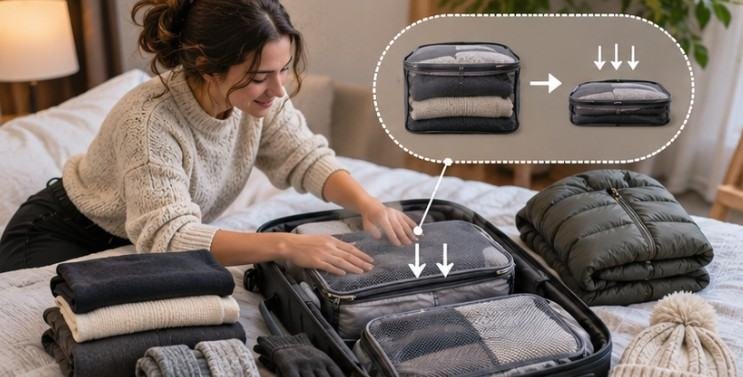
Use Compression Cubes Strategically
Compression packing cubes help reduce the volume of soft garments by squeezing out trapped air.
Place fleece layers, thermals, and other flexible clothing inside compression organizers. Avoid overfilling them because excessive pressure can damage zippers.
Vacuum bags can provide additional compression, but they may be inconvenient without a way to recompress clothing before returning home. Follow garment-care instructions, particularly for insulated jackets.
Compression reduces volume, not weight, so always check the final weight of your luggage.
Roll Thin Clothing and Fold Structured Pieces
Roll thermal tops, leggings, and lightweight shirts into compact bundles.
Fold heavier trousers and structured garments flat to reduce creasing. Place socks inside clean spare shoes to use otherwise wasted space.
Keep frequently needed accessories near the top of your bag so you won’t need to unpack everything to find your gloves.
Choose Shoes and Accessories That Work Harder
Winter footwear can consume more luggage space than several shirts combined. For snowy destinations, wear waterproof boots with suitable traction during travel. Make sure they fit comfortably with winter socks and have already been broken in.
A second pair of lightweight shoes is useful for indoor activities or restaurants, but it isn’t necessary for every trip. Accessories deserve equal attention. A compact neck gaiter can protect your neck and lower face, while touchscreen-compatible gloves help you use your phone without exposing your fingers.
According to the CDC’s frostbite prevention guidance, covering exposed skin and wearing water-resistant boots are important precautions during extremely cold weather.
For particularly severe conditions, insulated mittens may provide better warmth than thin gloves.
Adjust Your Packing List to the Destination
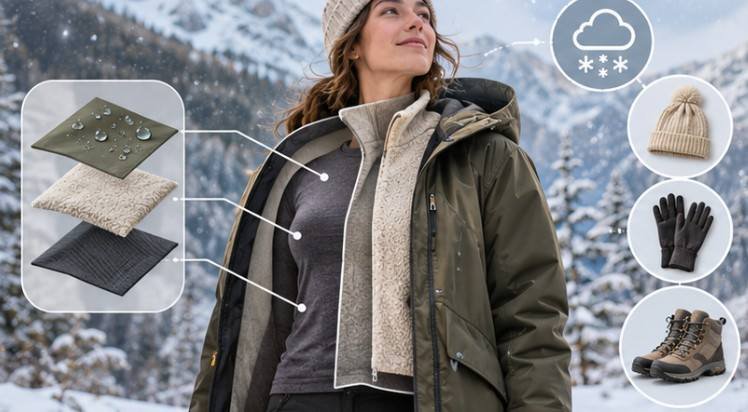
Not every American winter requires the same wardrobe. A December visit to Seattle may demand dependable rain protection, while a trip to Minneapolis may require substantial insulation against freezing temperatures.
For Colorado ski vacations, specialized equipment, waterproof snow pants, and extra dry accessories may be necessary.
Travelers should also consider outdoor exposure. Walking between restaurants and museums requires different protection from spending several hours hiking or skiing.
The American Hiking Society emphasizes checking winter conditions and adjusting layers to manage perspiration during outdoor activity. Always review the local forecast, wind chill, precipitation, and planned activities before finalizing your luggage.
Try the 20-Minute Packing Test Before Leaving
A simple trial can reveal whether your winter packing system actually works.
First, arrange your selected clothes on a bed and create three different outfits without adding garments. Next, try wearing your base, middle, and outer layers together to check mobility and comfort.
Pack everything along with travel size beauty products into your chosen bag, then carry or roll it for several minutes. Remove clothing that duplicates another item’s purpose.
Finally, confirm that you have dry socks, adequate outerwear, and appropriate footwear for the coldest expected conditions. This process identifies unnecessary extras before they become expensive baggage problems.
Frequently Asked Questions
1. Can you travel with only a carry-on during winter?
Yes. A coordinated capsule wardrobe, compact insulating layers, and planned laundry can make carry-on travel practical for many winter trips. Extreme-weather adventures may require additional luggage.
2. What is the best fabric for lightweight winter travel clothing?
Merino wool and performance synthetics are useful because they provide insulation and manage moisture. The ideal material depends on warmth requirements, drying time, comfort, and budget.
3. How many sweaters should I pack for a week?
One or two versatile sweaters or fleece layers are generally sufficient for a seven-day trip when combined with thermal tops and a suitable winter jacket.
4. Are compression packing cubes worth using?
Yes, especially for fleece and other flexible clothing. They save space and improve organization, although they do not reduce luggage weight.
Pack for Warmth, Not Volume
The best winter travel wardrobe isn’t necessarily the smallest. It’s the one that provides dependable warmth without making every journey feel like a moving day.
Prioritize breathable thermals, interchangeable clothing, appropriate weather protection, and footwear suited to your destination. Leave unnecessary duplicate sweaters at home and plan laundry rather than packing an entirely new outfit for every day.
Once you understand how to travel light with winter clothes, the process becomes much simpler. You spend less time managing luggage, avoid carrying unnecessary weight, and have more freedom to enjoy your trip. The smartest winter packing decision is choosing clothing that earns its space.