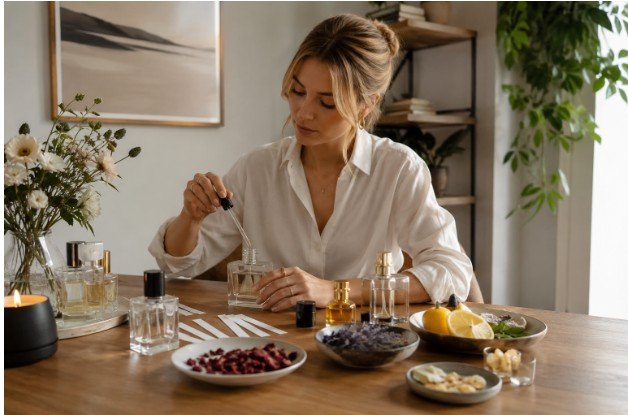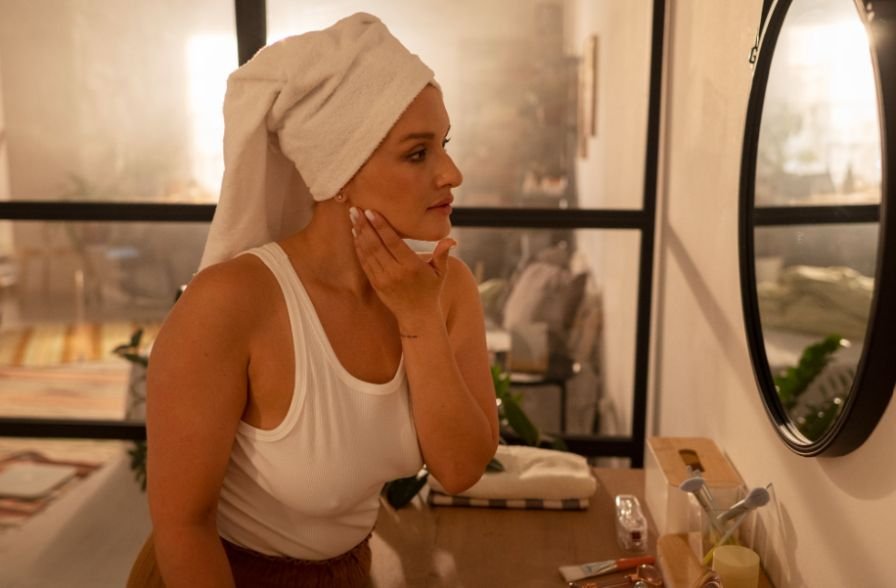
A fragrance can smell beautiful in the bottle yet disappear quickly on dry skin. The scent layering order body wash lotion perfume routine solves that problem by building aroma in three stages: cleanse, moisturize, and finish with perfume.
I use this order because each product has a different job. Body wash creates a soft base. Lotion supports moisture. Perfume supplies the clearest and longest-lasting expression.
Why Body Wash Comes Before Lotion and Perfume
Body wash is a rinse-off product, so it comes first. Lotion is a leave-on moisturizer that prepares the skin. Perfume belongs last because it should sit above the moisturized base rather than be covered or diluted.
The American Academy of Dermatology recommends short showers with warm water, gentle towel-drying, and moisturizer while skin is still damp. That guidance supports the practical logic of fragrance layering: prepare comfortable, hydrated skin before adding perfume.
Think of the routine as a scent structure. The wash sets the background, the lotion creates a bridge, and the perfume becomes the focal point.
Step 1: Start With a Body Wash That Sets the Mood

Choose a body wash that supports the fragrance family you plan to wear. It does not need to match every perfume note.
Use Warm Water and Avoid Over-Cleansing
I prefer warm water instead of very hot water. Keep the shower focused, rinse well, and pat the skin rather than rubbing it dry.
A vanilla wash pairs naturally with amber, caramel, sandalwood, coffee, or soft musk. A citrus wash supports fresh florals, aromatic scents, and light woods.
Most of the body wash rinses away, so its role is not to overpower the fragrance. It should leave a clean and compatible opening for the products that follow.
Match by Fragrance Family, Not Product Name
Matching sets are convenient, but they are not required. I look for one shared note, texture, or mood.
A coconut wash, unscented lotion, and tropical floral perfume can feel cohesive. A rose wash, vanilla lotion, and oud perfume may become too dense unless each layer stays light.
The goal is harmony, not perfect duplication. Three products with the same sugary note can smell flatter than a balanced mix of complementary scents.
Step 2: Apply Lotion While Skin Is Slightly Damp

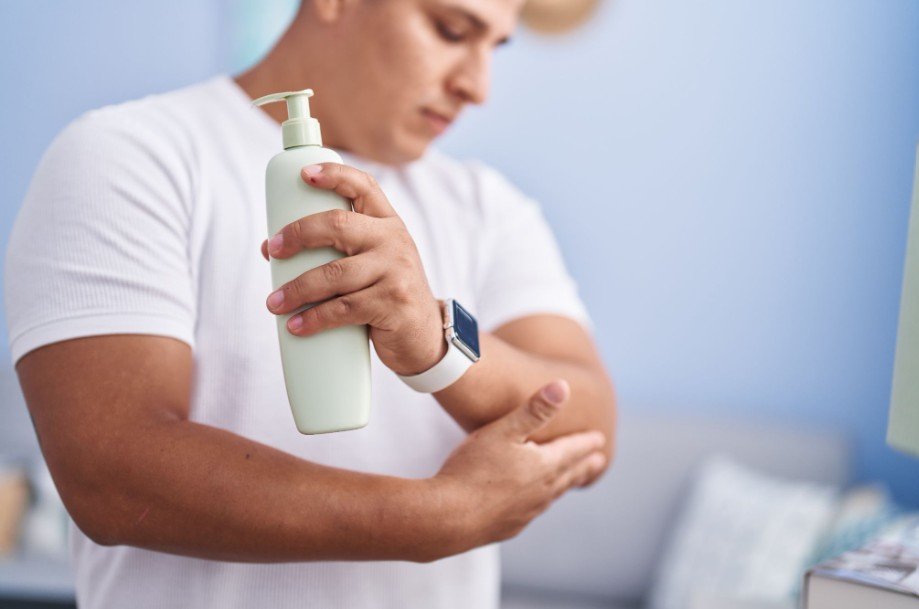
Lotion is the anchor in the scent layering order body wash lotion perfume method. Apply it after patting the skin dry, while a little moisture remains.
Dermatologists advise applying moisturizer promptly after bathing because moisturizer helps trap water in the skin. This step remains useful even when the lotion contains no fragrance.
Choose Scented or Unscented Lotion Strategically
Use unscented lotion when the perfume is complex, expensive, or easy to overwhelm. It allows the fragrance to develop without another strong accord changing its intended character.
Use scented lotion when you want to emphasize one part of the perfume. Vanilla can soften sharp woods. Coconut can make white florals feel creamier. Clean musk can smooth citrus, aquatic, and green fragrances.
I avoid combining three loud products with unrelated notes. More fragrance often creates noise rather than depth.
Let the lotion absorb for one or two minutes before spraying perfume. Your skin should feel moisturized, but it should not feel wet or slippery.
Step 3: Finish With Perfume on Selected Areas

Perfume is the final layer because it provides the strongest projection and clearest note development. Spray it after the lotion has settled.
Apply to Pulse Points Without Rubbing
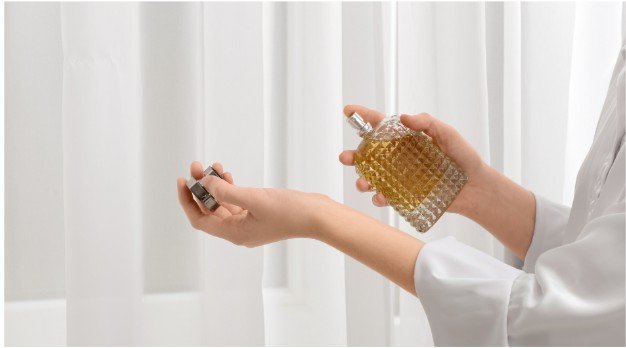
Common application areas include the sides of the neck, inner elbows, chest, and wrists. I choose two or three areas instead of spraying every available pulse point.
Allow the fragrance to dry naturally rather than rubbing your wrists together. Start with a restrained number of sprays and give the perfume time to develop before adding more.
A powerful perfume may need only a light application. A softer eau de toilette or body mist may need a careful refresh later.
Treat Clothing as an Optional Surface
Fabric may retain fragrance, but perfume can stain delicate or pale materials. Test an unseen section first. Avoid spraying silk, jewelry, finished leather, or fabric with special coatings.
I treat clothing as an optional surface rather than part of the core routine. The essential sequence remains body wash, lotion, and then perfume.
My Scent-Bridge Method for Better Combinations
My most useful rule is to make the lotion the “bridge note.” Instead of forcing all three products to match, choose a lotion that connects the body wash to the perfume.
For example, a warm vanilla body wash creates a sweet foundation. A soft sandalwood lotion adds warmth without making the routine excessively sugary. An amber perfume supplies depth and keeps the finished scent from smelling flat.
For a fresher blend, pair a citrus body wash with clean musk lotion and a neroli or green-tea perfume. The citrus opens brightly, the musk softens the transition, and the perfume provides the defining details.
This method offers more flexibility than buying a complete matching set. It also helps you use products already sitting in your bathroom.
For routines that include oils or fragrance mists, learn to layer perfume oil and body spray before changing the order. Perfume oils, body sprays, and alcohol-based perfumes behave differently and may require an adjusted sequence.
How to Prevent Clashing or Overpowering Layers
The easiest mistake is using too much of every product. I reduce the intensity as the products become stronger.
Use the body wash normally. Apply enough lotion to moisturize your skin. Add perfume in measured sprays. Then wait 15 minutes before deciding whether you need more.
That waiting period is my practical wear test. The opening often smells louder than the settled fragrance. Adding more perfume immediately can create an overpowering cloud once the heart notes emerge.
You can also test a combination before wearing it publicly. Apply the lotion and perfume to one arm, then use perfume alone on the other. Compare both sides after 15 minutes.
This simple comparison reveals whether the lotion improves the perfume, changes it too much, or makes the overall blend heavier than expected.
Keep combinations restrained for work, school, public transportation, and shared indoor spaces. Fragrance should feel pleasant at conversational distance rather than announcing itself across a room.
Sensitive Skin and Fragrance Safety
People with sensitive skin can simplify the routine by reducing the number of fragranced products touching their skin.
The FDA states that some fragrance ingredients can cause allergies or sensitivities in certain people, even when most users tolerate them. IFRA also maintains a risk-management system that restricts or prohibits fragrance materials when safety concerns require limits.
Patch-test unfamiliar scented lotions and follow the manufacturer’s directions. Stop using a product that causes redness, burning, itching, swelling, or another unexpected reaction.
The FDA advises consumers to stop using a cosmetic product and contact a healthcare provider after experiencing an adverse reaction.
A fragrance-free body wash and lotion can still provide a comfortable moisture base. You can then apply perfume sparingly, provided your skin tolerates it.
Frequently Asked Questions
1. What is the correct order for body wash, lotion, and perfume?
Use body wash in the shower, apply lotion to slightly damp skin, and spray perfume after the lotion absorbs.
2. Should lotion dry before applying perfume?
Let lotion absorb for one or two minutes so the perfume sits on moisturized skin without mixing into a wet layer.
3. Can I use different scents for each layer?
Yes. Choose one shared note, use a neutral lotion, or make the lotion a bridge between the body wash and perfume.
Does the scent layering order body wash lotion perfume routine improve longevity?
It can support longer wear because perfume follows moisturizer, although results also depend on the formula, weather, skin, and application amount.
Your Fragrance Deserves Better Than Random Spraying
I start with a compatible body wash, apply lotion while my skin is slightly damp, and finish with perfume after the moisturizer settles.
Use one bridge note, wait 15 minutes before adding more fragrance, and keep the strongest product for last. That small change creates a cleaner scent profile and helps every layer perform its intended role.