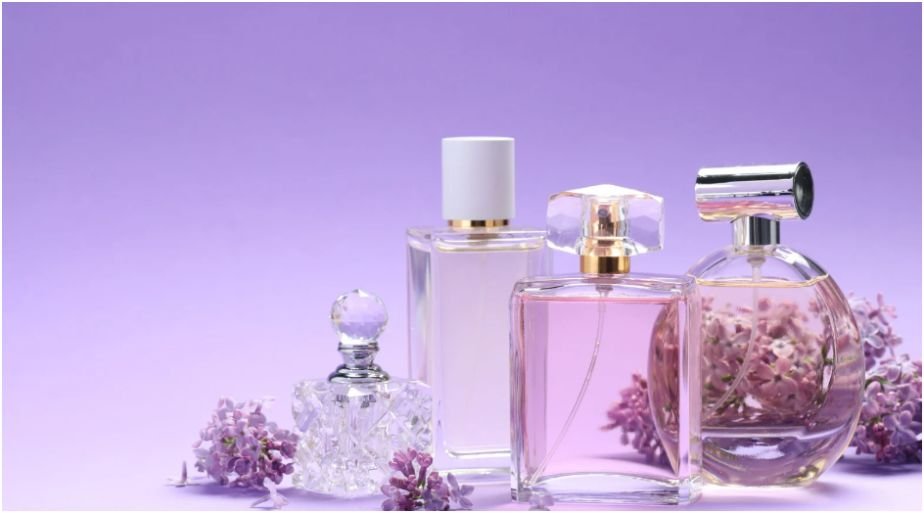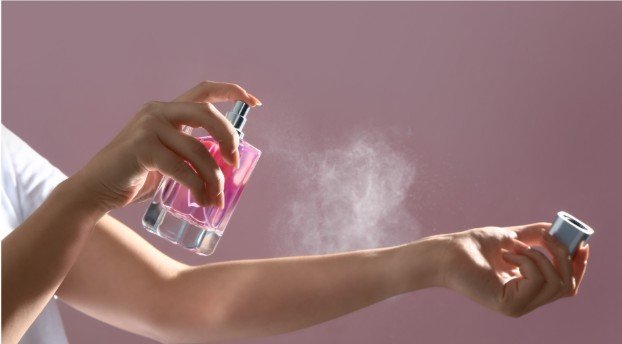
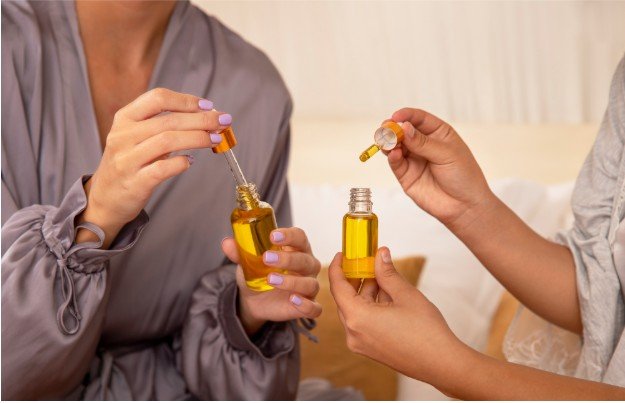
When I started paying closer attention to natural skincare labels, I noticed essential oils appearing in everything from facial serums to body lotions. Their botanical names and pleasant aromas can make a formula seem gentle and wholesome. However, I often hear one important question: are essential oils safe in clean beauty products?
The answer is not a simple yes or no. Essential oils can offer fragrance, sensory benefits and useful plant compounds, but they may also cause irritation, allergic reactions or increased sun sensitivity. Their safety depends on the specific oil, its concentration, the product format, storage conditions and the needs of the person using it.
What Are Essential Oils?
Essential oils are highly concentrated aromatic substances extracted from flowers, leaves, bark, roots, peels and other plant materials. Common examples include lavender, tea tree, peppermint, eucalyptus, lemon and rosemary oils.
They are different from carrier oils such as jojoba, sunflower, argan and rosehip oil. Carrier oils are generally rich in fatty acids and have a heavier, non-volatile texture. Essential oils evaporate more easily and contain concentrated fragrance compounds that may affect sensitive skin.
This distinction matters because a product described as containing botanical oils may include either gentle carrier oils, concentrated essential oils or a mixture of both.
Why Are Essential Oils Used in Clean Beauty?
Essential oils are commonly added to clean beauty formulas because they provide natural fragrance and improve the sensory experience of using a product. Certain oils may also possess antioxidant, cleansing or antimicrobial properties.
Tea tree oil is often used in products intended for oily or blemish-prone skin. Lavender is associated with calming aromas, while citrus oils add fresh fragrance notes. Peppermint and eucalyptus can create a cooling sensation in body care products.
However, an ingredient’s potential benefit does not guarantee that every formula containing it will be suitable for every person. Concentration and formulation quality remain more important than attractive marketing claims.
Natural Does Not Automatically Mean Gentle
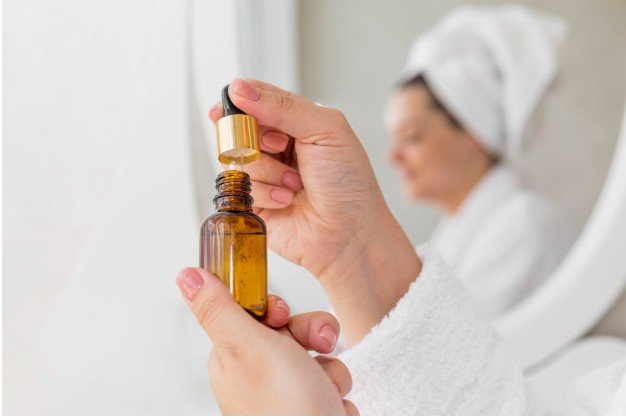
One of the most persistent misconceptions in skincare is that naturally derived ingredients are always safer than synthetic ones. Plants naturally produce complex chemical compounds, some of which can irritate the skin or trigger an immune response.
Synthetic fragrance ingredients can cause sensitivity, but natural fragrance compounds can do the same. Limonene, linalool, citral, geraniol and eugenol are examples of aromatic compounds that may be present in essential oils.
A clean beauty label therefore does not eliminate the possibility of irritation. Terms such as natural, pure, green, clean and non-toxic do not reveal the concentration of an ingredient or predict how an individual’s skin will respond.
Building the best clean beauty routine for dry body skin means focusing on gentle, well-formulated products that support the skin barrier with hydrating ingredients, rather than relying solely on marketing claims. Consistent moisturising, mild cleansers, and products suited to your skin’s individual needs are generally more important than whether a product carries a particular clean beauty label.
Possible Risks of Essential Oils in Skincare
Irritant Contact Dermatitis
Irritation occurs when an ingredient directly damages or disrupts the skin barrier. Symptoms may include burning, stinging, dryness, redness and peeling.
Strong essential oils, particularly peppermint, cinnamon, clove and oregano, may be irritating when used at unsuitable concentrations. Applying undiluted essential oil directly to the skin can increase this risk.
Allergic Contact Dermatitis
An allergy involves the immune system and may develop after repeated exposure. A person can use a product successfully for months before becoming sensitized.
Possible symptoms include itching, swelling, persistent redness, blistering or an eczema-like rash. Once sensitization develops, future exposure to the responsible fragrance compound may trigger another reaction.
Phototoxic Reactions
Certain citrus oils can make skin more vulnerable to ultraviolet light. This may result in redness, blistering or changes in pigmentation after sun exposure.
Cold-pressed bergamot, lime, lemon and bitter orange oils deserve particular attention. Not every citrus-derived ingredient is phototoxic, as the extraction method and formulation can influence the risk.
Oxidation
Essential oils can change when exposed to oxygen, heat and light. As some oils oxidize, their fragrance compounds may become more likely to cause sensitivity.
Dark or opaque packaging, secure closures and appropriate storage can help protect a formula. A product that smells noticeably different, has changed color or has been stored beyond its recommended period may no longer perform as intended.
Does the Product Type Matter?
A rinse-off cleanser generally remains on the skin for less time than a facial oil or leave-on serum. This can influence the amount of exposure an ingredient creates.
Leave-on facial products require greater caution because facial skin may be more reactive. Eye-area and lip products also need careful formulation because they are used close to delicate tissue.
Body washes containing essential oils may be tolerated more easily because they are diluted and rinsed away. Body lotions, deodorants and massage oils remain on the skin longer, so concentration still matters.
Rather than rejecting a product because it contains one essential oil, consider the complete formula, the location of use and how frequently it will be applied.
Who Should Be More Careful?
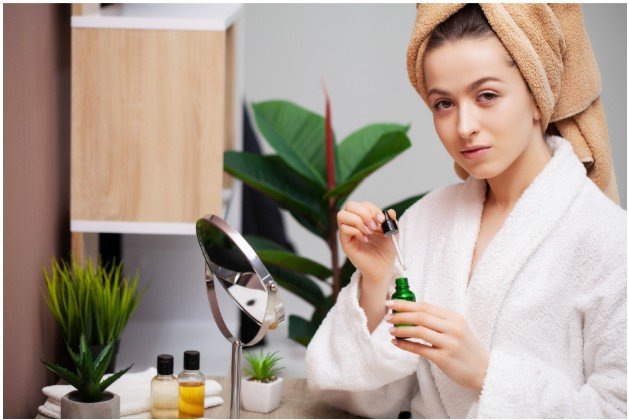
People with sensitive skin, eczema, rosacea symptoms and causes, fragrance allergies or a damaged skin barrier may be more likely to experience discomfort. Infants, young children and pregnant individuals may also require additional caution with certain oils.
Fragrance-free skincare may be a more suitable option for anyone with a history of reactions. “Unscented” is not always the same as fragrance-free because masking fragrances may be used to reduce the natural smell of a formula.
Persistent rashes, swelling or recurring reactions should be evaluated by a qualified medical professional. Professional patch testing may help identify specific fragrance allergens.
How to Read Essential Oils on Product Labels
Essential oils may appear under their common names, botanical names or both. Lavender may be listed as Lavandula angustifolia oil, while lemon peel oil may appear as Citrus limon peel oil.
Look beyond front-label claims and read the complete ingredient list. Essential oils placed near the end of a list may be present in smaller amounts, although the label alone cannot confirm the precise concentration.
Fragrance allergens such as limonene, linalool, citral, citronellol and geraniol may also be listed separately. Their presence does not prove that a product will cause a reaction, but it can help fragrance-sensitive shoppers make informed choices.
How to Choose and Use Products More Safely
Choose formulas from companies that provide complete ingredient lists, clear usage instructions and suitable packaging. Avoid applying undiluted essential oils directly to the face or body unless guidance from a properly qualified professional supports that use.
Patch test a new product on a small area before applying it widely. Observe the area for several days, as delayed reactions do not always appear immediately.
Introduce one new product at a time. This makes it easier to identify the cause if irritation develops. Stop using a product if it causes persistent burning, itching, swelling or redness.
Frequently Asked Questions
1. Are essential oils safe in clean beauty products for sensitive skin?
Some properly formulated products may be tolerated, but fragrance-free options are generally more predictable for reactive skin. Patch testing cannot guarantee that an allergy will never develop, but it may help reveal immediate irritation.
2. Can essential oils be applied directly to the skin?
Undiluted application is generally not recommended. Essential oils are concentrated and normally need to be incorporated into a professionally developed formula or diluted appropriately.
3. Are citrus essential oils always phototoxic?
No. The specific citrus ingredient, extraction process, concentration and finished formula determine the level of risk. Product instructions should always be followed carefully.
4. Are carrier oils safer than essential oils?
Carrier oils are different and are usually less concentrated in aromatic compounds. However, any cosmetic ingredient can cause a reaction in a susceptible person.
Final Perspective
I do not believe essential oils need to be treated as universally harmful or automatically beneficial. Their safety depends on the formula rather than the clean beauty label alone.
I look for transparent ingredient lists, responsible concentrations, protective packaging and instructions that acknowledge sensitivity and sun exposure. I also pay attention to how my skin responds instead of assuming that a botanical ingredient must be gentle.
A thoughtful product can contain essential oils and still be well formulated. The most reliable approach is to understand the ingredient, consider personal sensitivity and judge the finished product as a whole.