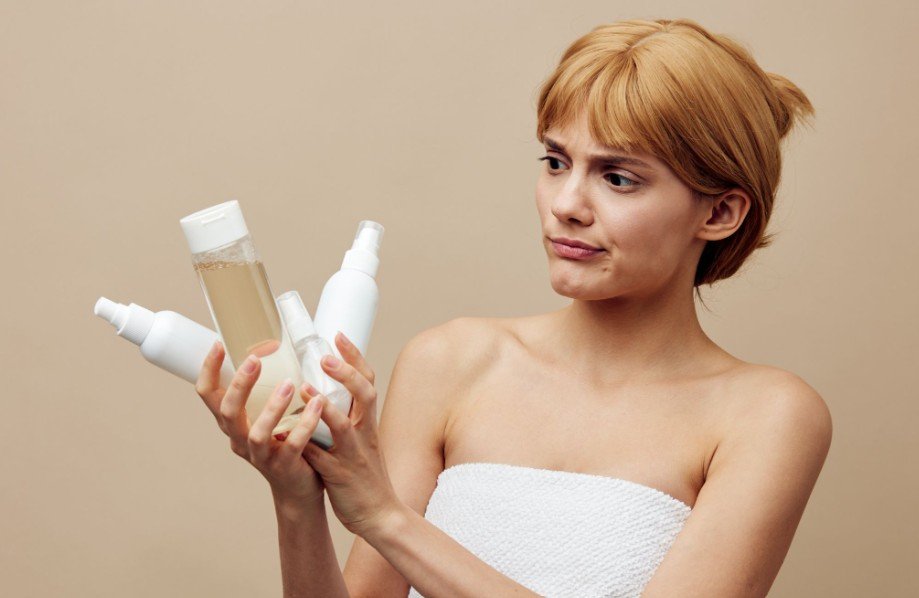
I find body care labels confusing when two bottles seem to promise the same thing. One says “unscented,” the other says “fragrance-free,” and neither explains why that distinction matters. Comparing unscented vs fragrance free body products, I want to know what the formula contains, rather than relying on how it smells.
The essential difference is simple: unscented generally means no noticeable scent, while fragrance-free means no added fragrance ingredients. An unscented product may contain masking fragrance. A fragrance-free product may still smell faintly of its raw materials. Understanding both claims makes shopping straightforward.
What Do These Labels Actually Mean?
Unscented Describes the Finished Smell
An unscented body product is formulated to have no noticeable odor. Manufacturers can achieve that by choosing ingredients with minimal smell or by adding materials that mask the formula’s underlying odor.
This does not mean every unscented lotion contains perfume. It means the word alone cannot confirm its absence. Two products carrying the same front label may have different ingredient lists, so treating “unscented” as proof of fragrance avoidance can be misleading.
Fragrance-Free Describes Added Fragrance
Fragrance-free generally indicates that fragrance ingredients, including masking scents, have not been added. However, the finished cream or cleanser does not need to be completely odorless.
Oils, plant extracts, and other raw materials can contribute their own smells. A faint oily or earthy odor therefore does not automatically contradict the claim. Labeling practices also vary between markets, making the full ingredient list more useful than a single marketing phrase.
Which Option Makes Sense for Sensitive Skin?

When comparing unscented vs fragrance free body products, it helps to ask, “what does fragrance free really mean?” Fragrance-free is usually the more useful starting point for people avoiding fragrance because of sensitive skin or eczema.
Fragrance can trigger irritation or allergic contact dermatitis in susceptible people. Masking a fragrance’s smell does not necessarily remove the ingredient responsible for a reaction. That is why sniffing a lotion cannot establish whether it suits fragrance-sensitive skin.
Still, fragrance-free does not mean reaction-free. Cleansing agents, preservatives, and botanical ingredients can cause problems for particular individuals. Choose according to your known triggers and the complete formula. Persistent itching, burning, or recurring rashes deserve professional assessment rather than repeated product swapping.
How to Read the Ingredient List
Check for Fragrance and Parfum
Look for “fragrance,” “parfum,” or “perfume” on the packaging. These terms indicate fragrance ingredients, although they may not identify every component of a fragrance mixture.
Check the bottle. Online descriptions may refer to another version, and formulas can change. If the front claim and ingredient list appear inconsistent, contact the manufacturer for clarification before buying.
Look Beyond Synthetic Perfume
Lavender, peppermint, and citrus essential oils can contribute scent even when a product sounds botanical or gentle. Natural origin does not guarantee suitability for fragrance-sensitive skin.
However, do not assume every plant extract functions as perfume. Ingredients may have several purposes. If you have a diagnosed allergy, follow the specific avoidance guidance provided by your clinician instead of judging ingredients solely by their names.
Choosing Products Across Your Body Care Routine
Body Wash and Cleansing Bars
Choose a gentle cleanser that leaves skin comfortable after rinsing. Fragrance-free labeling is useful, but it does not tell you whether the cleansing system suits your skin.
A wash that leaves tightness or stinging may need replacing even if it contains no perfume. Avoid judging mildness by foam volume, botanical packaging, or a “natural” claim.
Body Lotions and Creams
For dry skin, consider texture and moisturizing performance alongside fragrance status. Glycerin helps attract water, while ingredients such as petrolatum help reduce moisture loss.
Creams and ointments suit very dry skin better than lightweight lotions. Apply moisturizer after bathing while skin remains slightly damp. Choose something comfortable enough to use consistently.
Deodorants and Shaving Products
Fragrance-free deodorant can address body odor without adding perfume; fragrance is not the only mechanism used for odor control. Deodorant and antiperspirant also serve different purposes, with antiperspirant reducing perspiration.
For shaving, look for sufficient lubrication and a formula you tolerate. A scentless product can still sting freshly shaved skin, so evaluate its overall performance.
Why Other Marketing Claims Are Not Enough
“Hypoallergenic,” “dermatologist tested,” and “for sensitive skin” provide limited information without supporting details. None guarantees that a product will suit everyone.
Price is similarly unhelpful as a safety shortcut. An expensive botanical cream may contain an ingredient you react to, while a simpler affordable formula may work well. Compare ingredients and comfort before paying extra for reassuring packaging.
Frequently Asked Questions
1. Are unscented vs fragrance free body products interchangeable?
No. Unscented describes the smell and may involve masking fragrance. Fragrance-free indicates no added fragrance ingredients. Some products meet both descriptions.
2. Can a fragrance-free lotion still smell?
Yes. Raw ingredients can have noticeable odors without added perfume. Smell alone cannot confirm whether fragrance ingredients are present.
3. Does fragrance-free mean hypoallergenic?
No. Other ingredients can trigger reactions. Fragrance-free removes one potential concern but does not make a formula allergy-proof.
My Final Take
I would choose body care by reading the ingredients and considering how the whole formula fits my needs. Fragrance-free is a helpful starting point when avoiding fragrance, but I would still check the packaging carefully.
I also would not reject a suitable lotion simply because its raw ingredients have a faint smell. A comfortable, reliable routine matters more to me than reassuring words on a bottle.