

A probiotic capsule containing billions of beneficial microorganisms may lose some of its live bacteria before reaching the intestines. Surprisingly, something as simple as eating breakfast could influence how many survive.
So, should you take probiotics on an empty stomach or alongside food? The answer depends on the bacterial strains, capsule formulation, and manufacturer’s recommendations. Research suggests that many conventional probiotic supplements survive better when taken with food or shortly before a meal. However, certain acid-resistant products may work well without food.
Understanding these differences can help you get more value from your daily supplement without unnecessarily complicating your routine.
How Stomach Acid Influences Probiotic Survival
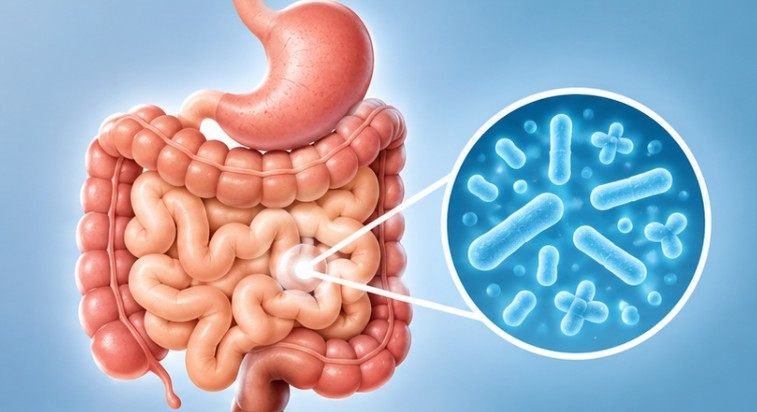
Probiotics contain live microorganisms that may support digestive health and other functions. Common varieties include Lactobacillus, Bifidobacterium, and the beneficial yeast Saccharomyces boulardii.
Before reaching the intestines, these microorganisms must pass through the stomach, where acidic conditions help destroy potentially harmful microbes. Unfortunately, stomach acid can also damage beneficial bacteria.
Eating temporarily changes the stomach’s environment. Food buffers acidity, potentially helping some probiotic strains survive their journey through the digestive tract. However, different microorganisms respond differently to digestive conditions.
According to the National Institutes of Health Office of Dietary Supplements, probiotic benefits depend on specific strains and doses. Two supplements containing similar bacterial species may therefore produce different outcomes. This distinction explains why there is no universally ideal time to take every probiotic.
Empty Stomach vs. With Food: What Does Research Show?
Why Taking Probiotics With Meals May Help
One frequently cited laboratory study investigated how mealtime affects probiotic survival. Researchers used a simulated human digestive system to examine a supplement containing several bacterial strains and Saccharomyces boulardii.
They found that bacterial survival was highest when the supplement was consumed with food or approximately 30 minutes before eating. Taking it 30 minutes after eating produced lower bacterial survival in that particular experiment.
The findings, published in Beneficial Microbes, also showed better survival with milk or oatmeal prepared with milk than with apple juice or water. The study is available through PubMed.
Importantly, these results came from a laboratory digestive model rather than a clinical trial measuring health improvements in people. They provide useful guidance but cannot establish the perfect schedule for every supplement.
Can Probiotics Work Without Food?
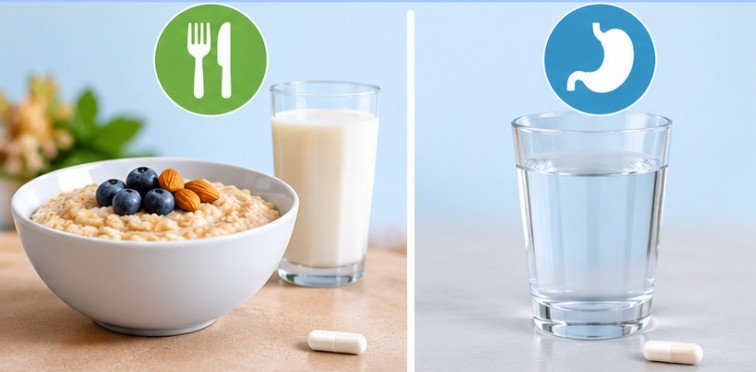
Yes. Some probiotic products are designed to tolerate acidic conditions. Certain bacterial spores, acid-resistant strains, and specially formulated capsules may remain viable during stomach transit without requiring a meal.
Saccharomyces boulardii also behaved differently from the bacterial strains in the laboratory study, showing less sensitivity to meal timing.
Consequently, taking a probiotic before breakfast is not automatically ineffective.
The appropriate approach depends on the particular microorganism and how the supplement is manufactured.
Does Capsule Technology Change the Best Time?
Modern probiotic supplements sometimes use protective delivery systems to improve bacterial survival.
Delayed-Release and Enteric-Coated Capsules
Enteric coatings are designed to resist breakdown in the stomach and release their contents farther along the digestive tract.
Delayed-release formulations may similarly help protect sensitive ingredients, although their effectiveness varies by product.
These technologies can make meal timing less important for certain supplements.
Nevertheless, a delayed-release label does not guarantee that every bacterial strain will survive or provide a measurable health benefit.
Conventional Capsules and Powders
Ordinary capsules and probiotic powders may offer less protection against stomach acid.For these formulations, taking the supplement alongside a suitable meal may improve bacterial survival.
A meal containing some fat and protein, such as oatmeal with milk or eggs and whole-grain toast, provides a practical option.
However, there is no established requirement to eat a particular food combination to make probiotics effective.
How to Choose the Right Probiotic Schedule
Rather than following a universal morning-or-night rule, use this simple decision process.
Step 1: Read the Manufacturer’s Instructions
Check whether your supplement recommends taking it before meals, with food, or independently of meals.
The manufacturer may have formulation-specific information that is more relevant than general online recommendations.
Follow the label unless your healthcare professional advises otherwise.
Step 2: Identify the Probiotic Strains
Look for the complete microorganism names, including their strain identifiers. For example, Lactobacillus rhamnosus GG identifies a particular probiotic strain rather than every member of the species.
The World Gastroenterology Organisation’s probiotic guidelines emphasize matching strains and doses to the health conditions they have actually been studied for.
This matters more than selecting a supplement solely because it contains numerous bacterial varieties.
Step 3: Choose a Schedule You Can Maintain
For a conventional bacterial probiotic without specific timing instructions, taking it with breakfast is a reasonable starting point.
If your product requires an empty stomach, follow that direction.
People who regularly skip breakfast can use another meal or the manufacturer’s recommended schedule.
Consistency helps prevent missed doses, although daily use is not necessary or appropriate for every probiotic treatment.
Step 4: Store the Supplement Correctly
Some probiotic products require refrigeration, while others remain stable at room temperature.
Avoid exposing products to excessive heat or moisture, and do not mix live cultures into very hot beverages unless the manufacturer specifically permits it.
Proper storage helps maintain the viable microorganisms listed on the label.
Four Probiotic Mistakes Worth Avoiding
Assuming More Bacteria Means Better Results
Probiotic strength is commonly measured in colony-forming units, or CFUs. A product containing 50 billion CFUs is not necessarily better than one containing 5 billion.
Clinical evidence, strain identity, and appropriate dosage are more meaningful than the largest number advertised on the bottle.
Choosing Supplements Without a Clear Purpose
Probiotics are not universal treatments for bloating, constipation, or every digestive complaint. Evidence supports certain formulations for specific conditions, but many advertised benefits remain insufficiently established.
The National Center for Complementary and Integrative Health advises consumers to evaluate probiotic claims carefully.
Ignoring Expiration Dates
Live microorganisms can decline during storage.
Look for products that specify viable CFUs through the expiration date rather than only at manufacture.
This offers a more meaningful indication of what the supplement should contain when consumed.
Assuming Every Supplement Has FDA Approval
In the United States, dietary supplements generally do not require FDA approval for safety and effectiveness before marketing.
The U.S. Food and Drug Administration explains that manufacturers are responsible for meeting applicable safety and labeling requirements.
Consumers should therefore evaluate product quality and scientific support rather than relying exclusively on promotional claims.
Who Should Speak With a Healthcare Professional First?
Probiotics are generally well tolerated by healthy adults, although temporary gas or digestive discomfort can occur.
However, individuals with severely weakened immune systems, serious underlying illnesses, or central venous catheters may face additional risks.
People who are pregnant, breastfeeding, or taking probiotics alongside medical treatment should discuss product suitability with their healthcare professional.
If you are taking antibiotics, ask whether a particular probiotic has evidence for preventing antibiotic-associated diarrhea and how its dosing should be separated from your medication.
Persistent abdominal pain, bloody stools, fever, or unexplained weight loss requires medical evaluation rather than self-treatment with supplements.
Frequently Asked Questions
Should You Take Probiotics on an Empty Stomach Every Morning?
Not necessarily. Many conventional bacterial probiotics may survive better with food. Follow the specific product instructions, particularly when using delayed-release or acid-resistant formulations.
Is It Better to Take Probiotics Before Bed?
Bedtime can be convenient, but evidence does not establish that nighttime dosing is superior. Product formulation, appropriate dosage, and consistent use are more important considerations.
Can You Take Probiotics With Coffee?
Swallowing a capsule with cool water is a sensible choice. Avoid mixing live probiotic powders directly into very hot coffee because excessive heat may damage microorganisms.
How Long Does It Take for Probiotics to Work?
Results depend on the strain, health condition, and individual response. Some studied treatments show effects within days, while others are evaluated over several weeks. Benefits are not guaranteed.
Let the Product Guide Your Routine
The best probiotic schedule is rarely about choosing one perfect hour of the day. It is about understanding what your supplement contains and how it is intended to work.
For many standard bacterial formulations, taking probiotics with or shortly before a meal is a sensible approach supported by laboratory findings. Other products may be suitable without food, particularly when designed for acid resistance.
Choose a clinically supported strain, follow storage and dosage instructions, and seek professional guidance when managing a medical condition.
Ultimately, taking the right probiotic for the right reason matters far more than turning breakfast timing into a complicated science.