I’ve noticed that fruity gourmand perfumes can smell irresistible on a test strip, then feel heavier on skin. Pear may open bright, while vanilla, caramel, or praline grows warmer underneath. When sweet notes crowd each other, the result loses freshness.
I’ve found the answer isn’t abandoning gourmand scents; it’s giving them room to breathe. Musk, dry wood, citrus, or green freshness can make a dessert-like perfume more wearable. The balance changes with the weather, so a cozy December blend may feel dense on a humid July afternoon.
Why Fruity Gourmand Scents Can Turn Too Sweet
Fruity notes do a different job from gourmand notes. Pear, raspberry, peach, and blackcurrant suggest juice or tartness; vanilla, caramel, honey, praline, and marshmallow add an edible creaminess. Together, rich notes can smell syrupy, especially when both perfumes have sweet bases.
Aim for contrast, not cancellation. Woods or musk can make sweetness feel drier, citrus adds sparkle, and green fig or crisp apple brings freshness. Identify what dominates after thirty minutes, not only in the opening.
Build Balance With Supporting Notes
Use musk and woods as an anchor
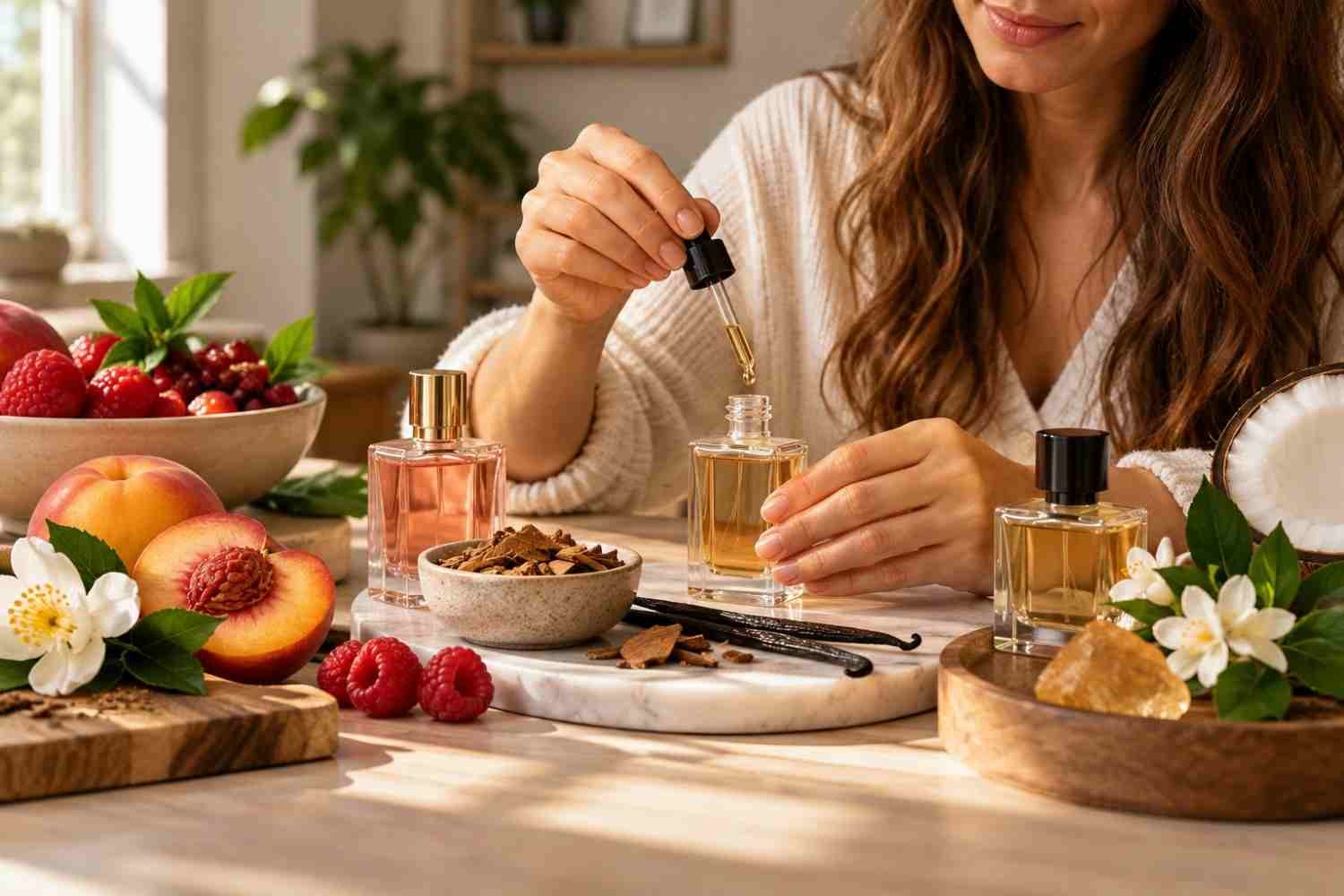
Begin with unscented lotion, then choose one grounding fragrance. Skin musk makes a fruity gourmand feel clean and close; sandalwood, cedar, or vetiver adds dryness. Amber can work too, but choose a sheer version if your perfume already features vanilla or caramel.
Try strawberry vanilla with clean musk, or pear gourmand with soft cedar. Apply one light spray of the anchor, then less of the sweeter scent. If both are powerful, test them on separate wrists first.
Bring in freshness, not more sugar
Citrus, tart berries, airy florals, and green notes create contrast. Bergamot lifts creamy vanilla; blackcurrant sharpens jammy berries; peony or magnolia softens sugar. Sea salt and fig leaf add an airy, mineral quality for warm weather.
Avoid treating every note as a separate layer. Two complementary fragrances are easier to control than four competing perfumes. If your gourmand features coconut, honey, and vanilla, a caramel-heavy mist may amplify sweetness.
How to Combine Body Mists and Niche Perfumes
A body mist adds a light fruity accent, while a niche perfume supplies depth. For how to combine body mists with niche perfumes, check each product’s notes. Pair peach or pear mist with woody vanilla, or use tart berry to brighten soft musk.
Apply the lighter product first, then add one modest spray of perfume to another pulse point. There is no universal rule about which scent goes last; choose based on what you want to notice most. Test on skin and wait thirty minutes.
Don’t rub your wrists together; let the fragrance dry naturally. Avoid adding more just because your nose has adjusted. Olfactory adaptation can make a scent seem quieter to you even when others still smell it. Note successful combinations, spray counts, and weather.
Fruity Gourmand Layering for Every Season

Spring: airy fruit and soft florals
Spring suits pear, green apple, peach, or raspberry with peony, magnolia, or clean musk. Sheer vanilla adds softness without a bakery-like cloud. Choose a light mist or eau de toilette for daytime.
Summer: crisp, green, and mineral
In heat, dense sweetness feels louder. Try citrus with coconut water, fig leaf with vanilla, or fresh florals over musk. Keep caramel, praline, and syrupy berries subtle. One or two sprays may be enough.
Fall: dark fruit and gentle spice
Cooler weather suits blackberry, fig, or blackcurrant with cardamom, pink pepper, cedar, or restrained amber. Let fruit lead and use vanilla as support. Too much cinnamon beside caramel can feel dense.
Winter: warmth with definition
Coffee, chocolate, toasted sugar, and vanilla feel comforting in cold weather. Define the blend with sandalwood, patchouli, or clean musk instead of stacking rich notes. Cold air changes projection, but concentration alone doesn’t guarantee performance. Adjust sprays to your setting.
One useful test is to wear each fragrance alone on different days before pairing them. That helps you notice whether the sweetness comes from the fruit, the vanilla base, or the way the perfume develops on your skin. Fragrance descriptions can guide you, but they cannot predict every result because formulas, skin, and application vary. If you are testing a new combination before work or an event, try it at home first. Keep the first attempt subtle, then check the scent after an hour and again later. The dry-down is often where the balance either works beautifully or becomes too rich for your taste.
Mistakes That Make a Blend Overwhelming
A common mistake is layering fragrances that both project strongly or judging them before the base develops. Test on a scent strip, then wear the pairing for several hours. If it feels sticky or loud, remove a layer instead of adding another.
Explore clean musk and woody fragrance layering combinations to give sweet fruit a calmer finish. Keep the rest of your routine simple; scented lotion, body wash, hair products, and perfume can compete.
FAQs: How to Layer Fruity Gourmand Scents Without Smelling Too Sweet in Every Season
1. What notes balance a sweet gourmand perfume?
Clean musk, cedar, sandalwood, bergamot, green fig, and airy florals can add contrast. Choose notes that complement the perfume instead of overpowering it.
2. Can I layer a body mist with niche perfume?
Yes. Start with a light mist, then add a small amount of perfume. Test the combination on skin and give it time to develop before adding more.
3. How many fragrances should I layer at once?
Begin with two. A third can work if it serves a clear purpose, but several sweet fragrances may compete and create a heavy scent.
4. Does hot weather make gourmand perfumes smell sweeter?
Heat can make fragrance feel more noticeable and intense. In warm weather, use fewer sprays and favor crisp fruit, citrus, green notes, or musk over dense sugary accords.
A Signature Scent That Leaves Room to Breathe
A good seasonal layering routine needs neither a large collection nor a complicated formula. Identify what you love in a fragrance, then choose one supporting note. Juicy fruit feels more grown-up with cedar; vanilla seems lighter beside bergamot; and rich berries soften with clean musk. Small changes often beat buying another bottle.
Let the fragrance settle before you judge it. When sweetness has contrast and space, it can feel inviting rather than overwhelming.