The tool you use to get clean can become one of the least hygienic things in your shower. A loofah collects dead skin, stays damp, and sits in a warm environment—exactly the combination that can encourage microbial growth.
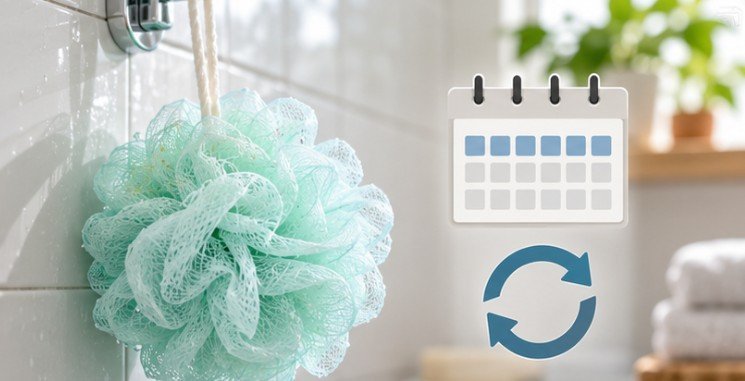
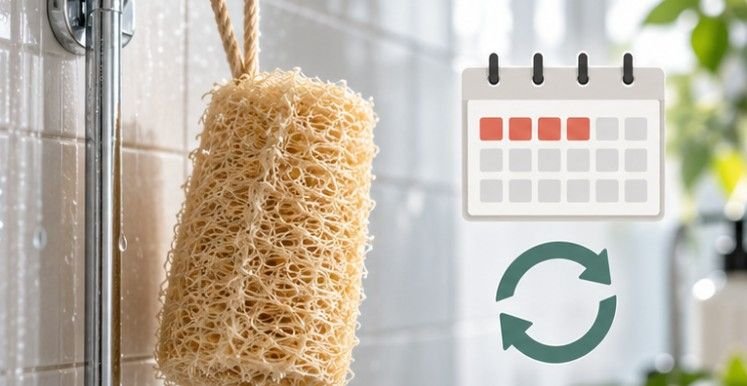
So, how often should you change your loofah? A useful rule is to replace a natural loofah about every three to four weeks and a synthetic mesh pouf roughly every six to eight weeks. But the calendar is only a starting point. Smell, discoloration, poor drying, or damaged material can mean it belongs in the trash much sooner.
Why Loofahs Become Dirty So Quickly
A loofah works because its textured surface loosens dead skin cells while spreading cleanser across the body. Unfortunately, some of those skin cells can remain trapped inside its fibers after the shower.
Add water, body oils, warmth, and a humid bathroom, and the loofah may stay damp for hours.
A classic study published in the Journal of Clinical Microbiology found that natural loofah material could support the growth of several bacterial species. Researchers also noted that trapped shed skin cells could increase its growth-promoting potential.
The study originated after investigators traced a case of Pseudomonas aeruginosa folliculitis to a contaminated loofah. That does not mean using a loofah automatically causes an infection. It does show why proper drying, cleaning, and replacement matter.
Cleveland Clinic dermatologist Melissa Piliang, MD, similarly explains that a loofah’s porous structure can trap skin debris and remain wet, allowing bacteria and fungal organisms to persist. Cleveland Clinic recommends rinsing it thoroughly, drying it outside the shower when possible, and cleaning it regularly.
How Often Should You Change Your Loofah by Type?
Not every bath scrubber ages at the same rate.
| Bath tool | Practical replacement schedule | Replace sooner if |
| Natural plant loofah | About 3–4 weeks | Musty smell, dark spots, softness, mold |
| Synthetic mesh pouf | About 6–8 weeks | Mesh unravels, odor develops, discoloration |
| Washcloth | No fixed disposal schedule | Fabric becomes damaged; wash after each use |
| Silicone scrubber | Usually much longer | Cracks, tears, persistent odor or residue |
Natural loofahs deserve the most attention because their fibrous plant structure has many spaces where moisture and debris can remain.
Synthetic poufs are not automatically sanitary simply because they are plastic. Their dense folds can also retain soap, skin cells, and water.
Silicone body scrubbers are less porous and generally easier to rinse clean. Their useful life therefore depends more on physical condition and the manufacturer’s care instructions than on a short replacement cycle.
Use the Smell-Dryness-Look Test
Instead of relying only on a phone reminder, inspect your shower tool every few days.

1. Smell it
A clean loofah should not develop a sour, mildew-like, or musty odor. If washing and complete drying do not remove the smell, replacement is the safer choice. Trying to stretch another month from a questionable bath sponge saves very little money.
2. Check whether it actually dries
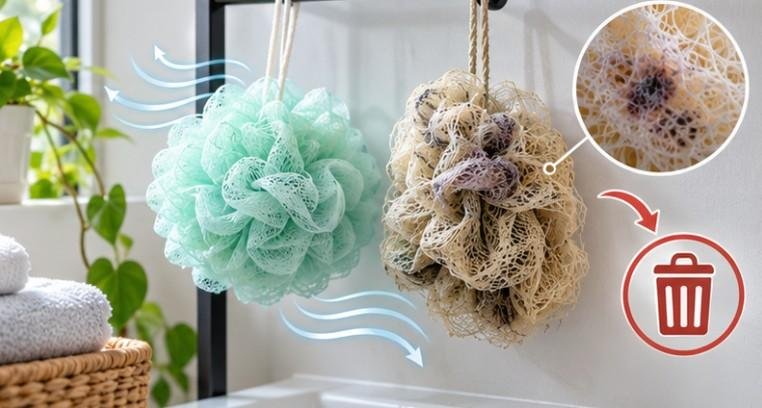
Squeeze the loofah several hours after your shower. If the center is still wet, your storage location may be the real problem. A pouf hanging directly beneath the showerhead can be repeatedly splashed throughout the day. Move it somewhere with better airflow.
3. Look closely at the material
Discard it if you notice unusual dark patches, obvious mold, major discoloration, or deterioration. For mesh poufs, unraveling layers also make thorough cleaning more difficult. For natural loofahs, a major change in texture can indicate that the fibers are breaking down.
This three-part check is often more useful than asking only how often should you change your loofah, because real shower conditions vary dramatically between households.
Your Drying Routine Matters More Than You Think
Replacing a loofah frequently does not solve poor storage. After each shower, rinse it thoroughly until visible soap and debris are gone. Squeeze or shake out as much water as possible, then hang it where air can circulate around the entire scrubber.
Cleveland Clinic specifically advises allowing loofahs to dry in a cool location rather than leaving them continuously damp in the shower. Do not share a loofah with another person either.
The CDC’s MRSA prevention guidance advises against sharing personal items such as towels, washcloths, and razors because bacteria can survive on contaminated surfaces and potentially enter through damaged skin. A personal body scrubber deserves the same common-sense treatment.
Be Especially Careful After Shaving
Freshly shaved skin and vigorous physical exfoliation are not an ideal combination. Shaving can create irritation and tiny breaks in the skin barrier. Cleveland Clinic recommends avoiding loofah use for several days after shaving because bacteria may enter through nicks or cuts.
The risk is relevant because folliculitis develops when hair follicles become inflamed or infected. MedlinePlus, a service of the U.S. National Library of Medicine, notes that shaving and friction can damage follicles and that contaminated washcloths should be avoided.
If your legs, underarms, or bikini area were just shaved, using clean hands and a gentle cleanser may be the better option.
More Scrubbing Is Not Better Skin Care
Some people use a loofah aggressively because they associate friction with cleanliness. Skin does not work that way.
Hard scrubbing can irritate the surface rather than meaningfully improve hygiene. It may be particularly troublesome if you have eczema, very dry skin, inflamed acne, keratosis pilaris, wounds, or an existing rash.
The American Academy of Dermatology explains that friction and shaving are among factors capable of damaging follicles and contributing to folliculitis.
A loofah should therefore provide light exfoliation, not feel like sandpaper. For sensitive skin, a soft washable cloth—or simply your hands—may be a more practical daily cleansing tool.
What About Disinfecting Your Loofah?
Cleaning can reduce contamination, but it does not make an old loofah immortal. Cleveland Clinic recommends cleaning a loofah at least weekly and describes soaking appropriate loofahs briefly in a diluted bleach solution before rinsing thoroughly. Always consider the manufacturer’s cleaning instructions because heat or disinfectants may damage some synthetic products.
Researchers from the Icahn School of Medicine at Mount Sinai likewise concluded that natural loofahs can act as reservoirs for potentially pathogenic bacteria and recommended regular decontamination. Their findings are available through the Mount Sinai research repository. Cleaning extends safe usability; it does not replace inspection and timely disposal.
When Should You Stop Using One Immediately?
Do not wait for your planned replacement date if the loofah develops mold, a persistent odor, suspicious discoloration, or damaged fibers.
Also stop scrubbing an area that develops painful redness, pus-filled bumps, swelling, or worsening tenderness. These symptoms can have many causes, so the loofah may not necessarily be responsible.
However, skin infections deserve attention. The CDC lists redness, swelling, painful sores, and pus among signs associated with MRSA skin infections and advises obtaining appropriate medical care when infection is suspected.
FAQs
1. Can I use the same loofah for three months?
It is better not to keep a natural loofah that long. Synthetic poufs may last longer, but roughly six to eight weeks is a more reasonable replacement target if they remain clean and dry.
2. Should I replace my loofah if it smells?
Yes. A persistent musty, sour, or mildew-like smell after cleaning and drying is a sensible reason to discard it, regardless of how recently you bought it.
3. Is a loofah better than a washcloth?
Neither is automatically better. Washcloths are convenient because they can be machine-washed frequently. Loofahs provide stronger physical exfoliation but require careful rinsing, drying, cleaning, and replacement.
4. Can I use a loofah every day?
Daily scrubbing is unnecessary for many people and may irritate sensitive skin. Cleveland Clinic notes there is generally no need to use a loofah more than twice per week.
A Clean Shower Tool Should Actually Be Clean
The most useful answer to how often should you change your loofah is not simply “every few weeks.” Treat three to four weeks for natural loofahs and six to eight weeks for synthetic poufs as maximum practical checkpoints, then let condition and hygiene decide whether replacement should happen sooner.
Rinse it thoroughly, give it enough airflow to dry, never share it, and keep it away from freshly shaved or broken skin. Most importantly, trust the obvious warning signs. A loofah costs little to replace; keeping a damp, deteriorating one around simply is not worth the gamble.