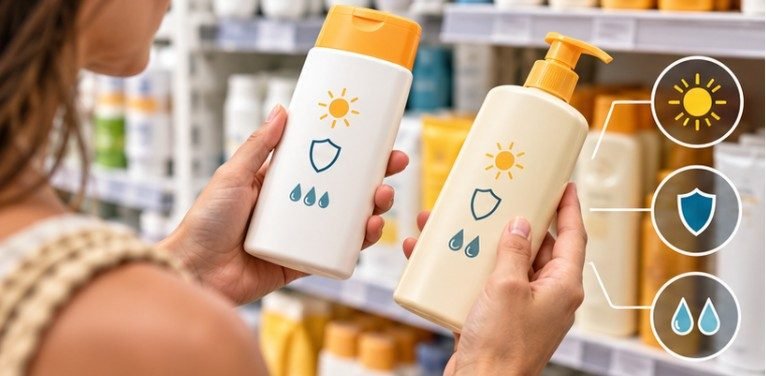
SPF 100 does not mean twice the protection of SPF 50, and “water-resistant” does not mean waterproof. Those two facts alone explain why buying body sunscreen can be more confusing than the wall of bottles at a drugstore suggests.
If you are figuring out how to choose sunscreen for your body, focus first on three things: broad-spectrum protection, SPF 30 or higher, and a formula you will comfortably apply in generous amounts. Texture, water resistance, skin sensitivity, and how you spend your day come next.
The best sunscreen is not simply the bottle with the largest SPF number. It is the one that gives appropriate protection and is practical enough for you to use correctly.
Start With the Three Label Claims That Actually Matter
Before comparing fragrance, finish, packaging, or trendy ingredients, read the front label. The American Academy of Dermatology recommends choosing sunscreen that is broad spectrum, water resistant, and SPF 30 or higher.
1. Look for “Broad Spectrum”
Ultraviolet radiation is not one single type of exposure. UVA rays contribute significantly to premature skin aging and penetrate deeper into skin, while UVB rays are strongly associated with sunburn.
A broad-spectrum sunscreen has passed testing designed to demonstrate protection across both UVA and UVB portions of the ultraviolet spectrum. The FDA regulates the use of this claim on sunscreen labels.
That makes “broad spectrum” more useful than vague marketing terms such as “sun defense” or “daily protection.”
2. Make SPF 30 Your Practical Starting Point
SPF primarily describes protection against UVB radiation. According to the AAD, SPF 30 filters approximately 97% of UVB rays. Higher SPF values provide additional protection, but the increase becomes progressively smaller; no sunscreen blocks 100% of UVB radiation.
For everyday body protection, SPF 30 or higher is a sensible benchmark. An SPF 50 product can be particularly useful for prolonged outdoor exposure, provided you still apply enough and reapply. A higher number should never become permission to stay outside indefinitely.
3. Check Water Resistance Before Exercise or Swimming
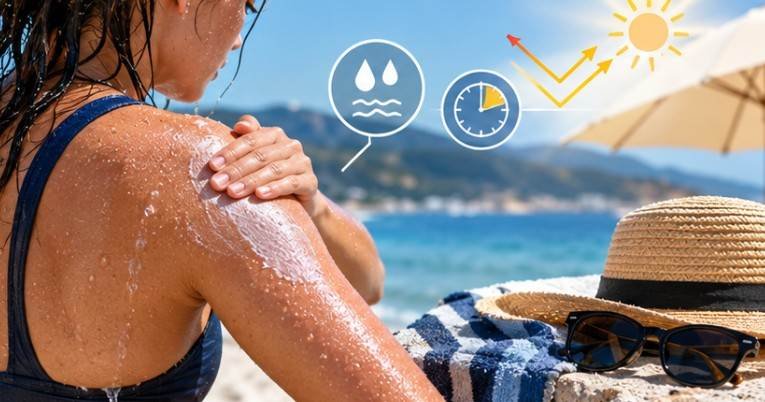
The FDA allows sunscreen to claim water resistance for either 40 or 80 minutes when it meets standardized testing requirements. Products cannot legitimately be labeled simply “waterproof” or “sweatproof.”
Choose 80-minute water resistance for swimming, running, beach days, outdoor sports, gardening in hot weather, or other activities involving substantial sweating.
A Simple Body Sunscreen Decision Table
| Your situation | What to prioritize |
| Normal daily errands | Broad spectrum, SPF 30+, comfortable lotion |
| Long outdoor day | Broad spectrum, SPF 50+, water resistance |
| Swimming or heavy sweating | 80-minute water resistance |
| Dry body skin | Creamy or moisturizing lotion |
| Oily or breakout-prone areas | Lightweight, non-comedogenic formula |
| Easily irritated skin | Fragrance-free option; consider mineral filters |
| Hard-to-reach body areas | Lotion plus carefully applied spray if needed |
The point is not to find one theoretically perfect sunscreen. Match the product to the conditions in which you will actually use it.
Match the Formula to Your Skin, Not the Trend
The body has different needs from the face. A lightweight facial fluid may be pleasant on your cheeks but impractical when you need enough product for your shoulders, arms, chest, back, and legs.
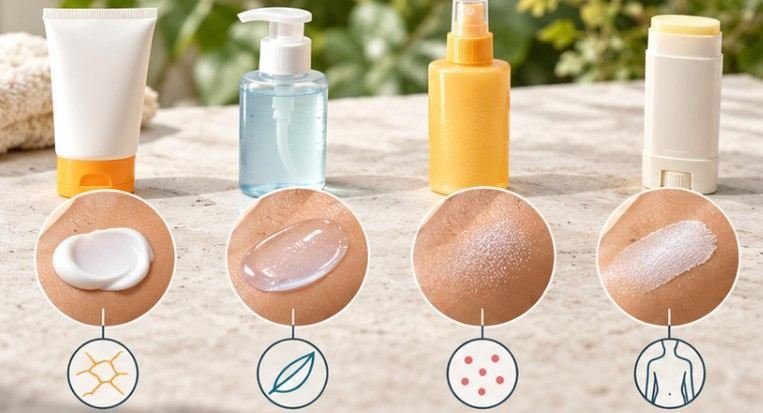
Dry Skin Usually Benefits From a Lotion or Cream
If your arms and legs regularly feel tight or flaky, look for a moisturizing sunscreen lotion or cream.
Ingredients such as glycerin, ceramides, hyaluronic acid, and emollients can make daily sunscreen more comfortable on dry skin. More importantly, a pleasant formula makes adequate application easier.
Very dry skin may dislike thin, alcohol-heavy formulations that evaporate quickly.
Acne-Prone Skin Needs Thoughtful Texture Selection
Body acne on the chest, shoulders, or back can make thick sunscreen uncomfortable. Look for lightweight formulas labeled non-comedogenic or oil-free if richer products repeatedly cause problems. A gel, fluid, or lightweight lotion may feel better during hot weather and exercise. “Non-comedogenic,” however, is not a guarantee that no individual will break out. Skin responses vary.
Sensitive Skin May Prefer Simpler Formulas
People who experience stinging, fragrance sensitivity, eczema-prone skin, or reactions to certain sunscreen ingredients may prefer fragrance-free formulas.
Mineral sunscreens typically rely on zinc oxide and/or titanium dioxide as active ingredients. They can be a useful option for sensitive skin, although mineral products sometimes leave a visible cast, particularly on deeper skin tones.
Patch-testing a new product on a small area before covering your entire body can prevent an uncomfortable full-body surprise.
Mineral Versus Chemical Sunscreen Is Not the Most Important Choice
Sunscreen discussions often turn into debates about “mineral versus chemical,” but that can distract from the fundamentals.
Both types can provide effective UV protection when properly formulated and used according to directions. Instead of choosing based entirely on ingredient category, ask whether the sunscreen is broad spectrum, SPF 30 or higher, comfortable on your skin, and suitable for your activity.
The National Cancer Institute emphasizes that people of every skin tone can experience UV-related skin damage and develop skin cancer.
That matters because darker skin tones are sometimes mistakenly treated as naturally exempt from sunscreen recommendations.
Lotion, Stick, or Spray: Which Works Best for the Body?
Lotion is often the easiest format for judging whether you have covered an area completely.
Spray sunscreen can be convenient for backs, legs, or active families, but convenience creates a common problem: people often spray too little. The AAD recommends spraying generously, holding the nozzle close to the skin, and rubbing the sunscreen in afterward to create even coverage.
Avoid intentionally inhaling spray sunscreen, and do not spray it directly onto your face.
Sticks can be useful for small areas, but they require repeated passes to build adequate coverage. They are less practical for covering two full legs.
The One-Ounce Rule Matters More Than Buying SPF 100
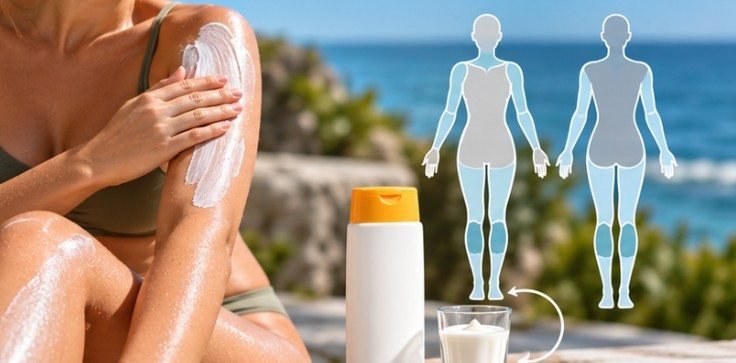
Most sunscreen failures are not necessarily product failures. Application is often the weak link. The AAD says most adults need approximately one ounce—roughly a shot-glass amount—to cover exposed skin adequately, although larger bodies may require more. It also notes that many people use only 25% to 50% of the recommended quantity.
Apply sunscreen about 15 minutes before going outdoors and remember easily missed areas such as: ears, neck, shoulders, backs of the hands, tops of the feet, calves, and any exposed scalp.
Reapply at least every two hours while outdoors and sooner after swimming, significant sweating, or towel drying. The CDC likewise stresses that sunscreen wears off and should be reapplied after extended outdoor exposure, swimming, sweating, or toweling.
Sunscreen Is Only One Layer of Sun Protection
Sunscreen should not do the entire job alone. Protective clothing, shade, sunglasses, wide-brimmed hats, and avoiding unnecessary intense midday exposure all reduce the amount of UV radiation reaching your skin. The Skin Cancer Foundation describes sunscreen as one part of a broader sun-protection strategy.
Babies younger than six months require special consideration. U.S. health guidance generally emphasizes shade and protective clothing for infants rather than routine sunscreen application; parents should discuss questions with a pediatric healthcare professional.
Frequently Asked Questions
1. Is SPF 50 better than SPF 30 for the body?
SPF 50 provides somewhat greater UVB protection, but both can work well when applied properly. Consistent coverage, sufficient quantity, broad-spectrum protection, and reapplication matter more than chasing extremely high SPF numbers.
2. Should I use body sunscreen every day?
Apply sunscreen to exposed skin when you will be outdoors. UV exposure occurs throughout the year and can still occur on cloudy days.
3. Is spray sunscreen as effective as lotion?
It can provide protection when applied generously and evenly, but sprays make it easier to miss areas or use too little. Rub the product into your skin after spraying.
4. How often should body sunscreen be reapplied?
Generally, reapply at least every two hours outdoors and after swimming, sweating, or towel drying. Follow the product’s specific water-resistance instructions.
The Sunscreen You Will Actually Use Wins
Learning how to choose sunscreen for your body becomes much easier once you ignore most of the front-label marketing. Start with broad-spectrum protection, SPF 30 or higher, and appropriate water resistance. Then choose the texture that makes regular application realistic for your skin and lifestyle.
The surprising part is that the “best” bottle may not be the most expensive, newest, or highest-SPF option on the shelf. Protection depends heavily on behavior. Apply enough, cover forgotten areas, reapply when necessary, and pair sunscreen with clothing and shade. A well-used SPF 30 or 50 beats an impressive bottle left sitting in the bathroom.