

A full day at my desk sometimes leaves me feeling more exhausted than an actual workout. Between answering emails, attending meetings, and completing deadlines, I barely notice how many hours pass without moving. By evening, my shoulders feel tight, my back feels stiff, and my energy disappears.
That’s why I’ve started paying more attention to healthy habits for people who sit all day. I discovered that staying active doesn’t require a gym membership or complicated fitness routine. A few intentional changes throughout the day can make a meaningful difference.
Whether you’re working from home or spending eight hours in an American office, these practical habits can help you feel more comfortable, move more, and support your long-term health.
What Happens to Your Body When You Sit All Day?
Prolonged sitting is associated with cardiovascular disease, type 2 diabetes, metabolic syndrome, and other health problems. Sitting for more than eight hours daily, particularly with little physical activity, has been linked to higher health risks.
Extended inactivity can also contribute to tight hip flexors, stiff joints, and weaker gluteal muscles, sometimes informally called dormant butt syndrome.
Fortunately, regular exercise and movement breaks can help reduce these risks, although no routine guarantees complete protection.
How Can You Stay Healthy When You Sit All Day?
1. Take Five-Minute Movement Breaks Every 30 Minutes
One of my favorite healthy office habits is exercise snacking, which means spreading short bursts of physical activity throughout the day.
I set reminders to stand, walk around, or stretch every 30 minutes. Research suggests that five-minute walking breaks at this interval can improve certain blood sugar and blood pressure measurements.
Even walking to refill my water bottle or pacing during phone calls helps interrupt long sitting periods.
2. Set Realistic Daily Step Goals
Walking is among the easiest exercises for people who sit all day.
A large observational study associated approximately 9,000–10,500 daily steps with the lowest mortality risk, although substantial benefits appeared around 4,000–4,500 steps.
I prefer increasing my current step count gradually instead of forcing myself to reach 10,000 immediately.
Walking after lunch, taking the stairs, and parking farther from the office entrance can help accumulate more steps.
3. Practice Simple Desk Stretches
Desk stretches for office workers can improve mobility and ease stiffness.
For a seated spinal twist, I sit upright, keep my feet planted, and gently rotate my upper body toward one side. I hold the position for 20–30 seconds before switching.
For sit-to-stand squats, I rise from a stable chair without using my hands when comfortable, then slowly sit down. Ten to fifteen repetitions activate my legs and glutes.
I also clasp my hands behind my back to open my chest and gently tilt my head sideways for approximately 20 seconds per side.
Every movement should feel controlled and comfortable, never painful.
4. Improve Your Sitting Posture and Workspace Ergonomics
A comfortable workspace helps reduce unnecessary muscle strain.
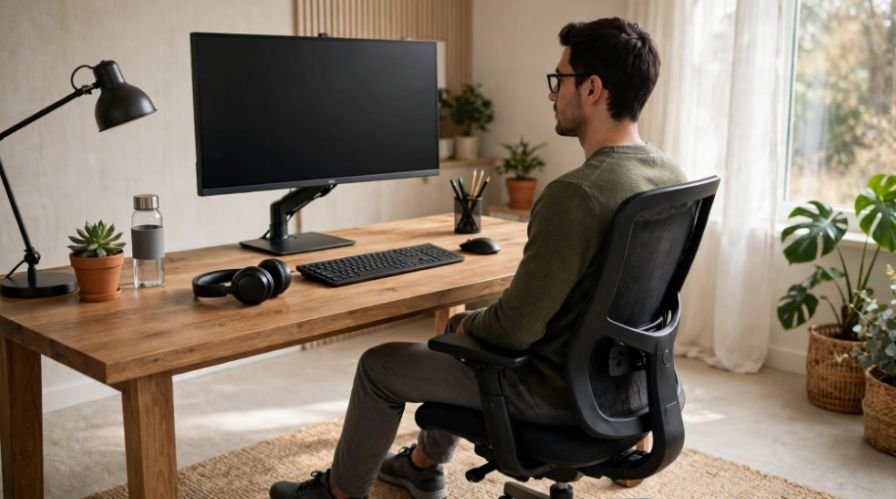
I position my monitor directly ahead, with its top around eye level. My feet rest flat, my back receives lumbar support, and my elbows stay comfortably bent near 90 degrees.
A rolled towel behind my lower back works when an adjustable chair isn’t available.
I also alternate between sitting and standing. Standing desks can encourage position changes, but prolonged stationary standing isn’t ideal either. Stability-ball chairs aren’t necessary and shouldn’t replace a supportive workstation.
5. Walk After Lunch Instead of Returning Immediately to Your Desk
Taking a short walk after eating is an easy way to reduce the effects of sitting all day.
I try walking for 10–15 minutes after lunch, whether outdoors or through an office hallway.
Post-meal movement can support blood sugar management while giving me a mental break before afternoon meetings.
6. Stay Hydrated and Choose Balanced Meals

Busy schedules sometimes make me forget basic healthy habits.
I keep a reusable water bottle nearby and refill it throughout the workday. Hydration supports normal body functions, while refill trips create natural movement opportunities.
For lunch, I choose meals containing vegetables, whole grains, protein, and healthy fats. Greek yogurt, fresh fruit, nuts, or hummus make convenient desk snacks.
These choices help me maintain a balanced diet without relying on vending machines or sugary drinks.
7. Protect Your Eyes From Digital Screen Fatigue
Long computer sessions can cause dry eyes, headaches, and visual discomfort.
I practice the 20-20-20 rule: every 20 minutes, I look at something about 20 feet away for 20 seconds.
Adjusting screen brightness, minimizing glare, and blinking regularly also help me manage eye strain.
8. Make Your Commute and Breaks More Active
Staying active with a desk job becomes easier when movement fits into existing activities.
I choose stairs when practical, walk during phone conversations, and park farther from building entrances.
People using public transportation can consider getting off one stop early when the route is safe and convenient.
These simple changes make everyday movement possible without scheduling another workout.
9. Strengthen Your Muscles Outside Work
Short movement breaks complement regular physical activity rather than replacing it.
The CDC recommends at least 150 minutes of moderate-intensity aerobic exercise weekly and muscle-strengthening activities on two days.
I combine brisk walking with squats, wall push-ups, resistance-band rows, or other beginner-friendly strength exercises.
This helps support my muscles, mobility, and overall fitness.
10. Build an Active Evening and Better Sleep Routine
After sitting throughout the workday, I avoid spending my entire evening on the couch.
Instead, I take a neighborhood walk, stretch while watching television, practice gentle yoga, or complete light household activities.
I also limit unnecessary bedtime screen time and aim for at least seven hours of sleep.
Along with limiting screen time, trying easy ways to reduce stress before bedtime can help you unwind after a demanding workday and prepare for more restful sleep.
A consistent evening routine supports recovery and makes the next workday easier to manage.
Beyond staying active, adopting healthy evening habits for better sleep can help you create a more consistent wind-down routine and support better rest after a sedentary workday.
What Is the Best Daily Routine for Desk Workers?

I start my morning with gentle stretching or a short walk. During work, I take regular movement breaks, drink water, and change positions.
At lunchtime, I enjoy a balanced meal followed by a brief walk. In the afternoon, I rest my eyes and stretch when needed.
After work, I include some physical activity before winding down for bed.
You can make these habits easier to maintain by learning how to build a healthy routine with a busy schedule, using small, consistent activities that fit naturally around your work commitments.
The biggest mistake is assuming one workout eliminates every risk associated with prolonged sitting. Consistent movement throughout the day remains important.
Frequently Asked Questions
1. How Often Should You Stand Up When Working at a Desk?
Try standing or walking every 30–60 minutes briefly. Choose a frequency that suits your work schedule and physical comfort.
2. Is Standing All Day Healthier Than Sitting?
Not necessarily. Alternating between sitting, standing, and walking is generally preferable to remaining stationary for extended periods.
3. Can Walking Reduce the Health Risks of Sitting?
Regular walking supports cardiovascular health and can reduce risks associated with inactivity. However, it doesn’t guarantee complete protection.
4. What Healthy Habits for People Who Sit All Day Are Easiest to Start?
Begin with movement reminders, gentle stretching, better posture, regular hydration, balanced meals, and short daily walks.
A Healthier Workday Starts With Small Decisions
I’ve realized that maintaining good health doesn’t mean abandoning my desk job or following an exhausting fitness schedule. It means making thoughtful decisions throughout the day.
A five-minute walk, a few chair squats, or an evening stretch may seem small, but these activities help me build consistency.
Rather than focusing on perfection, I choose practical habits that fit my lifestyle. Over time, those small decisions can turn an inactive workday into a more balanced, comfortable, and healthier routine.