

The biggest airport security delay often starts before you reach the checkpoint. A forgotten ID, poorly packed carry-on, or missing TSA PreCheck indicator can turn an ordinary screening into a frustrating experience.
Learning how to get through airport security faster isn’t about rushing past other passengers. It’s about understanding current TSA rules, preparing your belongings, and choosing the right security lane.
One important change: Since July 2025, most passengers at U.S. airports have been allowed to keep their shoes on during screening. That makes some older airport advice outdated. Here’s what actually saves time.
Choose the Right Fast-Track Security Program
Frequent travelers have several options for moving through U.S. airports more efficiently. These programs offer different benefits, so choosing the right one matters.
TSA PreCheck: Best for Frequent Domestic Travelers
TSA PreCheck provides access to dedicated screening lanes at participating U.S. airports.
Eligible travelers can generally leave laptops and compliant liquids inside their carry-ons while keeping belts and light jackets on, unless additional screening is required.
Although standard passengers can now usually keep their shoes on, PreCheck still offers a simpler screening experience.
You must add your Known Traveler Number (KTN) to your airline reservation and confirm that the TSA PreCheck indicator appears on your boarding pass.
CLEAR+: Best for Reducing Identity Verification Delays
CLEAR+ is a paid private service that uses biometric identity verification at participating airports.
Instead of waiting through the usual identity-check queue, eligible members use designated CLEAR lanes before proceeding to TSA screening.
CLEAR+ does not replace physical security screening.
Travelers who combine CLEAR+ with TSA PreCheck may benefit from both faster identity verification and expedited baggage screening, where both services are available.
Global Entry: Best for International Travelers
Global Entry is particularly valuable for Americans who frequently return from overseas trips.
Administered by U.S. Customs and Border Protection, the program offers expedited U.S. entry processing and TSA PreCheck eligibility.
According to U.S. Customs and Border Protection, Global Entry and TSA PreCheck address different parts of the travel experience.
For international travelers, Global Entry can therefore provide broader benefits than domestic screening membership alone.
Use Touchless ID Where Available
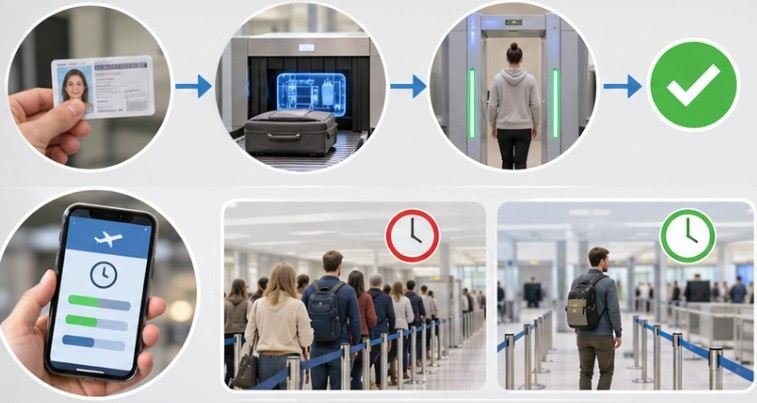
Facial recognition technology is changing how certain passengers verify their identities at airport checkpoints.
TSA PreCheck Touchless ID allows eligible travelers to use facial recognition rather than routinely presenting physical identification at participating checkpoints.
According to the TSA Touchless ID guidance, participation generally requires an active TSA PreCheck membership, a valid passport, and an eligible airline profile.
Travelers must enter their KTN and passport information, opt in through their participating airline, and follow the appropriate checkpoint signs.
Keep your physical identification accessible anyway. Availability varies, and TSA officers can request documents.
Pack Your Carry-On for a Faster Inspection
Your bag’s organization matters almost as much as your position in line.
Follow the One-Grab Packing Method
Keep your laptop, tablet, and toiletries together in accessible compartments rather than underneath clothing.
In standard screening lanes, officers may require electronics larger than smartphones and liquid containers to be removed.
Some newer scanners allow items to remain inside bags, but you should follow the instructions at your checkpoint.
The TSA travel checklist recommends arranging belongings in layers and keeping frequently inspected items accessible.
Remember the 3-1-1 Liquids Rule
For ordinary carry-on liquids, gels, creams, and aerosols, the familiar restrictions remain important.
Each container must hold no more than 3.4 fluid ounces (100 milliliters), and containers must fit into one quart-size transparent bag, with one bag per passenger.
Medically necessary liquids and certain infant feeding supplies have exceptions but may require separate screening.
Pack large toiletries in checked baggage to avoid last-minute disposal.
Organize Chargers and Small Electronics
Use a compact pouch for charging cables, adapters, earbuds, and power banks.
Separating accessories makes your bag easier to inspect and simplifies repacking if TSA officers request a closer look.
Remember that spare lithium batteries and power banks generally belong in carry-on baggage rather than checked luggage.
Dress for Security Without Overthinking It
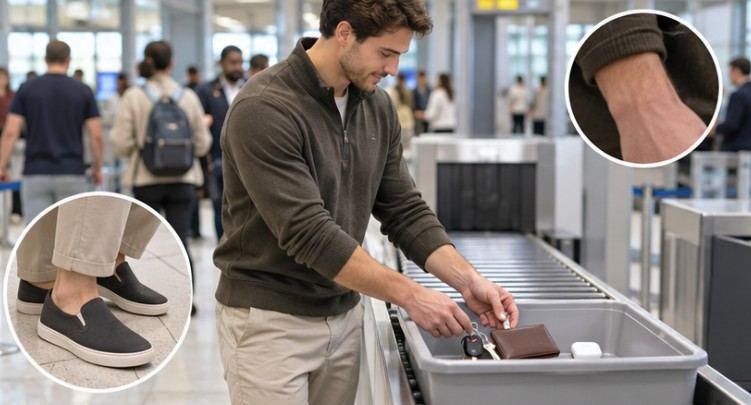
Clothing choices can create unnecessary complications at screening checkpoints.
Choose comfortable footwear, limit bulky metal accessories, and avoid complicated belts when possible. Most U.S. passengers can now keep their shoes on during standard screening. However, TSA officers may still request removal for additional inspection.
The change was announced by the Department of Homeland Security in July 2025 and confirmed in subsequent TSA travel updates.
Before reaching the conveyor belt, transfer your phone, wallet, keys, watch, and loose coins into your carry-on. A small zippered accessory pouch prevents valuables from becoming scattered across multiple bins.
Prepare Your Boarding Pass and Identification Early
Knowing how to get through airport security faster also means avoiding paperwork problems.
Check in through your airline’s mobile app as soon as online check-in becomes available, commonly 24 hours before departure.
Save your boarding pass to your phone’s digital wallet and keep a backup accessible without an internet connection.
For U.S. domestic flights, travelers aged 18 and older generally need a REAL ID-compliant license or another TSA-acceptable identification document, such as a valid passport.
REAL ID enforcement began May 7, 2025. Travelers without acceptable identification may face additional identity verification procedures, charges, delays, or denied checkpoint access.
TSA introduced its paid ConfirmID alternative in February 2026, but identity verification is not guaranteed.
Checking identification requirements before leaving home is considerably easier than resolving problems at the airport.
Check Security Wait Times Before Leaving Home
Airport congestion changes throughout the day, particularly during major holidays, early-morning departures, and peak vacation periods.
The MyTSA app provides airport-related screening information and crowd-sourced historical wait-time estimates. Some airports also publish their own checkpoint estimates.
These figures are useful planning tools, not guaranteed real-time predictions.
Check whether your departure airport provides security reservations or timed checkpoint entry. Such programs may be free, but participating airports, eligibility, and available appointment times vary.
For arrival planning, allow approximately two hours before domestic departures and three hours before international flights as a starting point, adjusting for your airport and airline recommendations.
The Five-Minute Security Preparation Routine
A quick routine can prevent several common checkpoint delays.
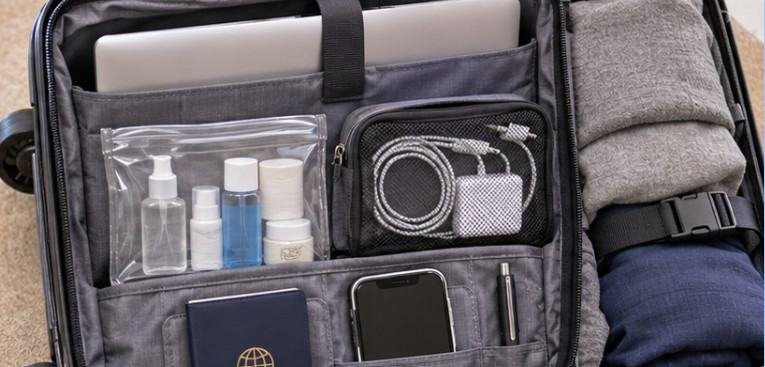
Five minutes before joining the security line:
- Confirm your boarding pass, identification, and designated screening lane.
- Secure your phone, keys, wallet, and loose accessories.
- Move electronics and liquids into accessible compartments.
- Check that your carry-on contains no prohibited items.
- Follow checkpoint instructions, then move to a nearby bench to reorganize your belongings after screening.
Families traveling with children should also check for dedicated family screening lanes, available at select airports.
Passengers with disabilities or medical conditions can contact TSA Cares before traveling to request assistance with the screening process.
What Even Experienced Travelers Get Wrong
A shorter security line isn’t always faster. Screening equipment, staffing, passenger preparation, and secondary inspections can affect how quickly each lane moves.
TSA PreCheck also doesn’t guarantee expedited screening on every flight. Your boarding pass must display eligibility, and TSA can conduct additional checks.
Similarly, biometric screening doesn’t eliminate the need to carry acceptable identification.
Finally, never assume procedures are identical across airports. Updated scanners may permit laptops and liquids to remain inside bags, while older equipment may require removal.
Following the officer’s instructions is more effective than relying on what worked during your previous flight.
Frequently Asked Questions
1. What is the fastest way to get through TSA security?
Use TSA PreCheck when eligible, check in online, organize your carry-on, and have acceptable identification ready. Checkpoint wait times and available expedited lanes also affect your experience.
2. Can I get through airport security faster without TSA PreCheck?
Yes. Pack liquids correctly, keep electronics accessible, empty your pockets early, and check airport wait-time estimates. Some airports also offer free checkpoint reservations.
3. Do I still need to remove my shoes at airport security?
Most passengers at U.S. airports can keep their shoes on under the policy introduced in July 2025. TSA officers may still require removal during additional screening.
4. Does CLEAR+ replace TSA PreCheck?
No. CLEAR+ expedites identity verification at participating airports, while TSA PreCheck provides expedited physical screening. Eligible travelers can sometimes use both programs together.
Final Thoughts
Airport security doesn’t have to be the most stressful part of flying. Most avoidable delays come from small preparation mistakes rather than complicated screening procedures.
Understanding how to get through airport security faster starts with checking your identification, packing thoughtfully, and knowing which expedited programs actually suit your travel habits. You don’t necessarily need an expensive membership or the latest airport technology to make a noticeable difference.
Sometimes, the simplest improvements work best: an organized carry-on, accessible boarding pass, and a few minutes of preparation. The goal isn’t to race through security. It’s to arrive at your gate with enough time and energy to enjoy the journey.