
A shower can leave skin drier than it was before you stepped under the water. Hot water, long showers, aggressive scrubbing, and strong cleansers can all remove some of the oils that help the outer layer of skin retain moisture.
That is where shower oil can be useful. Learning how to use shower oil correctly means treating it as a rinse-off cleanser rather than simply pouring body oil onto wet skin. Applied to damp skin and mixed with water, a well-formulated shower oil can loosen sweat and everyday grime while leaving skin feeling less stripped afterward.
The technique is simple, but a few common mistakes can make the product feel greasy, ineffective, or irritating.
What Shower Oil Actually Does
Despite the name, cleansing shower oil is usually more than straight oil.
Many formulas combine emollient oils with surfactants or emulsifiers. When the product meets water and is massaged over wet skin, those ingredients allow oil, water, and surface debris to mix. Depending on the formula, the texture may become milky, creamy, or lightly foamy before rinsing away.
That matters because plain body oil behaves differently. A traditional body oil is primarily designed to remain on the skin, while a cleansing shower oil is formulated to rinse.
The distinction is worth checking on the bottle. Look for directions such as “apply to wet skin,” “lather,” “emulsify,” or “rinse thoroughly.” If the product is labeled only as a body or bath oil, do not automatically assume it can replace cleanser.
Shower oils can be particularly appealing during colder months, when indoor heating and low humidity make dryness more noticeable. MedlinePlus notes that long, hot showers, some soaps, and dry environmental conditions can contribute to dry skin.
How to Use Shower Oil Correctly: The 6-Step Method
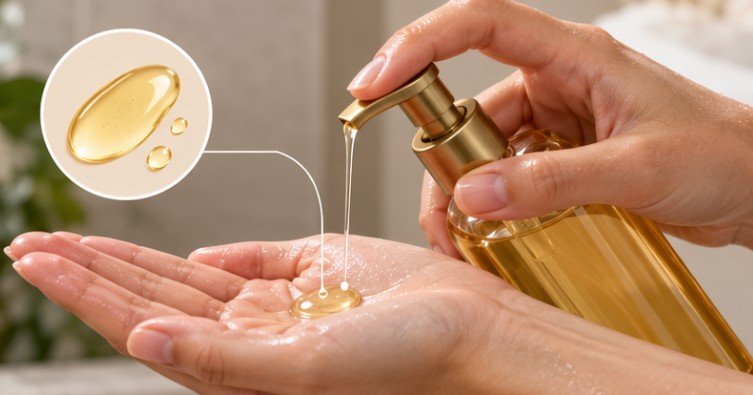
1. Start With Warm, Not Steaming, Water
Wet your body thoroughly before reaching for the oil. Very hot water may feel relaxing, but it can work against the reason you chose to moisturize and cleanse in the first place. Harvard Health recommends warm rather than hot showers because hot water can remove some of the fatty substances that help skin retain moisture. Aim for comfortably warm water rather than water that leaves the skin noticeably red.
2. Dispense a Small Amount
Start with roughly one to two pumps or a coin-sized amount, depending on the product’s instructions. More is not necessarily better. Using excessive shower oil can make rinsing harder and may leave the shower floor dangerously slippery. Spread the product briefly between your palms before applying it.
3. Massage It Over Damp Skin
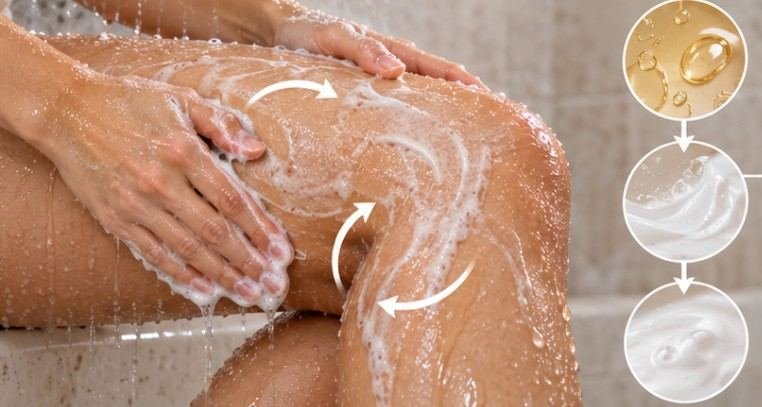
Work the oil across your body using your hands and gentle circular movements. Pay attention to areas that become especially dry, including the lower legs, elbows, knees, and heels. Areas that accumulate more sweat, odor, or sunscreen may need slightly more cleansing attention.
A washcloth is optional. Vigorous scrubbing is not. The American Academy of Dermatology recommends gentle cleansing for dry skin and advises against excessive scrubbing.
4. Give It a Few Seconds to Emulsify
Add a little more water with your hands as you massage. A rinse-off shower oil may become cloudy, milky, creamy, or slightly foamy. That change is a useful indication that water is mixing with the formula. You do not need to let shower oil “soak in” for several minutes. It is a cleanser, not a treatment mask.
5. Rinse Thoroughly
Rinse until obvious product residue is gone and your skin feels comfortable rather than coated. Do not interpret a slippery film as proof that the product is moisturizing. Some formulas simply rinse more cleanly than others.
If your skin feels heavily greasy or your towel becomes oily after every shower, experiment with using less product or switching to a formula that emulsifies more effectively.
6. Pat Dry and Moisturize When Needed
Use a soft towel to pat rather than vigorously rub your body. If your skin is dry, follow with body cream or lotion while it remains slightly damp. Mayo Clinic recommends applying moisturizer after bathing while skin still holds moisture.
People dealing with seasonal dryness can also pair this technique with a consistent body care routine for dry skin in winter.
A Quick Shower-Oil Technique Check
| If this happens | Likely issue | What to change |
| Skin feels greasy afterward | Too much product or poor rinsing | Use less and add water while massaging |
| Skin still feels tight | Water may be too hot or formula too cleansing | Lower the temperature and moisturize afterward |
| Product barely spreads | Skin is not wet enough | Thoroughly wet skin before application |
| Skin becomes itchy or red | Possible irritation or fragrance sensitivity | Stop use and check the ingredient list |
| Breakouts appear repeatedly | Formula may not suit acne-prone areas | Try a noncomedogenic cleanser instead |
Should You Use Shower Oil Before or After Body Wash?
For most ordinary showers, you usually do not need both. A properly formulated cleansing shower oil can replace conventional body wash. Doubling up on cleansers without a reason may simply expose dry skin to more cleansing than necessary. There are exceptions.
After a sweaty workout, heavy sunscreen use, dirty outdoor work, or other situations involving substantial buildup, some people may prefer a regular cleanser first and shower oil afterward. Others will find one thorough cleanse sufficient.
If back breakouts are your main concern after exercise, prioritize promptly removing sweat and changing out of damp clothing rather than assuming more oil is automatically beneficial. This guide to preventing back acne after working out explains the broader post-exercise routine.
Can You Shave With Shower Oil?
Sometimes, but check the product directions. An oil-rich cleanser can provide slip that helps a razor travel across the skin, making it appealing for shaving legs or other body areas. However, a product that disappears immediately with water may provide less cushioning than dedicated shaving cream.
The American Academy of Dermatology advises wetting the skin and hair first, shaving in the direction of hair growth, and using a moisturizing shaving product to reduce irritation. If you try shower oil for shaving, test a small area first. Use a sharp razor, light pressure, and plenty of lubrication.
What About Adding Shower Oil to a Bath?
Only do this when the manufacturer specifically says the product is suitable for bathing. Some formulas can be dispersed in bathwater, but others are intended strictly for rinse-off cleansing. Using too much oil can also make the tub extremely slippery.
A bath oil and a cleansing shower oil may look similar on the shelf, yet their formulas and intended uses can differ considerably.
Who Should Be More Careful With Shower Oils?
Shower oil is not automatically the best cleanser for every person. If you have acne-prone skin, consider a noncomedogenic product and pay attention to whether repeated use corresponds with breakouts. Mayo Clinic specifically recommends looking for noncomedogenic or oil-free products when acne is a concern.
Fragrance also deserves attention. A luxurious scent may improve the shower experience, but fragrance can irritate some sensitive or eczema-prone skin.
Stop using a product that repeatedly causes burning, itching, redness, swelling, or a persistent rash. Chronic dryness, cracked skin, widespread scaling, or symptoms that do not improve with basic care deserve medical evaluation rather than endless product switching.
FAQ
1. Do I apply shower oil to wet or dry skin?
Most cleansing shower oils are designed for wet or damp skin. Water helps the formula emulsify, spread, lift debris, and rinse away properly.
2. Do I need body wash after shower oil?
Usually not. If your shower oil is a true rinse-off cleanser, it can often replace body wash for everyday cleansing.
3. Can I use shower oil every day?
Many formulas are suitable for daily use, particularly for dry skin. Stop or reduce use if you notice irritation, persistent residue, or breakouts.
4. Should I moisturize after using shower oil?
Not everyone needs to, but dry skin often benefits from moisturizer applied shortly after showering while the skin remains slightly damp.
A Better Shower Starts With Technique
The biggest benefit of how to use shower oil correctly is not that oil somehow “adds moisture” during a shower. The advantage is that an appropriately formulated cleanser may clean without leaving skin feeling as stripped as it does after harsher washing.
Keep the water warm rather than hot, apply the oil to wet skin, let it mix with water, rinse completely, and judge the results by how your skin feels over the next several hours—not by how slippery it feels under running water. Sometimes improving body care requires adding fewer products and simply using one product properly.