I used to judge moisturizers by how rich they felt, assuming a thicker cream would always work better. Understanding emollients vs occlusives in skincare gave me a more useful way to read labels.
One function improves softness; the other helps retain water. That distinction matters when your hands feel rough after washing or your legs become flaky during winter. Instead of chasing the heaviest product, you can choose a formula that addresses what your skin needs.
What Is the Main Difference?
Emollients soften and smooth the skin’s surface. Occlusives create a protective film that reduces water evaporation. Both support comfortable skin, but they emphasize different jobs.
These categories overlap. Some ingredients provide both softness and moisture retention, so a moisturizer does not have to belong exclusively to one group. Its overall performance depends on the complete formula.
The word “emollient” also has two uses. It can describe a specific softening ingredient or, more broadly, a moisturizing product. That explains why different skincare explanations sometimes categorize the same product differently.
How Emollients Help Rough Skin
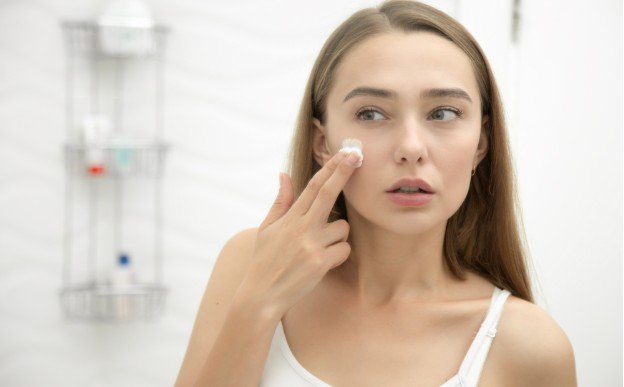
Emollient ingredients lubricate the outer skin layer and smooth uneven areas between surface cells. They make dry and flaky skin feel softer and more flexible.
Examples include glyceryl stearate, lanolin, and certain fatty alcohols. An ingredient such as cetyl alcohol belongs to a different category from rubbing alcohol; the word “alcohol” alone does not mean a moisturizer will dry your skin.
Emollients are useful when roughness is the main concern. Think of elbows catching on clothing or shins looking scaly. However, a pleasant, silky finish does not automatically mean a formula provides enough moisture retention for very dry skin.
How Occlusives Keep Moisture From Escaping
Occlusives form a surface film that slows transepidermal water loss, often shortened to TEWL. This simply means water moving through the skin and evaporating. Common examples include petrolatum, mineral oil, paraffin, and dimethicone. Petrolatum provides strong occlusion, while other ingredients can contribute protection with a different skin feel.
Occlusives do not supply water themselves. Their main role is helping skin retain it. Applying moisturizer after bathing makes practical sense because the formula helps preserve moisture already present in the outer layer. Ointments generally offer greater occlusion than lighter lotions, although formulation still matters.
Why Humectants Still Matter
Humectants attract and retain water in the outer skin layer. Familiar examples include glycerin, hyaluronic acid, and urea. When comparing emollients vs occlusives in skincare, I find it helpful to remember this third function. Humectants support hydration, emollients improve softness, and occlusives reduce moisture loss.
Many moisturizers combine these functions in one formula. You do not automatically need a hydrating serum, facial oil, and separate ointment to build an effective routine. A well-chosen moisturizer may already provide the combination your skin needs.
Can One Ingredient Do Both Jobs?
Yes. Lanolin can provide emollient and occlusive effects, and dimethicone can contribute both smoothness and moisture retention. This overlap makes rigid ingredient charts misleading. Texture alone also cannot tell you exactly how an ingredient works.
A silky product may still contain occlusive ingredients, while a rich-feeling formula is not necessarily equivalent to petroleum jelly. Evaluate the moisturizer as a whole rather than assuming one ingredient determines everything.
How to Choose a Moisturizer for Everyday Conditions
For Winter Dryness and Frequent Handwashing
Cold outdoor air, indoor heating, and repeated washing can make dryness harder to manage. While humectants in body care products help attract moisture, a cream or ointment may provide more lasting protection than a lightweight lotion. Apply after washing or bathing, and reapply when skin feels dry.
For Oily or Acne-Prone Skin
Avoid assuming every occlusive formula will suit your face. Some products can aggravate acne or folliculitis. Look for a noncomedogenic moisturizer, introduce one new product at a time, and judge how your skin responds. A product that works on cracked hands may feel unsuitable across your forehead.
For Sensitive Skin
Choose a simple, fragrance-free formula when fragrance triggers irritation. Persistent burning, itching, or a new rash deserves attention rather than repeated applications of the same product. Moisturizing can support eczema care, but it does not replace prescribed treatment.
Read the Label Before Adding Another Step
Look for recognizable ingredients that contribute hydration, softness, and moisture retention. Glycerin, glyceryl stearate, and petrolatum illustrate those different functions.
Remember that an ingredient list does not reveal the complete performance of a formula. Concentrations, combinations, and product texture also matter.
Start with one moisturizer after gentle cleansing. If particular areas remain dry, consider targeted additional protection rather than making your entire routine heavier. Follow your clinician’s directions when combining moisturizers with prescription creams.
Frequently Asked Questions
Which Is Better: emollients vs occlusives in skincare?
Neither is universally better. Emollients emphasize softness, while occlusives emphasize moisture retention. Many formulas provide both.
Is Petroleum Jelly an Emollient or an Occlusive?
It is primarily known as an occlusive, but it also has emollient properties.
Are All Facial Oils Equally Occlusive?
No. Oils can contribute emollience and some occlusion, but their properties differ. Avoid treating every oil as interchangeable with petrolatum.
Do I Need Three Separate Moisturizing Products?
Usually, no. Many moisturizers combine humectant, emollient, and occlusive ingredients.
My Take on Choosing Better Moisture
I now focus on function before richness. For rough skin, I look for smoothing ingredients; for persistent dryness, I consider stronger moisture retention. My starting point is a comfortable moisturizer I can use consistently, with extra protection only where needed. Understanding the formula makes choosing easier without turning everyday skincare into a complicated layering exercise.